- DIRECT CONTACTS:
- +256394517569
- tours@safarioclock.africa

Watching Hippos Along the Victoria Nile: A Complete Murchison Falls Safari Guide

Antelope Species in Murchison Falls: A Complete Guide to Uganda’s Savannah Antelopes
September 15, 2026
Tracking Leopards in Murchison Falls National Park: What Visitors Should Know
September 15, 2026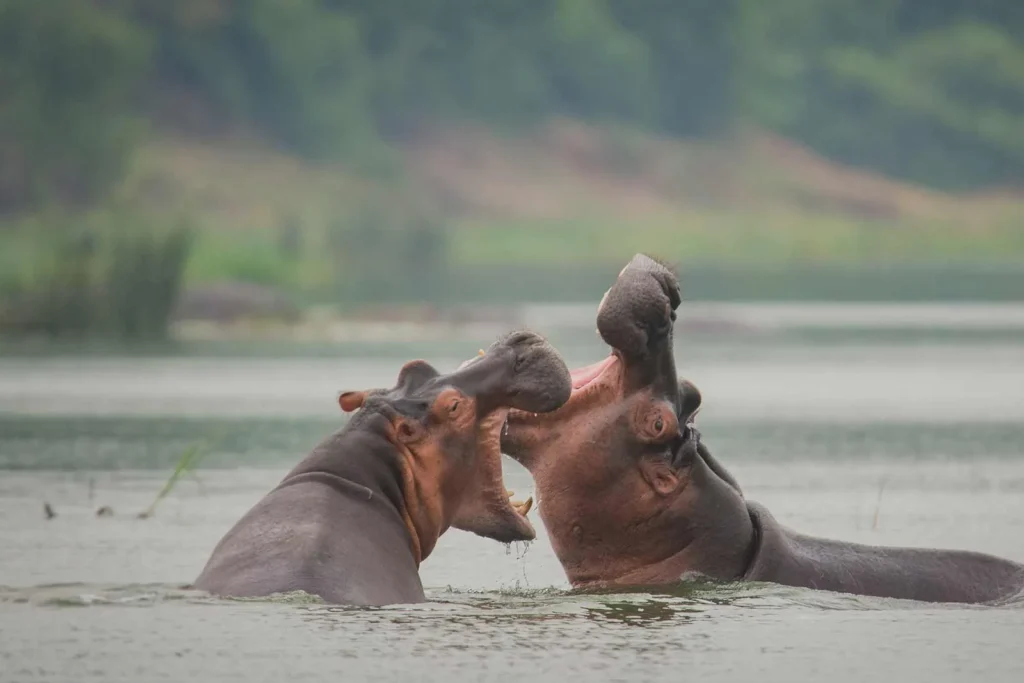
There are few experiences on a Uganda safari quite like approaching a group of hippos along the Victoria Nile. At first, the river may appear calm. Then you notice rounded backs breaking the surface. A pair of ears flicks above the water. Eyes appear between the ripples. Suddenly, the quiet river becomes a scene filled with wildlife. For many visitors, watching hippos Victoria Nile Murchison Falls is one of the most memorable experiences of a Murchison Falls safari.
The Victoria Nile creates one of the most dramatic wildlife landscapes in Uganda. After passing through the narrow gorge at Murchison Falls, the river continues across the park before flowing towards Lake Albert. Along its banks, hippos gather in the water and rest along the shoreline. Nile crocodiles bask on exposed banks. Buffaloes and elephants may approach the river. Waterbirds feed in the shallows. Meanwhile, the surrounding savannah supports giraffes, Uganda kob, hartebeest, lions and other wildlife.
This combination makes the Nile boat cruise much more than a scenic boat ride. It offers a different way to experience Murchison Falls National Park. Instead of watching wildlife from a vehicle on land, travellers observe animals from the water. The slower pace gives visitors time to study behaviour, photograph wildlife and appreciate the relationship between the river and the surrounding ecosystem. Safari O’clock can make this experience even more rewarding by combining the boat cruise with game drives and other Murchison Falls activities.
Why Watching Hippos Victoria Nile Murchison Falls Is Special
The attraction of hippos Victoria Nile Murchison Falls lies in the unusual perspective that the river provides. Hippos spend much of their day in water, so a boat allows visitors to observe them in an environment where they feel comfortable. You can watch a pod resting together, listen to their grunts and observe animals rising briefly before disappearing beneath the surface.
UWA describes the Murchison Falls Nile boat ride as an opportunity to see numerous hippos both in the water and along the river shores. The cruise travels upstream towards the base of Murchison Falls, creating a combination of wildlife viewing and dramatic scenery.
The experience feels very different from a conventional game drive. On land, you may search the grass for a lion or scan trees for a leopard. On the river, your attention changes. You begin watching the water. You look for ripples, ears and movement along the banks. You listen for sounds from the pods. At the same time, your guide points out crocodiles, birds and other animals.
That slower rhythm is part of the appeal. A Murchison Falls boat safari does not require constant movement. Instead, it allows travellers to pause and observe one of Uganda’s most fascinating aquatic ecosystems.
Hippos Victoria Nile Murchison Falls: Where the Experience Happens
The classic wildlife boat cruise begins at Paraa, one of the most important tourism areas in Murchison Falls National Park. UWA’s Murchison Falls material explains that Paraa means “home of the hippo” in the local Luo language. The area sits along the Nile and serves as an important access point for boat trips to the falls and the Nile Delta.
From Paraa, the traditional launch trip travels upstream towards Murchison Falls. The river gradually changes as the boat moves through the landscape. Wildlife appears along the banks, while the sound of the falls becomes more noticeable as you approach the gorge.
The standard excursion has traditionally been described by UWA as a roughly three-hour return journey. It is the oldest and one of the most popular excursions in the park. The route passes resident hippos and crocodiles, while elephants, buffaloes and other wildlife may appear along the river.
For Safari O’clock travellers, this makes Paraa an important part of the Murchison itinerary. The boat cruise can fit naturally between game drives or other activities. It also gives visitors a chance to rest while continuing to experience wildlife.
Understanding the Hippopotamus Before Your Boat Cruise
The hippopotamus is one of Africa’s most recognisable large mammals. Its rounded body, enormous mouth and semi-aquatic lifestyle make it instantly memorable. However, hippos are not simply large animals that spend their days floating in rivers.
They are highly adapted to life around water. Hippos spend much of the day submerged or partially submerged because the water helps them regulate their body temperature. Their eyes, ears and nostrils sit high on the head, allowing them to remain mostly underwater while still breathing and observing their surroundings.
Despite their bulky appearance, hippos can move surprisingly quickly. They can also become highly aggressive when they feel threatened. This fact matters during a safari. Visitors should never treat a hippo as a harmless animal simply because it appears to be resting peacefully.
A boat cruise provides an excellent viewing opportunity because the boat can maintain a safe distance while travellers observe natural behaviour. Safari O’clock guides can explain the difference between relaxed behaviour and warning signs. This knowledge helps visitors appreciate the animals without underestimating them.
Hippos Victoria Nile Murchison Falls and Their Daily Routine
One of the most interesting aspects of a hippo encounter is understanding what the animals are doing. A pod may look inactive from a distance. However, the animals communicate, interact and constantly respond to their surroundings.
During daylight hours, hippos often remain in or close to water. They may submerge themselves, rest in shallow areas or gather tightly together. Their nostrils and eyes can remain above the surface while the rest of the body stays underwater.
As temperatures change, their activity also changes. Hippos usually leave the water to feed after dark. They graze on grasses around the river and can travel considerable distances from their daytime resting areas.
This daily movement creates a fascinating relationship between the river and the surrounding savannah. The Nile provides a refuge during the heat of the day. The grasslands provide food at night. Therefore, hippos depend on both aquatic and terrestrial habitats.
When Safari O’clock guides explain this relationship, visitors gain a deeper understanding of what they are seeing. Instead of viewing a pod as a group of animals sitting in water, they begin to understand the rhythm behind the behaviour.
How Many Hippos Are in Uganda?
Uganda continues to support an important hippopotamus population. According to the 2026 State of Wildlife Resources in Uganda, the national hippopotamus population increased from 8,226 individuals in the 2021–2022 assessment to 9,026 in the 2023–2025 assessment. UWA included hippos among several wildlife species showing positive population trends during the period.
These are national figures. They should not be presented as a current count for Murchison Falls alone. Wildlife populations also change between habitats and seasons. For that reason, a responsible safari article should distinguish national estimates from park-specific counts.
What is certain is that Murchison Falls remains one of Uganda’s important hippo-viewing destinations. UWA specifically highlights the Nile boat ride as an opportunity to see many hippos along the river and in the water.
The concentration of hippos around water makes the experience particularly accessible to visitors. A game drive may require searching large areas of savannah. A boat cruise, however, follows a river where hippos naturally gather.
Why Hippos Gather Along the Victoria Nile
Water is the central reason hippos gather along the Nile. These enormous mammals need aquatic habitats for much of their daytime routine. The river provides shade, cooling and protection from the heat.
The Victoria Nile also supports suitable vegetation along its banks. After spending daylight hours in or near water, hippos can move onto nearby grasslands to feed.
This creates an ecosystem where several species interact. Hippos occupy the water. Crocodiles use sandbanks and river edges. Buffaloes may drink or rest nearby. Elephants can approach the river to drink and bathe. Birds feed in shallow water or search the shoreline.
As a result, a single section of the Victoria Nile can support many different wildlife experiences. This is one reason the boat cruise works so well as part of a wider Uganda safari.
Hippos and Nile Crocodiles: Two Powerful River Neighbours
A Murchison Falls boat cruise often reveals two of Africa’s most impressive aquatic animals in the same landscape: hippos and Nile crocodiles.
Crocodiles may lie almost motionless along the riverbank. Their camouflage can make them difficult to notice until the guide points them out. Once you see one, however, you may suddenly notice several more.
Hippos behave differently. Their movement is often more obvious because they rise, submerge, vocalise and interact with other members of the pod. The contrast creates an excellent wildlife lesson.
Crocodiles rely heavily on patience and ambush. Hippos rely on their size, social behaviour and powerful jaws. Both species have adapted to the same river environment in very different ways.
For visitors, the combination creates one of the strongest reasons to take the Nile cruise. You are not travelling only to see the falls. You are travelling through an entire river ecosystem.
Watching Hippos Victoria Nile Murchison Falls From a Boat
A boat offers an unusually good viewpoint for watching hippos. It moves at a controlled pace and allows passengers to scan both sides of the river.
When the boat approaches a pod, the guide can slow down and allow passengers to observe. You may see animals lying close together. Another hippo may rise suddenly beside the group. Some individuals may open their mouths widely. Others may remain almost completely submerged.
The experience becomes even more memorable when the river is calm. Reflections can appear around the animals, while birds move along the shoreline. In the distance, the landscape rises towards the Murchison Falls gorge.
UWA’s official information specifically recommends the boat ride as a way to view hippos in Murchison Falls. The authority also notes the photographic opportunities available during the experience.
Safari O’clock guides can help visitors use this time well. Rather than rushing from one sighting to another, guests can observe the pod, understand the behaviour and photograph the animals without unnecessary disturbance.
What Else Can You See During the Hippo Boat Cruise?
Hippos may be the stars of the river, but they are certainly not the only attraction.
Nile crocodiles are common along suitable riverbanks. Their long bodies can blend into the shoreline, especially when they remain motionless.
Buffaloes may come to drink or rest near the water. Elephants sometimes approach the river, creating dramatic scenes as they drink, bathe or cross shallow areas. Waterbuck can also occur around wetter habitats.
Birdlife adds another dimension. Fish eagles, kingfishers, herons, cormorants and other water-associated species can be seen around the river. UWA’s Murchison material highlights the rich wildlife along the Nile and the importance of the river and delta for birdlife.
The experience therefore works for more than mammal enthusiasts. Birdwatchers, photographers and travellers who simply enjoy landscapes can all find something interesting during the cruise.
Hippos Victoria Nile Murchison Falls and the Murchison Falls Experience
The boat cruise becomes even more impressive as the journey continues towards the falls.
The Victoria Nile narrows dramatically as it approaches the gorge. Water is forced through a very tight passage before plunging through the Murchison Falls system. The contrast is extraordinary.
Earlier in the journey, the river feels broad and peaceful. Hippos rest along the banks. Birds move across the water. Crocodiles lie on exposed ground. Then the landscape changes.
The sound of rushing water grows louder. The gorge becomes more prominent. Finally, visitors reach the dramatic area below the falls.
This transition is one of the defining features of the experience. The boat ride connects two very different faces of the Nile. One is calm and wildlife-rich. The other is powerful, narrow and dramatic.
For Safari O’clock guests, combining the wildlife viewing with the falls makes the cruise more than a single-animal excursion.
The Importance of the Victoria Nile to Murchison Wildlife
The Victoria Nile is not simply a scenic feature. It is one of the ecological foundations of Murchison Falls National Park.
Water attracts wildlife. Animals need it for drinking, bathing, feeding and cooling. Vegetation around the river provides additional habitat. The river also creates ecological conditions that differ from the drier savannah farther away.
Hippos depend heavily on this environment. Crocodiles depend on it too. Waterbirds exploit shallow areas and riverbanks. Larger mammals visit the water for drinking.
Consequently, the river creates a concentration of wildlife that makes the boat cruise particularly productive.
This relationship also explains why protecting the Nile matters. A healthy river supports a much wider ecological system than the animals directly visible from the boat.
The Difference Between a Game Drive and a Hippo Boat Safari
A game drive and a boat cruise complement each other rather than compete.
On a game drive, visitors explore terrestrial habitats. The main targets may include lions, elephants, buffaloes, giraffes, Uganda kob and hartebeest. The vehicle can cover large areas and search different habitats.
On the boat, the experience becomes more focused. The river guides the journey. Hippos and crocodiles become major attractions. Birds become easier to study. The surrounding landscape also looks different from the water.
This difference makes it worthwhile to include both experiences in a Murchison itinerary.
Safari O’clock can combine an early game drive with a later boat cruise, giving travellers two distinct ways to explore the park. The result is a more complete safari rather than a series of similar activities.
Best Time for Watching Hippos Victoria Nile Murchison Falls
Hippos can be seen along the Victoria Nile throughout the year. They remain associated with the river regardless of season.
However, weather and water conditions can influence the overall appearance of the landscape. During drier periods, vegetation may become less dense. This can make animals around the river easier to observe from some viewpoints.
The dry months can also create strong photographic conditions. The riverbanks may contrast sharply with the surrounding grassland. Early and later light can produce attractive reflections and silhouettes.
The wetter months have their own appeal. Green vegetation creates a lush background. Migratory and resident birdlife can add interest. Clouds can also produce dramatic skies over the Nile.
Therefore, there is no single month that guarantees the perfect hippo experience. Safari O’clock can help travellers choose dates according to their wider interests, including wildlife, photography, birding and general safari conditions.
Morning or Afternoon Boat Cruise for Hippos?
The exact boat schedule can vary by operator and park arrangements, so travellers should confirm current departure times when booking. UWA describes the classic boat journey as a major park activity, while licensed operators may offer different schedules.
Rather than choosing a time only because of hippos, consider the whole itinerary. An afternoon cruise may work well after a morning game drive. A morning experience may fit better when travellers want to combine the river with other activities later in the day.
The most important point is that hippos remain one of the primary attractions of the Victoria Nile. The boat provides a reliable way to explore their river habitat.
Safari O’clock can coordinate the timing with the rest of the safari so that travellers do not feel rushed between activities.
How to Photograph Hippos Along the Victoria Nile
Hippos can be challenging photographic subjects because much of their bodies remain underwater. That limitation can actually make the images more interesting.
Instead of trying to photograph the entire animal every time, watch for expressive details. Eyes above the water can create a striking portrait. Ears can reveal an animal’s position. A wide-open mouth can capture the impressive size of a hippo’s jaws.
When several animals surface together, wider photographs can communicate the social nature of the pod.
Lighting also matters. Soft light can reduce harsh reflections from the water. On brighter days, adjusting exposure can help preserve detail around the animal and the river.
A longer lens can be useful, but travellers should never lean dangerously over the boat or attempt to get closer for a photograph. The guide’s instructions should always take priority.
Safari O’clock encourages wildlife photography that respects distance and animal behaviour. A photograph is valuable only when it does not compromise safety.
Why You Should Never Underestimate a Hippo
Hippos can look slow and peaceful. That appearance can create a dangerous misunderstanding.
They are extremely powerful wild animals. Their size, jaws and territorial behaviour make them animals that deserve considerable respect.
Visitors should never attempt to approach a hippo on foot. They should also never leave the boat because they want a closer photograph unless the activity and guide explicitly make it safe and permitted.
A good guide understands hippo behaviour and knows how to position the boat appropriately. Visitors should remain attentive and follow instructions throughout the cruise.
This is particularly important because the river environment can appear calm. Calm water does not mean that the animals are harmless.
Responsible tourism begins with understanding that wildlife belongs in the wild. The best encounter allows visitors to watch without interfering.
Hippos and Responsible Tourism in Murchison Falls
Tourism can play an important role in wildlife conservation when visitors and operators follow responsible practices.
Murchison Falls National Park is managed by Uganda Wildlife Authority, which is responsible for protecting Uganda’s wildlife resources and supervising wildlife activities in protected areas.
Visitors contribute to conservation through park-related tourism spending. They also support guides, drivers, lodges, boat operators and other businesses connected to the safari economy.
However, responsible tourism requires more than paying an entrance fee. Travellers should respect park rules, avoid disturbing animals and listen to guides.
Safari O’clock can help guests understand these responsibilities before and during their Murchison Falls experience. When travellers know why rules exist, they are more likely to respect them.
The result is better for everyone. Visitors enjoy safer wildlife encounters. Animals experience less disturbance. Guides can work effectively. Tourism can continue supporting conservation.
Hippos and the Wider Murchison Falls Food Web
Hippos occupy an important ecological position. They feed on vegetation and return nutrients to the ecosystem through their movements between land and water.
Their grazing can influence vegetation around river habitats. Their presence also creates opportunities for scavengers and other organisms to use resources associated with the aquatic ecosystem.
At the same time, hippos interact with other large animals indirectly through their shared dependence on water.
An elephant may approach the same river. Buffaloes may gather nearby. Crocodiles may wait along the shoreline. Birds may search around the animals for feeding opportunities.
Therefore, watching hippos can become a lesson in ecology. One animal leads you to another. One habitat supports several species. One river connects the entire landscape.
This is why a good guide does more than identify animals. The guide explains relationships.
Combining the Hippo Cruise With a Murchison Game Drive
A complete Murchison Falls safari should ideally give visitors time on both land and water.
The game drive introduces the savannah. Travellers can search for lions, elephants, buffaloes, Uganda kob, hartebeest, giraffes and other wildlife.
The boat cruise introduces the river. Hippos become a central attraction, while crocodiles and waterbirds add variety.
Later, visitors can explore the waterfall itself. The Top of the Falls offers another perspective on the Nile’s dramatic passage through the gorge.
UWA’s official park material identifies the boat cruise, Top of the Falls and game viewing as major Murchison experiences.
Safari O’clock can combine these activities into a practical itinerary that allows enough time for each experience. This is especially useful for travellers who want to understand Murchison rather than simply pass through the park.
How Safari O’clock Makes the Hippo Experience More Meaningful
Safari O’clock approaches wildlife viewing with the belief that every animal has a story.
For hippos, that story begins with the river. Guests learn why the animals spend daylight hours in water, why they leave the river to feed and why they require careful viewing.
The guide can also connect hippos to the other wildlife around the Victoria Nile. A crocodile becomes more interesting when you understand its ambush strategy. A waterbuck becomes more memorable when you understand its association with wetter habitats. A fish eagle becomes part of the same river ecosystem.
This approach creates a richer safari.
Instead of returning to your lodge saying, “We saw hippos,” you can return knowing where they live, how they behave, why the river matters and how the animals fit into the wider Murchison ecosystem.
That is the kind of experience Safari O’clock aims to create.
Frequently Asked Questions About Hippos Victoria Nile Murchison Falls
Where can I see hippos in Murchison Falls?
The Victoria Nile is one of the best places to see hippos in Murchison Falls National Park. UWA specifically highlights the Nile boat ride as an opportunity to see hippos in the water and along the riverbanks.
What is the best way to see hippos in Murchison Falls?
The classic boat cruise from Paraa towards the base of Murchison Falls provides one of the best and most convenient ways to observe hippos. The boat allows visitors to view the animals from the river while also experiencing crocodiles, birds and other wildlife.
How many hippos are in Uganda?
UWA’s 2026 State of Wildlife Resources report estimates Uganda’s hippopotamus population at 9,026 individuals for the 2023–2025 assessment, compared with 8,226 in 2021–2022. This is a national figure and should not be interpreted as the current population of Murchison Falls alone.
Are hippos dangerous?
Yes. Hippos are powerful wild animals and can be dangerous when people approach or disturb them. Visitors should never approach them on foot or attempt to leave a safari boat for a closer view.
Can I see crocodiles and hippos together?
Yes. Nile crocodiles and hippos share the river ecosystem, and both are commonly associated with the Victoria Nile wildlife experience in Murchison Falls. UWA specifically describes the boat trip as offering views of hippos and crocodiles.
How long is the Murchison Falls hippo boat cruise?
The traditional UWA description of the upriver cruise is approximately three hours return. Current departure schedules can vary, so Safari O’clock should confirm the operating schedule with the relevant operator when arranging a specific itinerary.
Can I photograph hippos from the boat?
Yes. The boat provides excellent opportunities for wildlife photography. Visitors should keep a safe distance, follow the crew’s instructions and avoid leaning dangerously over the boat or trying to approach animals for a closer photograph.
What other wildlife can I see along the Victoria Nile?
Depending on conditions, visitors can encounter Nile crocodiles, buffaloes, elephants, waterbuck and numerous waterbirds. UWA describes the river cruise as passing through an area rich in wildlife.
Is the hippo boat cruise suitable for families?
The cruise can be a memorable family safari activity, but children should remain closely supervised. Hippos are wild and potentially dangerous animals. Families should follow the boat crew’s safety instructions throughout the trip.
Can Safari O’clock include the hippo cruise in a Uganda safari?
Yes. Safari O’clock can incorporate the Victoria Nile boat cruise into a wider Murchison Falls itinerary. Combining the river experience with game drives creates a more complete wildlife safari.
Final Thoughts: Watching Hippos Along the Victoria Nile
Watching hippos along the Victoria Nile is one of the experiences that gives a Murchison Falls safari its character.
The attraction begins with the animals themselves. Hippos are enormous, powerful and fascinating. Yet the experience becomes even richer when you understand their relationship with the river.
The Victoria Nile gives them a place to rest during the heat of the day. The surrounding grasslands provide feeding grounds. The same water attracts crocodiles, elephants, buffaloes and countless birds. Beyond the river, Murchison’s savannah supports giraffes, Uganda kob, hartebeest, lions and many other species.
Therefore, a hippo boat cruise is not simply an activity between game drives. It is an opportunity to explore a completely different side of Uganda’s wildlife.
The latest UWA figures show that Uganda’s national hippo population reached 9,026 in the 2023–2025 assessment, up from 8,226 in the previous assessment period. Murchison remains one of the country’s important places for seeing these animals, and UWA specifically recommends the Nile boat experience for hippo viewing.
For travellers with Safari O’clock, the best approach is to slow down and let the river reveal itself.
Watch the water.
Listen for the hippos.
Look along the sandbanks for crocodiles.
Scan the shoreline for elephants and buffaloes.
Watch the birds moving across the river.
Then, as the boat continues upstream, allow the sound of Murchison Falls to grow louder.
That combination of wildlife, water and dramatic scenery is what makes watching hippos along the Victoria Nile one of the unforgettable experiences of a Uganda safari.