- DIRECT CONTACTS:
- +256394517569
- tours@safarioclock.africa

Tracking Leopards in Murchison Falls National Park: What Visitors Should Know

Watching Hippos Along the Victoria Nile: A Complete Murchison Falls Safari Guide
September 15, 2026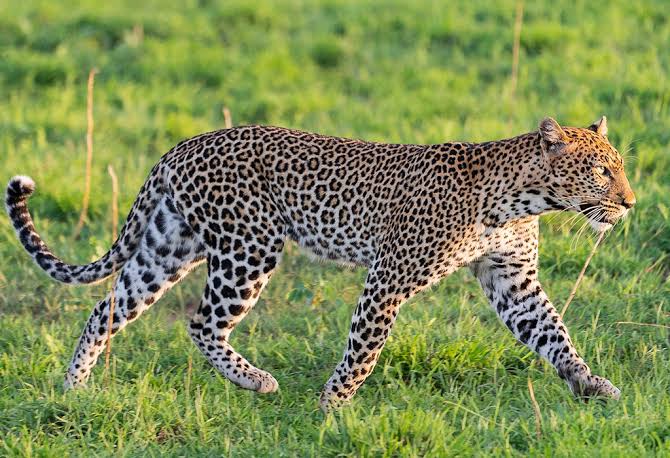
Murchison Falls National Park is one of Uganda’s most exciting destinations for wildlife lovers. The park is famous for its powerful waterfall, the Victoria Nile, large elephant herds, giraffes, buffaloes, Uganda kob and lions. However, another predator creates a very different kind of safari experience. The leopard is quiet, elusive and extremely difficult to predict. Tracking leopards in Murchison Falls National Park therefore requires patience, a good safari guide and realistic expectations. You may spend hours watching the savannah before a spotted shape appears beside the road. Then, within seconds, the leopard can disappear into tall grass or woodland. That uncertainty is part of what makes a leopard encounter so memorable.
Murchison Falls is also a particularly interesting place to search for leopards because recent research has confirmed that the species occurs there in meaningful numbers. A UWA-supported national large-carnivore survey examined leopards in the Nile Delta region of the park. Researchers worked for 59 days and recorded 99 leopard detections involving 27 individual animals. The study estimated a leopard density of 14.06 individuals per 100 square kilometres in the surveyed area. The researchers also noted that this was among the highest leopard densities recorded across the species’ range in Africa. Therefore, while seeing a leopard remains uncertain on any individual game drive, Murchison Falls is far more than a place where leopards appear only by chance. It is an important leopard landscape in Uganda.
Tracking Leopards in Murchison Falls Starts With Knowing the Park
Murchison Falls National Park covers about 3,840 square kilometres, making it Uganda’s largest national park. Its landscape includes open savannah, woodland, riverine habitats and forest patches. This variety creates different opportunities for wildlife, including predators such as leopards. The northern part of the park contains broad savannah plains with Borassus palms and acacia woodland. These open areas make many herbivores easier to find. Consequently, predators can also benefit from the concentration of prey. The Victoria Nile and the Nile Delta add another layer to the ecosystem because animals gather around water and productive habitats. For visitors, understanding this landscape helps explain why a skilled guide does not simply drive around looking randomly for a leopard. Instead, the guide reads the habitat and wildlife activity before deciding where to search.
The park’s geography also explains why visitors should allow enough time for wildlife viewing. A leopard does not follow a tourist schedule. It may rest during the hottest part of the day, move through cover or become active around dawn and dusk. UWA describes leopards as solitary and secretive animals that are difficult to see and even harder to photograph. Their spotted coats provide excellent camouflage, while their behaviour allows them to remain hidden from both prey and competing predators. As a result, tracking leopards in Murchison Falls is more about understanding animal behaviour than simply driving until you find a big cat.
Where to Look When Tracking Leopards in Murchison Falls
The Buligi Peninsula is one of the most important areas for game viewing in Murchison Falls National Park. UWA describes Buligi as the park’s prime game-viewing area. The peninsula consists of grassland bordered by the Victoria Nile, the Albert Nile and the Lake Albert area. Visitors can expect a wide variety of wildlife here, including elephants, buffaloes, antelopes and giraffes, while lions and leopards require a little more luck and patience. Older UWA conservation material also records leopard sightings around the Buligi circuit. Therefore, the area remains particularly relevant when planning a predator-focused game drive.
The Nile Delta deserves special attention. Recent leopard research focused specifically on this region and found 27 individual leopards during the survey. The researchers also described the Nile Delta as an important tourism area with high observed densities of large carnivores. That finding gives visitors a useful scientific reason to pay attention to the Delta rather than relying only on traditional game-drive routes. However, this does not mean every visitor will see a leopard there. Research density describes the population within a study area. It does not guarantee a sighting on a particular morning or afternoon. That distinction is important when planning an honest and responsible safari.
How Leopard Tracking Works on a Murchison Safari
Visitors sometimes imagine leopard tracking as a walking activity similar to chimpanzee tracking. That is not the normal leopard-viewing experience in Murchison Falls. In practical terms, tracking leopards in Murchison Falls usually means searching for them during a guided game drive. Your guide watches the road, vegetation, trees and surrounding plains while also listening to information from other guides and considering recent wildlife activity. The process requires observation. A leopard may leave tracks, move across a road, climb a tree, rest beneath vegetation or remain almost completely hidden. A good guide combines these small clues with knowledge of the animal’s preferred habitat.
This approach makes the guide a central part of the experience. An experienced Murchison guide knows where wildlife tends to concentrate and can recognize subtle signs that many first-time visitors would miss. The guide also understands how to position the vehicle without disturbing the animal. Safari O’clock can therefore make a major difference by planning predator-focused game drives with experienced guiding and by allowing enough time for patient wildlife observation. The goal should never be to promise a leopard sighting. Instead, the goal is to give visitors the best realistic opportunity while respecting the animal.
Why Leopards Are So Difficult to See
Leopards have several natural advantages that make them challenging to find. First, they are solitary animals. Unlike lions, which often live in prides, leopards generally move alone except during mating or when a mother is raising cubs. Second, their coats blend remarkably well with grass, shrubs, woodland and shadows. Third, they can remain hidden for long periods. UWA notes that leopards can rest in trees or caves and that their stealth and camouflage make them difficult to spot.
Their relationship with other predators also influences where and when they move. Leopards must compete with larger predators such as lions and spotted hyenas. UWA notes that lions can kill leopards, while hyenas may steal their kills. A leopard therefore benefits from being cautious. It may choose cover, avoid busy areas and move when conditions reduce the risk of confrontation. This behaviour makes a leopard sighting feel completely different from watching a large herd of buffalo or a group of elephants. You are often searching for a single animal rather than an obvious gathering of wildlife.
The Best Time for Tracking Leopards in Murchison Falls
There is no single month that guarantees leopard sightings. However, the dry seasons can make general wildlife viewing easier because animals often concentrate around reliable water and vegetation becomes less dense in some areas. UWA identifies June to August and December to February as dry-season periods that are generally favourable for wildlife viewing in Uganda’s savannah reserves.
Time of day also matters. Early morning game drives offer cool conditions and fresh wildlife activity. The late afternoon can also be productive as temperatures fall and many animals become more active. Leopards, however, do not follow a fixed timetable. You should therefore avoid treating morning or evening as a guaranteed leopard period. Instead, combine flexible timing with patience. Safari O’clock can build your Murchison itinerary around longer game-viewing opportunities so that you have more time to search without turning the experience into a rushed checklist.
What Leopard Tracks and Signs Can Tell You
One of the most fascinating parts of a predator-focused safari is learning to read the landscape. Leopard tracks can provide clues about recent movement. A guide may also look for signs of prey activity, disturbed vegetation or a carcass that could attract predators. A leopard may drag or carry prey into cover. It can also use trees as resting places or to protect food from competitors. These behaviours create opportunities for experienced guides to investigate.
However, visitors should understand that wildlife tracking is not an exact science. A track does not mean that a leopard is still nearby. Weather can erase footprints. Other animals can cross the same area. The leopard may also change direction. Therefore, the best guides combine tracks with broader observations. They consider time, weather, habitat, prey, recent sightings and the behaviour of other animals. This is why a quiet game drive can suddenly become exciting when the guide spots a small clue that visitors would otherwise overlook.
What to Expect When You Finally See a Leopard
A leopard sighting can last only a few seconds. You may first notice movement in the grass. Then the animal may step into the open, cross the road or climb onto a low branch. Sometimes the leopard simply lies under a bush and watches the vehicle. On other occasions, you may see one walking confidently across the savannah. Every encounter differs because the animal controls the situation.
Do not expect the leopard to pose for photographs. UWA describes the species as difficult to see and even harder to photograph. Its camouflage works against photographers because the animal can blend into the background remarkably well. If you spot one, remain calm and follow your guide’s instructions. Avoid sudden movements and unnecessary noise. Your guide may also reposition the vehicle carefully to give everyone a better view without crowding the animal.
Photography Tips for Leopard Tracking in Murchison Falls
Photographing a leopard requires patience as much as camera equipment. A long lens helps because the animal may remain some distance from the vehicle. However, equipment alone cannot create a good photograph. Light, background, animal position and timing matter just as much. Early morning and late afternoon can produce attractive natural light, while harsh midday sunlight can make exposure more difficult.
Keep your camera ready before the leopard becomes visible. If your equipment allows it, use a reasonably fast shutter speed because the animal may move suddenly. Focus on the eye whenever possible. The eyes often create the strongest connection in a wildlife photograph. At the same time, do not spend the entire encounter looking through the viewfinder. Put the camera down occasionally and enjoy the sighting itself. Safari memories are not measured only by the number of photographs on a memory card.
Tracking Leopards in Murchison Requires Patience
Patience is perhaps the most important skill for a leopard safari. You may find elephants within minutes. A herd of Uganda kob may appear across the plains. Giraffes may stand clearly against the horizon. Yet the leopard can remain invisible. That does not mean the game drive has failed.
A predator-focused safari should also teach you to appreciate the smaller signs of wilderness. Watch how antelopes react to movement. Notice alarm calls from birds. Observe where animals gather and where they avoid. Listen when your guide explains the tracks and vegetation. These details create a deeper understanding of the ecosystem. Then, when a leopard finally appears, you understand why the encounter required so much patience.
How Leopards Fit Into the Murchison Ecosystem
Leopards play an important role as predators within the Murchison ecosystem. They hunt a wide range of prey and can adapt to different habitats. UWA describes the species as highly adaptable and capable of living in environments ranging from forests to savannahs. Leopards can also climb well and may carry prey into trees.
This adaptability helps explain why Murchison can support them despite its changing landscapes. The park contains extensive savannah, woodland, riverine areas and forest patches. It also supports a large diversity of mammals. UWA currently lists 144 mammal species in Murchison Falls National Park, alongside 556 bird species, 51 reptiles and 51 amphibians. This biological richness creates a complex food web in which predators occupy an important ecological position.
Leopard Conservation in Uganda
Seeing a leopard on safari also means seeing part of Uganda’s wider conservation story. UWA’s 2026 State of Wildlife Resources report estimates approximately 328 leopards across Uganda, with the national population distributed among several protected areas, including Murchison Falls.
The species faces pressures across its range, including habitat loss, conflict and competition with people and other predators. Protected areas therefore provide essential space where leopards can survive and reproduce. Tourism contributes to this conservation system because visitors create economic value around protected landscapes. When travellers choose responsible operators such as Safari O’clock, their safari becomes more than a wildlife holiday. It becomes an opportunity to support Uganda’s protected areas and the communities connected to them.
Responsible Rules for Leopard Viewing
Responsible wildlife viewing protects both visitors and animals. Never ask a driver to chase a leopard for a better photograph. Do not encourage a guide to leave designated routes or drive aggressively toward an animal. Avoid shouting, feeding wildlife or making unnecessary noise. UWA’s Murchison guidelines prohibit feeding wildlife and hooting, while the park’s general speed limit is 40 km/h.
Vehicle positioning also matters. A leopard needs space to behave naturally. If several vehicles gather around an animal, the experience can quickly become stressful for both the leopard and other wildlife. Safari O’clock believes that a memorable encounter should also be a respectful encounter. Give the animal room, follow park regulations and allow other visitors a fair opportunity to observe it.
What to Pack for a Leopard Safari
You do not need specialist equipment to enjoy leopard viewing. Comfortable neutral-coloured clothing, sunglasses, sunscreen, a hat and a light jacket can make game drives more comfortable. Binoculars are extremely useful because a leopard may appear far away or remain partly hidden. A camera with a telephoto lens can help photographers, but even a phone can capture a memorable record when the animal comes close enough.
Carry enough water and keep personal items secure inside the vehicle. Dust can become significant on some game tracks, particularly during dry periods. A small cloth can help protect camera equipment. Most importantly, bring patience. A leopard safari rewards visitors who remain alert and willing to spend time looking at the landscape rather than expecting instant sightings.
How Safari O’clock Can Plan a Leopard-Focused Murchison Safari
Safari O’clock can design a Murchison Falls itinerary around your interest in predators while still giving you the complete park experience. A good plan should not focus on leopards alone. Murchison offers far more. You can combine early-morning game drives with the Victoria Nile boat cruise, search for elephants, giraffes, buffaloes, Uganda kob and lions, and then explore the dramatic Murchison Falls.
The timing of your game drives can also remain flexible. If your main priority is photography and predators, Safari O’clock can allow longer periods for patient game viewing rather than rushing from one attraction to another. Your guide can also adjust the route according to wildlife activity and current conditions. Most importantly, we explain the difference between a realistic wildlife opportunity and a guaranteed sighting. That honesty helps travellers enjoy the safari for what it truly is: a journey into a living ecosystem.
Is Tracking Leopards in Murchison Falls Worth It?
Absolutely. Tracking leopards in Murchison Falls offers one of the most rewarding challenges for visitors who enjoy wild predators. The park has confirmed leopard populations, and recent research found particularly high leopard density in the Nile Delta study area. Yet the animal remains secretive enough to keep every game drive unpredictable.
The best approach is to travel with patience and curiosity. Do not measure the safari only by whether a leopard appears. Learn how guides read tracks. Watch the behaviour of Uganda kob and other antelopes. Study the trees and vegetation. Listen for alarm calls. Enjoy the elephants, giraffes, buffaloes, lions and birds that share the same landscape. Then, if a leopard suddenly emerges from the grass, you will understand why the moment feels so special.
Frequently Asked Questions About Tracking Leopards in Murchison Falls
Can visitors see leopards in Murchison Falls?
Yes. Leopards occur in Murchison Falls National Park, and UWA lists the park among Uganda’s destinations where visitors can see them. Recent large-carnivore research also documented 27 individual leopards in the Nile Delta study area.
Where are leopards most likely to be seen in Murchison Falls?
The Buligi area has a long history of leopard sightings and remains one of the park’s major game-viewing areas. The Nile Delta is also especially important because recent research recorded a high leopard density there.
Is leopard tracking a walking activity?
No. Visitors normally search for leopards during guided game drives. This differs from activities such as chimpanzee tracking, where visitors walk through forest habitat with specialist guides.
What is the best time to see a leopard?
There is no guaranteed time. Early morning and late afternoon can provide good wildlife-viewing conditions, while dry seasons can make general savannah wildlife viewing easier. However, leopards remain unpredictable, so patience matters more than relying on a particular hour.
Can I photograph a leopard?
Yes, but photography can be challenging. Leopards often stay far away, move quickly or blend into vegetation. A telephoto lens helps, but good timing and patience are equally important.
Are leopard sightings guaranteed with Safari O’clock?
No responsible safari company should guarantee a wild leopard sighting. Safari O’clock can increase your chances through good planning, experienced guiding and sufficient game-drive time, but wildlife remains unpredictable.
Can a leopard climb trees?
Yes. Leopards are excellent climbers and can use trees for resting and sometimes to keep prey away from competing predators. This behaviour can create memorable photographic opportunities when conditions allow.
Why are leopards harder to see than lions?
Leopards are generally solitary, secretive and well camouflaged. Lions often occur in groups, which makes them easier to detect across open savannah. Leopards can remain hidden in vegetation or woodland for long periods.
Should I choose Murchison Falls if leopards are my main safari interest?
Murchison Falls is a strong choice, particularly because recent research recorded a high leopard density in the Nile Delta region. However, visitors who want a broader predator experience should also enjoy the park’s lions, hyenas and abundant prey species.
Final Thoughts on Tracking Leopards in Murchison Falls
A leopard safari in Murchison Falls is not about chasing a rare animal. It is about learning to slow down and observe. The leopard rewards patience, careful guiding and respect for the wilderness. Murchison’s huge landscapes give these predators room to move, while its abundant wildlife provides the ecological foundation they need.
For visitors travelling with Safari O’clock, the experience should go beyond simply ticking “leopard” off a wildlife list. We want travellers to understand the animal, appreciate the ecosystem and leave Uganda with a deeper respect for conservation. When the spotted coat finally appears between the grasses or beneath a tree, the excitement comes from knowing that you did not manufacture the encounter. You simply entered the leopard’s world, waited patiently and were fortunate enough to witness it.