- DIRECT CONTACTS:
- +256394517569
- tours@safarioclock.africa

Capturing Gorilla Family Interactions Respectfully

How to Photograph Gorilla Portraits Without Disturbing Wildlife
November 11, 2026
How to Keep Your Camera Dry During a Rainy Trek
November 11, 2026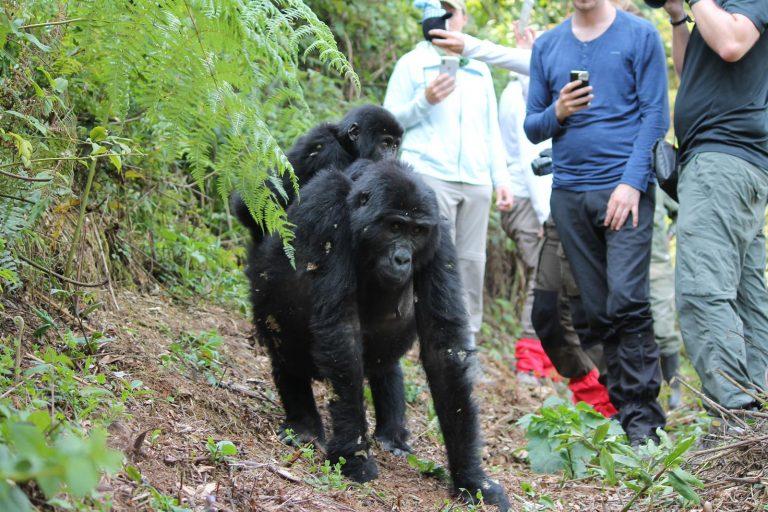
A mountain gorilla encounter offers more than an opportunity to see an endangered animal in the wild. It gives visitors a rare chance to observe the relationships and daily activities that take place within a gorilla family. A young gorilla may play with its siblings. An adult female may groom another family member. Meanwhile, an infant may remain close to its mother as the group rests or moves through the forest.
These moments reveal the social lives of mountain gorillas. They also create memorable photography opportunities for visitors. However, capturing these experiences requires patience, respect and responsible behaviour.
At Safari O’clock, we believe that responsible gorilla tracking involves appreciating wildlife without interfering with its natural activities. Visitors should remember that they are guests in the gorillas’ habitat. Their cameras must never become a reason to disturb the animals.
This guide explores how to capture gorilla family interactions respectfully while protecting the welfare of these remarkable primates.
Understanding Mountain Gorilla Family Interactions
Mountain gorillas live in social groups commonly known as families. These groups often include a dominant silverback, adult females, young gorillas and infants. However, family composition can change over time as individuals mature, transfer between groups or leave their natal families.
Each gorilla has its own personality and social relationships. Some individuals spend considerable time close to particular family members. Others may prefer to rest, feed or move independently for periods.
Researchers have documented strong social relationships among mountain gorillas. A 2024 study published in Animal Behaviour examined relationships between female mountain gorillas. It found that many females maintained preferred social relationships over several years. These findings show that gorilla families have complex social connections that extend beyond simply living in the same group.
For visitors, observing these relationships can make a trek especially meaningful. Instead of focusing only on individual gorillas, travellers can appreciate how different members interact naturally.
Safari O’clock encourages visitors to approach every encounter with curiosity and respect. Understanding gorilla behaviour helps travellers appreciate what they see without expecting the animals to perform for the camera.
Gorilla Family Interactions Worth Observing
Mountain gorillas display several social behaviours during their daily activities. Some are easy to recognise, while others require careful observation. Visitors should never assume that every behaviour has an obvious meaning. However, watching these interactions can offer valuable insight into gorilla family life.
1. Grooming Between Family Members
Grooming is one of the most interesting gorilla family interactions to observe. It involves one gorilla carefully inspecting and cleaning another’s fur. The animal may use its fingers to remove dirt, loose material or small insects.
Grooming can contribute to hygiene and social relationships. It also provides an opportunity for individuals to spend time close to one another. Researchers have documented grooming and other affiliative behaviours among mountain gorillas.
When two gorillas groom each other, visitors may capture a beautiful photograph of their relationship. A close observation can reveal the attention and patience involved in this behaviour.
However, photographers should avoid moving closer to improve their pictures. They should use the permitted viewing position and follow the guide’s instructions throughout the encounter.
2. Young Gorillas Playing Together
Play is another fascinating part of mountain gorilla family life. Young gorillas may chase one another, wrestle gently, climb around vegetation or engage in playful movements.
These activities can provide opportunities for young gorillas to develop physical coordination and social skills. Through play, they interact with other group members and explore their surroundings.
A playful moment can happen quickly. One young gorilla may approach another before both begin chasing each other through the vegetation. Therefore, photographers need patience and should be ready without trying to influence the activity.
It is also important to remember that gorilla play does not happen on demand. Some young gorillas may spend much of the observation period resting or feeding. Safari O’clock encourages travellers to appreciate these quieter moments as part of the experience.
3. Mothers Caring for Their Infants
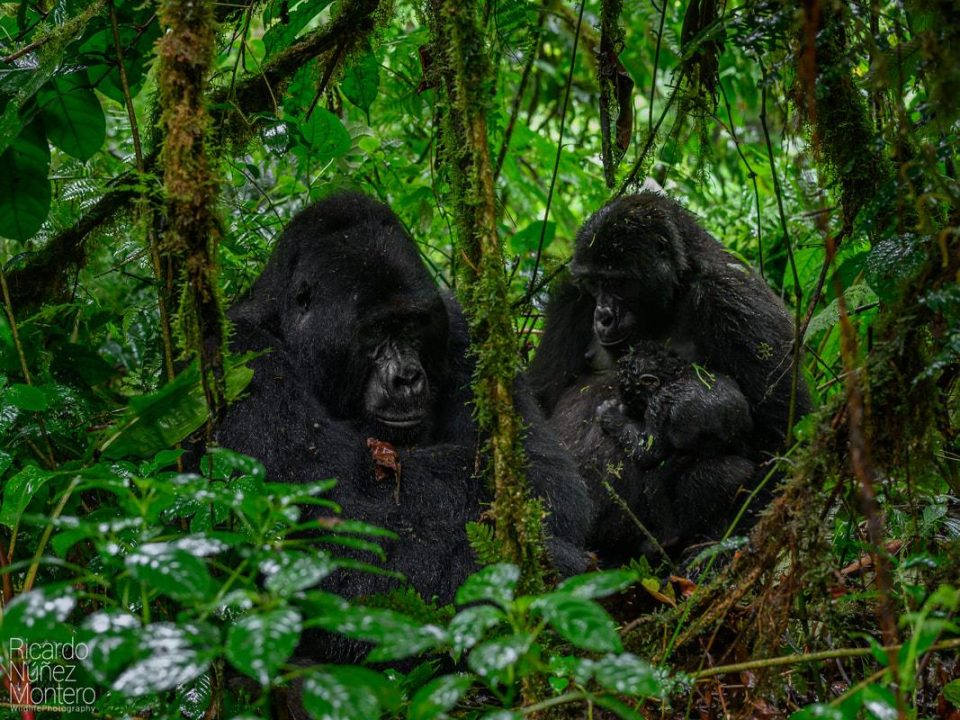
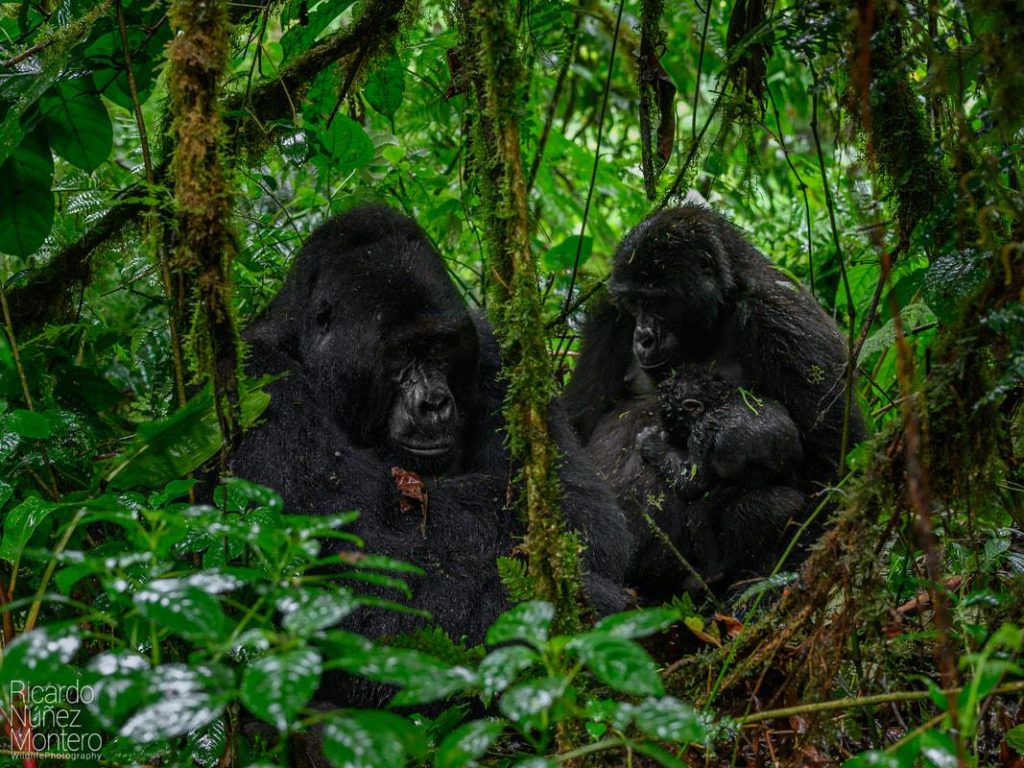
Maternal care offers some of the most touching moments during a gorilla encounter. Mother gorillas carry, nurse and protect their infants. Young gorillas often remain close to their mothers, especially during their early development.
Visitors may observe an infant resting against its mother, nursing or moving around her. They may also notice the mother adjusting her position as the infant changes its activity.
These moments are natural family interactions. They should never become an excuse for visitors to approach the animals or attempt to attract an infant’s attention.
Researchers have also studied infant handling by other female mountain gorillas. A study based on observations from groups in Rwanda found that such handling occurred relatively infrequently. This shows that infant care and social contact involve behaviours that researchers continue to investigate.
Photographers should therefore avoid making assumptions about relationships based only on a brief encounter. The best approach is to observe quietly and allow the animals to continue their activities.
4. Silverbacks Interacting with Other Family Members
The silverback often plays an important role in the social organisation of a mountain gorilla group. He may travel with the family, rest near other members and respond to different situations within the group.
Visitors may observe a silverback sitting while younger gorillas play nearby. They may also see him feeding, moving through the vegetation or interacting with other adults.
However, a silverback does not spend every moment directing the family. Other members also make decisions about feeding, resting and moving through the forest.
A respectful photograph should capture his natural behaviour rather than present him as an animal performing for visitors. Photographers should also avoid movements or actions intended to attract his attention.
5. Resting and Sitting Close Together
Not every meaningful interaction involves movement. Sometimes, several gorillas rest close to one another. A mother may sit with her infant, while other family members settle nearby.
These quiet moments can reveal the comfort and social connections that exist within a group. They also provide opportunities for photographers to capture natural family compositions.
Instead of waiting for dramatic action, visitors can appreciate the peaceful atmosphere. A photograph of gorillas resting together can communicate just as much about family life as an image of young animals playing.
How to Photograph Gorilla Family Interactions Respectfully
Capturing natural gorilla behaviour requires more than a good camera. Visitors must understand the rules, prepare their equipment and remain aware of the animals’ comfort.
The following practices can help photographers create meaningful images without interfering with the gorillas.
1. Maintain the Required Viewing Distance
Distance is one of the most important parts of responsible gorilla photography. Visitors must follow the rules established by the wildlife authority managing the park.
For example, Rwanda Development Board guidance requires visitors to maintain at least seven metres from mountain gorillas. Uganda Wildlife Authority’s July 2024 tracking guidelines specify a minimum distance of ten metres. Visitors should always follow the current instructions given by the relevant authority and their guides.
This distance helps reduce the risk of disease transmission and limits unnecessary disturbance. It also reminds visitors that gorillas are wild animals, not photography subjects that people can approach freely.
A longer camera lens can help photographers capture details without moving closer. However, equipment must never become an excuse to ignore park rules.
Safari O’clock encourages travellers to understand destination-specific guidelines before their trek. Responsible photography begins with respecting the space that gorillas need.
2. Use Natural Light Instead of Flash
Flash photography is not permitted during gorilla tracking. A sudden burst of light can disturb the animals and interfere with the natural viewing experience.
Fortunately, visitors can take photographs using available forest light. Before the trek, they should learn how to adjust their camera settings for shaded conditions.
Increasing the ISO may help when the forest is dark. A suitable shutter speed can also reduce motion blur. However, the best settings depend on the camera, lens and lighting conditions.
Photographers should practise these adjustments before arriving at the park. This reduces the need to spend valuable viewing time struggling with camera controls.
3. Be Patient and Avoid Directing the Animals
Wildlife photography requires patience. Gorillas may move, rest, feed or interact with one another without following any predictable schedule.
Visitors should never clap, shout, imitate gorilla sounds or make sudden movements to attract attention. They must not throw objects or encourage animals to move into better photographic positions.
These actions interfere with natural behaviour and can create unnecessary stress.
Instead, wait for opportunities to develop naturally. A young gorilla may begin playing without warning. Two adults may start grooming while the rest of the group rests.
The best photographs often come from observing carefully rather than trying to control the scene.
4. Focus on Natural Behaviour Rather Than Perfect Poses
A photograph does not need to show a gorilla looking directly into the camera to be meaningful. In fact, natural behaviour often tells a more interesting story.
For example, a picture of a mother caring for her infant may communicate family bonds. An image of two young gorillas playing can show their curiosity and energy.
Photographers can also capture grooming, resting and feeding activities. These images help tell a broader story about the gorillas’ daily lives.
Safari O’clock encourages visitors to value genuine wildlife moments. The aim should be to document what happens naturally, not to create a scene for social media.
5. Keep Movements Slow and Voices Low
Mountain gorillas are sensitive to their surroundings. Visitors should avoid shouting, sudden movements and unnecessary noise.
When taking photographs, move carefully and remain in the position selected by the guide. Do not push through vegetation or change positions without permission.
If a gorilla approaches, follow the guide’s instructions. Do not attempt to touch it, move towards it or take a closer photograph.
A quiet visitor allows the family to continue its activities with less interference. This also helps everyone in the group enjoy the encounter.
6. Respect the Limited Viewing Time
Gorilla tracking visits have strict time limits. Rwanda’s official guidance limits the viewing period to one hour. Uganda’s tracking guidelines also provide for a one-hour visit.
This short period makes preparation especially important. Visitors should check their cameras, batteries and memory cards before entering the forest.
They should also avoid spending the entire encounter looking through a camera screen. Taking a few meaningful photographs is valuable, but observing the animals directly creates a deeper connection with the experience.
Remember that the gorillas’ welfare comes before photography. If guides decide to end the encounter early, visitors must respect that decision.
Choosing the Right Camera Equipment for Gorilla Family Interactions
The right equipment can make wildlife photography easier. However, visitors do not need the most expensive camera to capture meaningful memories.
A camera with reliable autofocus and good performance in low light can be useful in forest conditions. A versatile zoom lens also helps photographers adjust their composition without moving closer to the gorillas.
A telephoto lens may be useful for capturing facial expressions and details from the permitted viewing distance. Nevertheless, photographers should choose equipment that they can operate comfortably.
Smartphones can also capture good photographs when lighting and viewing conditions allow. Visitors should avoid using digital zoom excessively because it can reduce image quality.
Before the trek, travellers should charge their batteries and carry enough memory space. They should also protect their equipment from rain and moisture.
Safari O’clock recommends practising with your chosen camera before the journey. Knowing how to focus, adjust exposure and change settings can save time during the encounter.
Understanding Gorilla Body Language Without Making Assumptions
Observing gorilla family interactions can be exciting, but visitors should avoid interpreting every movement as a clear message.
For example, a gorilla sitting quietly may simply be resting. A young animal running around may be playing. Another individual may move away because it wants to feed or find a comfortable resting place.
Some behaviours can have different meanings depending on the situation. Therefore, visitors should not assume that every movement shows happiness, anger, affection or fear.
Guides and researchers have more experience interpreting gorilla behaviour. Visitors can learn from their explanations while remembering that a short encounter cannot reveal everything about an animal’s social relationships.
A responsible photographer records what is visible without inventing a story. This makes wildlife photographs more honest and respectful.
Why Responsible Photography Matters for Gorilla Conservation
Mountain gorillas face several conservation challenges. These include habitat pressure, disease risks and the effects of human activity around their forest homes.
Responsible tourism helps create opportunities for people to appreciate these animals while supporting the protection of their habitat. However, tourism must operate under clear rules that put animal welfare first.
Research in Bwindi Impenetrable National Park has examined how tourist presence and proximity can influence gorilla behaviour. One study reported changes in social behaviour during tourist visits, including differences in proximity and affiliative activities. The researchers highlighted the importance of enforcing visitor guidelines and maintaining appropriate distances.
This research reminds visitors that their presence can influence wildlife. Even when gorillas appear calm, people should not assume that every close encounter is harmless.
Respectful photography supports responsible tourism in several ways. It reduces pressure on animals, encourages visitors to follow park rules and promotes a more accurate understanding of wildlife.
Safari O’clock encourages travellers to share photographs that promote conservation awareness. Images should celebrate gorillas in their natural environment without encouraging unsafe or disrespectful interactions.
Sharing Gorilla Family Interactions Responsibly Online
Many travellers enjoy sharing their gorilla trekking experiences on social media. Photographs can inspire others to learn about mountain gorillas and visit protected areas responsibly.
However, the way people share wildlife images also matters.
Avoid publishing photographs that make it appear acceptable to touch, approach or feed gorillas. Do not encourage followers to imitate unsafe behaviour. Images should also avoid misleading captions that suggest gorillas pose for visitors or welcome close human contact.
When sharing photographs, explain that the encounter took place under strict park rules. You can also include a message about habitat protection, responsible tourism and the importance of following ranger instructions.
This approach helps turn personal travel memories into useful conservation messages.
Safari O’clock believes that responsible travel stories should inspire appreciation rather than encourage wildlife disturbance.
How Safari O’clock Encourages Respectful Gorilla Encounters
A successful gorilla trek involves preparation, responsible guidance and respect for wildlife. Travellers should understand the park rules before arrival and remain willing to follow instructions throughout the experience.
Safari O’clock encourages visitors to prepare for the physical demands of trekking and understand the importance of responsible behaviour. This includes maintaining the required distance, avoiding flash photography, keeping voices low and respecting the limited viewing period.
We also encourage travellers to appreciate more than the photographs they take. Watching a mother care for her infant, observing young gorillas play or seeing family members groom one another can make the experience truly memorable.
The forest is not a photography studio. It is a living habitat where gorillas must remain free to feed, rest, move and interact naturally.
By choosing responsible travel practices, visitors can enjoy meaningful encounters while respecting the animals and the people who protect them.
Conclusion: Let Gorilla Family Interactions Remain Natural
Capturing gorilla family interactions respectfully requires patience, preparation and a genuine appreciation for wildlife. Grooming, play, maternal care and quiet moments together reveal the social lives of mountain gorillas.
However, visitors must never interfere with these activities to obtain better photographs. Maintaining the required distance, avoiding flash, moving carefully and following guide instructions are essential parts of responsible tracking.
A memorable photograph should represent a natural moment, not an activity created by human interference.
With Safari O’clock, travellers can approach gorilla tracking with a stronger understanding of wildlife etiquette and conservation. The greatest achievement is not simply returning home with beautiful photographs. It is knowing that the encounter respected the gorillas and their natural environment.