- DIRECT CONTACTS:
- +256394517569
- tours@safarioclock.africa

Understanding Mountain Gorilla Family Structure Before You Trek in Rwanda

Last-Minute Packing Checks Before Leaving for Kinigi, Rwanda
November 24, 2026
The Role of a Silverback in a Mountain Gorilla Family
November 24, 2026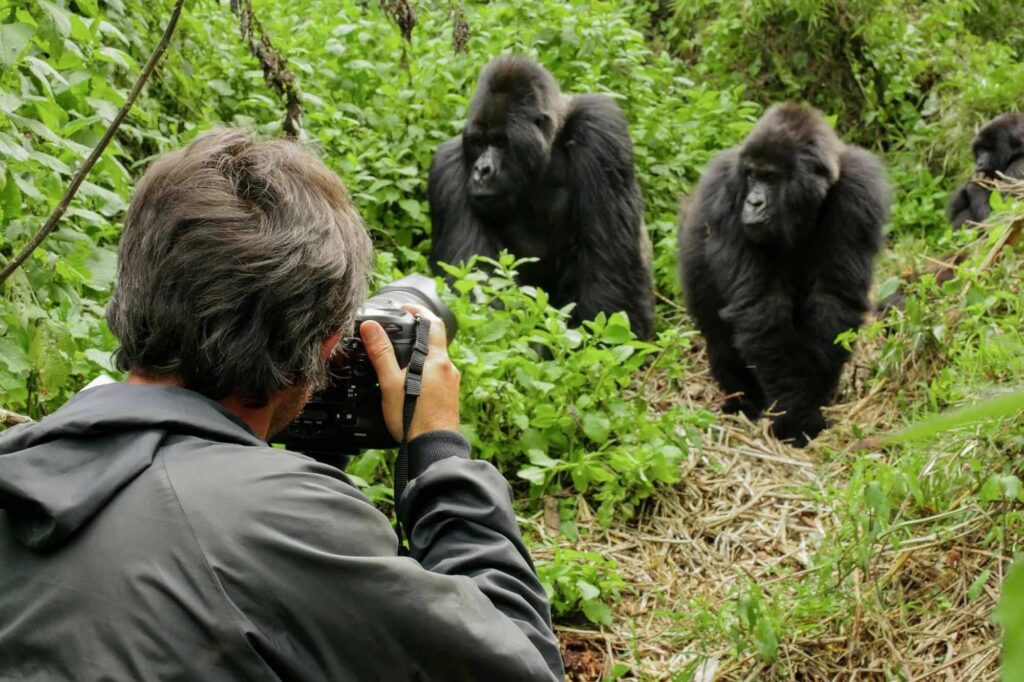
Seeing mountain gorillas in their natural habitat is one of the most memorable wildlife experiences in Rwanda. Visitors often look forward to meeting a powerful silverback, watching playful infants and observing the group as it moves through the forest. However, understanding how these animals live together makes the experience even more special.
Mountain gorillas are highly social animals. They usually live in family groups with adult males, females and young offspring. Each individual contributes to the group’s social relationships and daily activities. Although the silverback often provides leadership and protection, the entire family has an important place within the group.
Before visiting Volcanoes National Park, it helps to understand these relationships. You will recognise different age groups, appreciate their behaviour and understand why guides ask visitors to remain quiet and respectful.
At Safari O’clock, we believe responsible travel begins with knowledge. This guide explores mountain gorilla family structure, the role of each member and what visitors should know before meeting these remarkable animals.
How Mountain Gorilla Families Are Organised
Mountain gorillas live in social groups commonly called families or troops. A typical group contains a dominant silverback, adult females and their young. Some groups also include additional adult males and younger males.
However, not every family has the same number of members. Some groups are relatively small, while others contain more than twenty gorillas. Their composition can also change as individuals mature, move between groups or establish new social relationships.
Research in Rwanda shows that mountain gorilla groups can contain several adult males. These males may have different social positions within the same family. The dominant silverback usually holds the leading position, while subordinate males remain part of the group.
The group also includes females at different stages of life. Some care for infants, while others have older offspring or may be preparing to reproduce.
Therefore, a gorilla family is more than a collection of animals living together. It is a social community built around relationships, protection, reproduction and cooperation.
The Silverback: The Leader of Mountain Gorilla Families
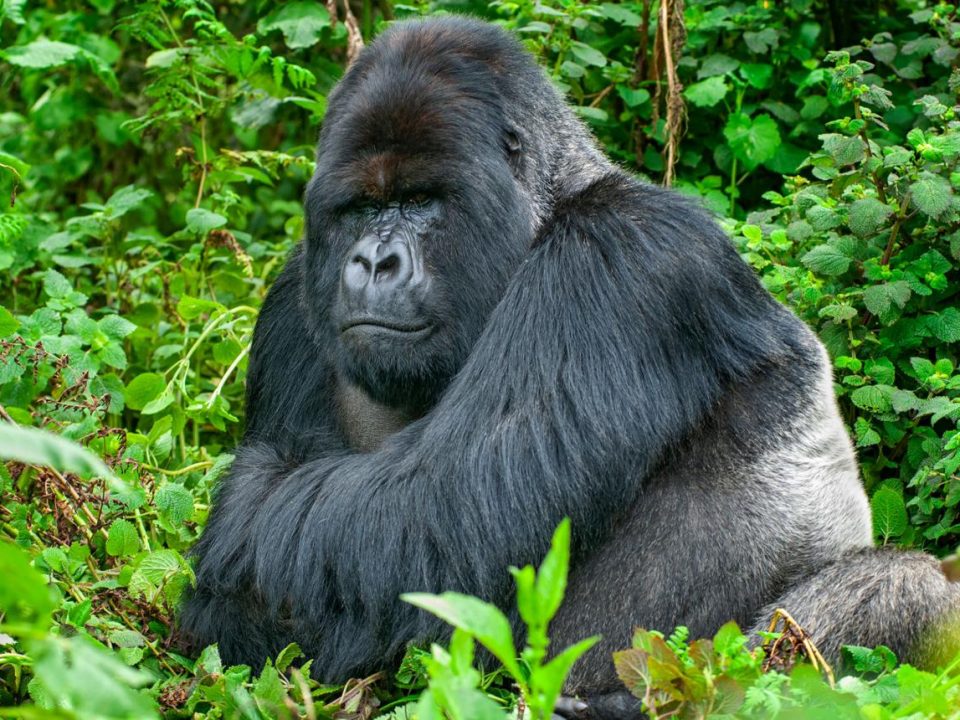
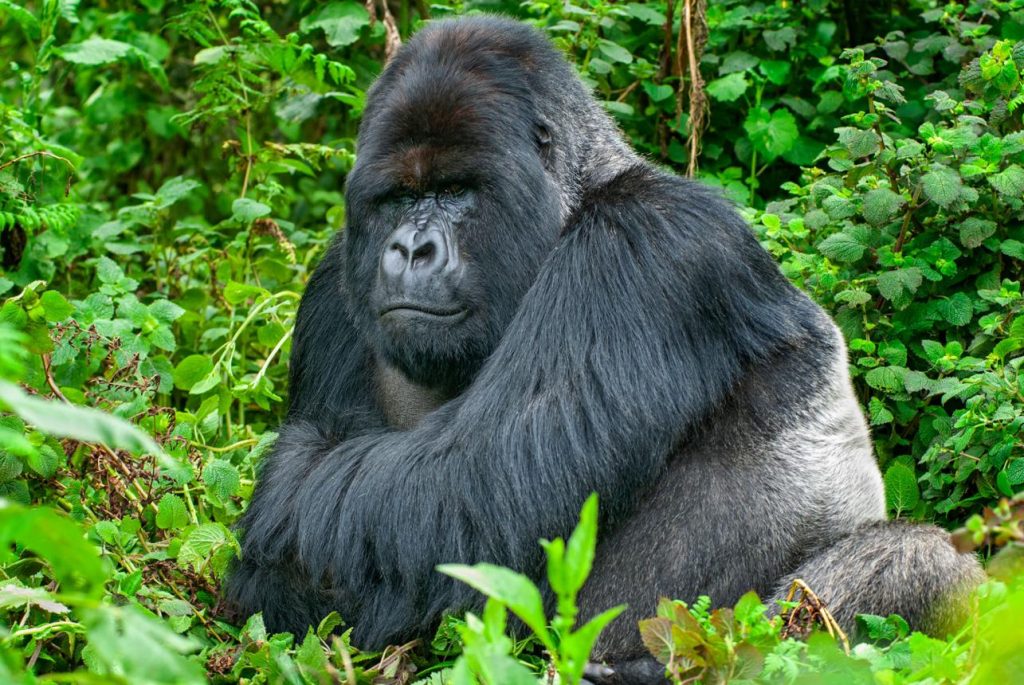
The silverback is usually the most recognisable member of a mountain gorilla family. He is a mature male whose back develops a distinctive silver-grey patch as he grows older.
A male gorilla generally develops this colouring around maturity, often from approximately twelve years of age. The silver hair makes him easier to distinguish from younger blackback males.
In many groups, the dominant silverback leads the family. He influences its movements, helps maintain group stability and responds to potential threats. His presence can also provide protection for females and young gorillas.
The silverback may use different sounds, movements and displays to communicate. For example, he may beat his chest, vocalise or display his strength when responding to a challenge.
However, chest beating does not always mean aggression. Gorillas use it as part of their communication, and visitors should allow their guide to interpret what is happening.
It is also important to understand that the dominant silverback is not necessarily the biological father of every infant in the group. Gorilla families can have complex reproductive histories, especially when several adult males live together.
Adult Females and Their Role in Gorilla Families
Adult females play an important role in maintaining the social life of mountain gorilla families. They give birth, care for their young and develop relationships with other members of the group.
Female gorillas often move between social groups during their lives. This movement helps them find reproductive opportunities and reduces the risk of mating with close relatives.
When a female joins a new family, she gradually becomes part of its social structure. Her relationships with the dominant male and other females can influence how she settles into the group.
Motherhood also requires significant attention. Female gorillas carry their infants, feed them and protect them during their early development.
Visitors may notice females resting with their young, grooming other members or moving through the vegetation together. These ordinary activities reveal the close relationships that exist within the family.
At Safari O’clock, we encourage visitors to look beyond the silverback. Observing the females provides another perspective on how gorilla families function.
Infants: The Youngest Members of Mountain Gorilla Families
Gorilla infants are often among the most exciting members for visitors to observe. Their small size, playful movements and close relationship with their mothers make them especially interesting.
During the early months of life, an infant depends heavily on its mother. It stays close to her body and relies on her for feeding, warmth and protection.
As the infant grows, it begins to explore its surroundings. It may play with other young gorillas, climb vegetation and interact with different family members.
These activities help the young animal develop physical skills and social relationships. However, the mother remains an important source of security.
The dominant silverback may also interact with infants. He can provide a protective presence and may tolerate young gorillas resting or playing near him.
Visitors should remember that infants are vulnerable. Never attempt to approach, touch or attract their attention. Allow the mother and other family members to move naturally.
Juveniles and Young Gorillas Learning Social Behaviour
Juveniles are older than infants but have not yet reached adulthood. They are often energetic and curious, making them interesting to watch during a trek.
At this stage, young gorillas spend more time exploring their surroundings. They may play, climb, chase one another and practise behaviours they observe in older group members.
Play is important because it helps juveniles develop coordination and social skills. Through these interactions, they learn how to communicate and respond to other gorillas.
They also observe adult behaviour. For example, they may watch how older individuals groom one another, move through the forest or respond to social tension.
Some juveniles stay close to their mothers, while others become more independent as they grow.
If you are lucky, you may see young gorillas playing during your visit. However, their behaviour varies, and they may spend much of the encounter resting or feeding.
Blackbacks: The Younger Adult Males
Blackbacks are younger adult male gorillas that have not yet developed the full silver-grey saddle of a mature silverback.
They occupy an interesting stage in the family structure. Some remain in their birth groups and live under the authority of the dominant silverback. Others eventually leave and may spend time alone.
A blackback that stays in the group can become a subordinate male. He may develop relationships with other family members and, depending on the group, contribute to its social stability.
Other males eventually become solitary. They may later attract females and establish their own social groups.
This process is part of the natural development of mountain gorilla populations. It also explains why family membership can change over time.
During a trek, you may notice younger males moving near the dominant silverback or resting separately. Your guide can help you understand their position within the group.
Can a Mountain Gorilla Family Have More Than One Silverback?
Yes. Some mountain gorilla families contain more than one adult silverback. These groups are known as multi-male groups.
In such families, one male usually holds the dominant position. Other adult males may remain subordinate, although they still have their own relationships and influence within the group.
Research by the Dian Fossey Gorilla Fund has documented large multi-male families in Rwanda. These groups show how complex gorilla social relationships can become.
The presence of several adult males does not mean that the group lacks leadership. Instead, the males maintain a social hierarchy that can change with age, strength and individual relationships.
Younger males may challenge the established order as they mature. In some situations, a subordinate male may eventually leave and form a separate group.
This flexibility helps explain why researchers continue monitoring gorilla families over many years. Their social structure is not fixed.
Do All Mountain Gorilla Families Have the Same Structure?
No. Mountain gorilla families differ in size, age composition and the number of adult males they contain.
Some groups have one dominant silverback, several females and their offspring. Others contain additional silverbacks and younger males.
The number of infants also changes over time. New births increase the group, while deaths and transfers can reduce or alter its membership.
Female movement between groups also affects family composition. A female may leave her birth group and join another family during her lifetime.
Furthermore, some males spend time alone rather than living in a family group. These solitary males may later establish their own groups by attracting females.
For this reason, visitors should avoid expecting every gorilla family to look the same. Each group has its own history and social relationships.
How Mountain Gorilla Families Communicate and Interact
Gorillas communicate through sounds, facial expressions, body movements and physical contact. These signals help them maintain relationships and respond to different situations.
Grooming is one example of social interaction. Gorillas may groom one another to remove dirt and parasites from their fur. It can also strengthen social bonds.
Play is another important activity, especially among younger members. Infants and juveniles may wrestle gently, chase one another or climb around nearby vegetation.
Gorillas also use vocalisations to communicate. Different sounds may signal interest, reassurance, warning or discomfort.
Chest beating is one of the best-known behaviours. Males may use it during displays of strength or communication. However, it does not automatically indicate that a gorilla intends to attack.
Visitors should not imitate gorilla sounds or movements. Instead, remain quiet and allow the animals to behave naturally.
Your guide will explain interesting interactions while ensuring that visitors follow the park’s conservation rules.
What Happens When a Gorilla Family Changes?
Mountain gorilla families can change as individuals grow, move or form new relationships. These changes are part of their natural social development.
For example, young males may leave their birth groups as they mature. Some spend time alone before attracting females and establishing a new family.
Females may also transfer between groups. This movement helps maintain genetic diversity and reduces the risk of close-relative mating.
A group may also divide into separate units. This process is known as group fission. It can happen when social relationships change or subordinate males establish their own groups with some females.
The death or departure of a dominant silverback can also affect family stability. Depending on the group, females may join other males, and the original group may reorganise or split.
Researchers monitor these changes closely. Long-term observations help conservation teams understand individual gorillas, family relationships and population development.
What Visitors Should Observe During a Gorilla Trek
Understanding gorilla family structure helps you appreciate more than the animals’ physical appearance. It also encourages you to observe their natural relationships.
During your visit, you may notice the silverback resting near other group members. You might also see females caring for infants or juveniles playing nearby.
Look for grooming, feeding, resting and movement within the family. These ordinary behaviours provide useful insight into how the group spends its day.
However, remember that every encounter is different. Some families may be active, while others may spend much of the viewing period resting or feeding.
You should never try to create an interaction. Avoid calling the gorillas, touching them or moving closer for a photograph.
Follow your guide’s instructions throughout the encounter. Keep your voice low, avoid flash photography and maintain the required distance. Rwanda’s current visitor guidance also limits the viewing period and the number of visitors allowed with a gorilla group.
Why Understanding Mountain Gorilla Families Makes Your Trek More Meaningful
Learning about gorilla family relationships changes the way you experience the forest. Instead of focusing only on the largest male, you begin to notice the entire group.
You may appreciate the bond between a mother and her infant. You may also notice how juveniles learn through play and how the dominant silverback responds to other family members.
These observations help visitors understand why mountain gorillas need protection. Their survival depends on healthy habitats, stable social relationships and effective conservation efforts.
Responsible tourism also supports conservation. Gorilla trekking permits contribute to the management and protection of protected areas. Tourism can also create economic opportunities for communities living near national parks.
Safari O’clock encourages visitors to approach gorilla trekking with respect and curiosity. Understanding the animals before meeting them makes the experience more educational and rewarding.
Explore Rwanda’s Mountain Gorilla Families With Safari O’clock
Mountain gorilla families are fascinating because every member contributes to the group’s social life. The silverback provides leadership, females raise their young, and younger gorillas develop through play and interaction.
However, no two families have exactly the same composition. Their membership changes over time as gorillas mature, transfer between groups and establish new social units.
Before your trek, take time to learn about these relationships. It will help you recognise different members and appreciate the behaviours you observe in the forest.
Safari O’clock helps travellers plan memorable Rwanda gorilla trekking experiences. We encourage responsible wildlife viewing and help visitors prepare for the unique experience of meeting mountain gorillas in their natural habitat.
When you finally meet a gorilla family, remember that you are entering their home. Observe quietly, respect their space and allow them to continue their natural activities.