- DIRECT CONTACTS:
- +256394517569
- tours@safarioclock.africa

The Role of a Silverback in a Mountain Gorilla Family

Understanding Mountain Gorilla Family Structure Before You Trek in Rwanda
November 24, 2026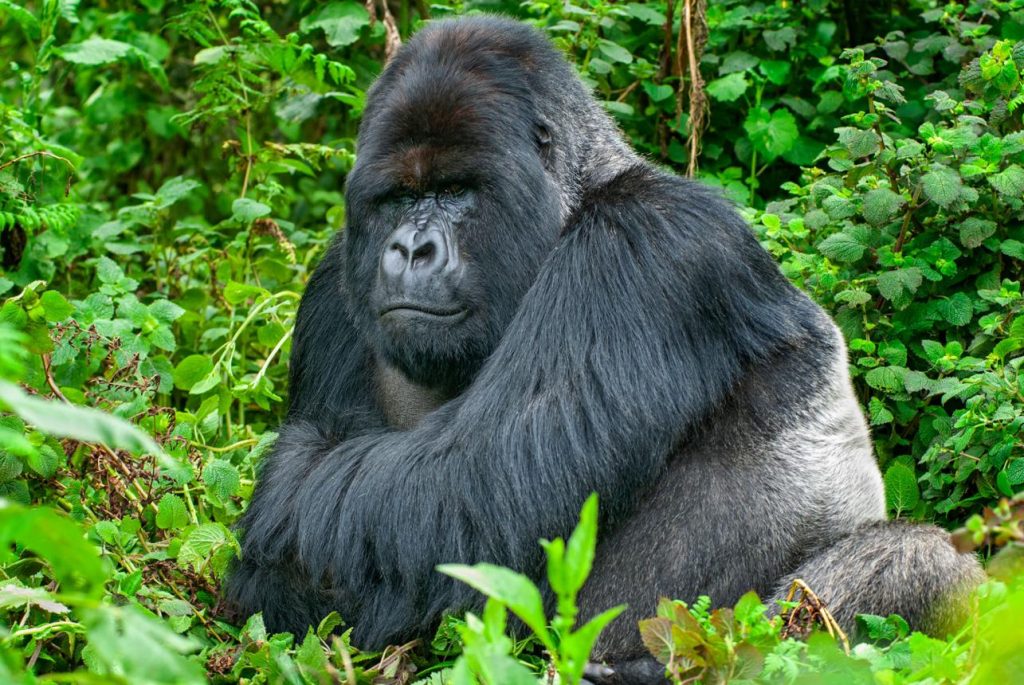
Mountain gorillas are famous for their strength, intelligence and close family bonds. However, one member often plays a central role in keeping the family together: the silverback. His presence influences the group’s movements, safety and social relationships.
A silverback is a mature male mountain gorilla. He gets his name from the distinctive silver-grey hair that develops across his back as he matures. In many mountain gorilla families, the dominant silverback serves as the group’s main leader. He helps guide daily activities, responds to threats and maintains social order.
For visitors planning a Rwanda gorilla trekking experience, understanding the silverback makes the encounter even more meaningful. Instead of seeing him only as the largest gorilla, visitors can appreciate his important place within the family. Safari O’clock helps travellers discover these fascinating behaviours while exploring Rwanda’s mountain forests.
Understanding the Silverback Gorilla Role in a Family
The silverback holds an important position in mountain gorilla society. In a typical family, he is the dominant adult male. He often provides leadership and helps maintain group stability.
However, gorilla families do not all have the same structure. Some groups have one adult male, while others contain several silverbacks. In families with multiple adult males, one usually holds the dominant position. Other males may have important relationships with the group and its younger members.
The silverback’s role is not simply about physical strength. Leadership also involves experience, social relationships and the ability to respond to different situations. Researchers have observed that individual personalities influence how gorillas interact and establish their positions within a family.
Therefore, a successful silverback is more than a powerful animal. He is a central figure in the family’s social life.
1. The Silverback Gorilla Role in Protecting the Family
Protection is one of the most recognised responsibilities of a dominant silverback. Mountain gorillas live in forests where they may encounter unfamiliar gorillas and other potential dangers. The silverback often responds when the group faces a threat.
When he senses danger, he may display impressive behaviours. These include chest beating, loud vocalisations, charging and other intimidating movements. Such displays can warn an approaching animal to keep its distance. They may also help discourage a confrontation before it becomes physical.
If a serious conflict occurs, the silverback may place himself between the threat and other family members. His size and strength can make him a formidable defender. Meanwhile, females and young gorillas may move away from the immediate danger.
Nevertheless, chest beating does not always mean that a gorilla is preparing to attack. It can serve as a form of communication and display. The meaning depends on the situation and the behaviour around it.
The silverback’s protective role is therefore about more than fighting. His presence, displays and responses can help the family avoid unnecessary conflict.
2. How the Silverback Leads Daily Family Movements
A mountain gorilla family must move through the forest to find food and suitable places to rest. The dominant silverback often plays a leading role in these daily movements.
He may influence when the group leaves a resting area and where it travels next. Mountain gorillas feed mainly on vegetation, including leaves, stems, shoots and other plant material. Their movements depend on food availability, habitat conditions and other environmental factors.
The silverback’s knowledge of the group’s home range can be valuable. His experience may help him respond to familiar feeding areas and changing conditions. As the family moves, other members often follow or remain close to one another.
However, group movement is not always a simple process in which every gorilla follows one individual without question. Females and other group members also influence social interactions and daily activities.
For visitors, watching a family move through the forest can reveal this organisation. The silverback may walk ahead, pause, feed or remain close to other members. These ordinary moments help explain how the family functions.
3. The Silverback Gorilla Role in Maintaining Family Unity
A gorilla family depends on social relationships. Members feed, rest, groom and interact with one another. The dominant silverback often acts as a central figure within these relationships.
His presence can help maintain group cohesion. He may respond to tension between members through displays or other social behaviours. His position also influences the group’s hierarchy, especially when other adult males are present.
Mountain gorilla families can experience disagreements and competition. For example, adult males may compete for social position. Females may also form relationships and associations with other group members.
A dominant silverback does not control every interaction. Instead, the family maintains a social structure through several relationships. Researchers continue to study how these relationships change over time.
The silverback’s position is important because it can provide a point of stability. However, family unity also depends on the bonds between females, young gorillas and other adult males.
4. The Silverback’s Relationship With Infants and Young Gorillas
One of the most interesting aspects of a silverback’s life is his relationship with younger gorillas. Although mothers provide the main care for infants, the silverback can also play an important social and protective role.
Young gorillas often spend time near the dominant male. They may approach him, rest nearby or interact with him during play. Some silverbacks show patience towards young members and tolerate their playful behaviour.
These interactions can be important for young gorillas as they develop social skills. They also help strengthen relationships within the family.
Research on multi-male mountain gorilla groups has found that immature gorillas often spend considerable time near the dominant silverback. This suggests that relationships with adult males can form an important part of young gorillas’ social development.
In some situations, a silverback may also help protect or care for young gorillas. This can become especially important when a mother dies or leaves the group. However, the level of care varies between individuals and circumstances.
It is important to remember that the silverback does not replace the mother. Instead, he forms part of a wider social environment that supports the young gorillas as they grow.
5. Does the Silverback Control Reproduction in the Family?
The dominant silverback often has greater access to mating opportunities within his family. This is one reason his position can be important to the group’s social structure.
However, it would be inaccurate to say that he always fathers every infant. Some mountain gorilla families contain several adult males. Research in the Virunga region has shown that subordinate males can also father offspring.
A scientific study published in the Proceedings of the National Academy of Sciences examined paternity in mountain gorilla groups with multiple adult males. It found that dominant silverbacks did not always father all the young. Other males within the same group also contributed to reproduction.
This discovery shows that gorilla family life is more complex than a simple system of one male controlling everything. Social rank matters, but other relationships and individual behaviours also influence reproduction.
For this reason, the presence of several silverbacks does not automatically mean that a family lacks leadership. Instead, the males may occupy different positions within the same social group.
6. How a Silverback Communicates With His Family
Communication helps mountain gorillas remain aware of one another. Silverbacks use vocalisations, body posture, facial expressions and physical displays to communicate.
Some sounds help group members understand what is happening around them. Grunts and other vocalisations can occur during feeding, movement and social interactions. A silverback may also use louder sounds when responding to a disturbance.
Chest beating is another well-known behaviour. The sound can travel through the forest and communicate information about the gorilla’s presence, size or emotional state. It may also occur during displays and social encounters.
Body language is equally important. A gorilla’s posture, movement and facial expression can provide clues about its mood. For example, a display may communicate confidence or warn another animal to keep its distance.
Visitors should not interpret every sound or movement as aggression. Gorillas communicate in many ways, and their behaviour depends on the context. During a trek, the guide helps visitors understand what they observe.
7. What Happens When a Silverback Loses His Dominant Position?
A silverback’s position can change during his lifetime. Younger adult males may challenge an older dominant male. Other changes can also occur through ageing, illness, injury or death.
When a dominant silverback loses his position, another adult male may become the group’s new leader. In some multi-male families, a subordinate silverback may take over. This can help the group remain together after a leadership change.
However, the outcome depends on the family structure and relationships between its members. Some groups may experience tension or changes in membership. Others may maintain stability because another adult male is already present.
The Dian Fossey Gorilla Fund has documented changes in male hierarchy within mountain gorilla families in Rwanda. These observations show that leadership develops over time and can involve competition, alliances and shifting relationships.
Therefore, the silverback’s role is not permanent simply because he holds the dominant position today. Gorilla families are living social groups that continue to change.
8. Can a Gorilla Family Have More Than One Silverback?
Yes. Some mountain gorilla families contain several adult males with silverbacks. One male usually holds the dominant position, while others occupy subordinate positions.
These additional males can contribute to the family’s social structure. They may interact with infants, support group stability and remain within the family as they develop their own relationships.
Multi-male groups are important because they show that mountain gorilla families do not follow one fixed structure. Some groups have a single dominant male, while others have several adult males.
The Dian Fossey Gorilla Fund has documented families in Rwanda with multiple silverbacks. Its observations show how individual personalities, competition and social bonds influence group life.
This is why visitors should avoid assuming that the largest or oldest-looking male is the only important adult male. Each individual can have a different place within the family.
Observing the Silverback During Rwanda Gorilla Trekking
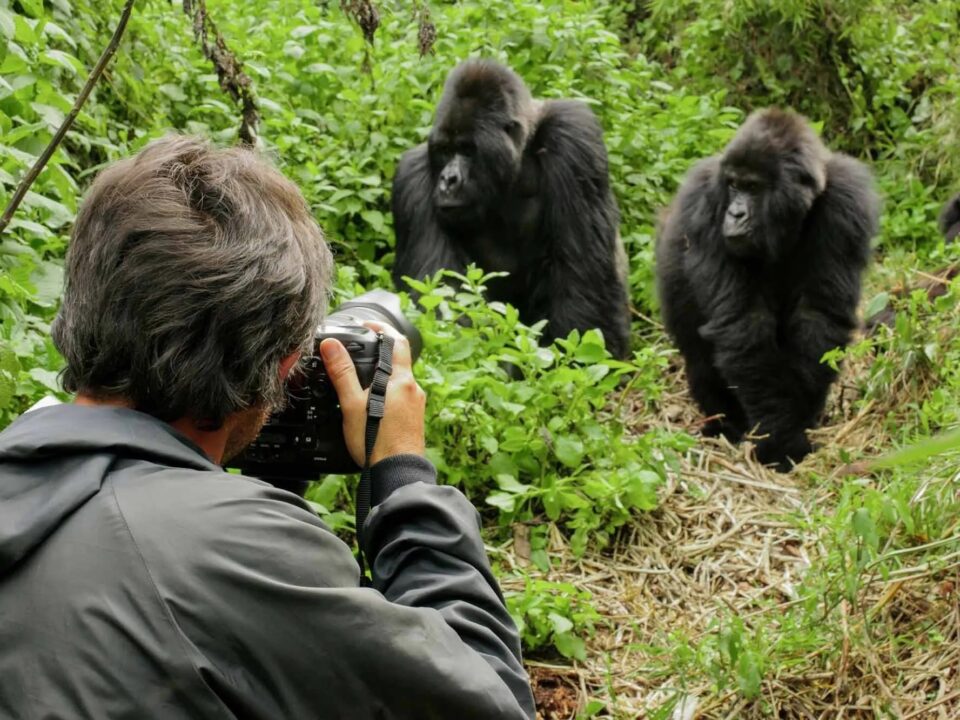
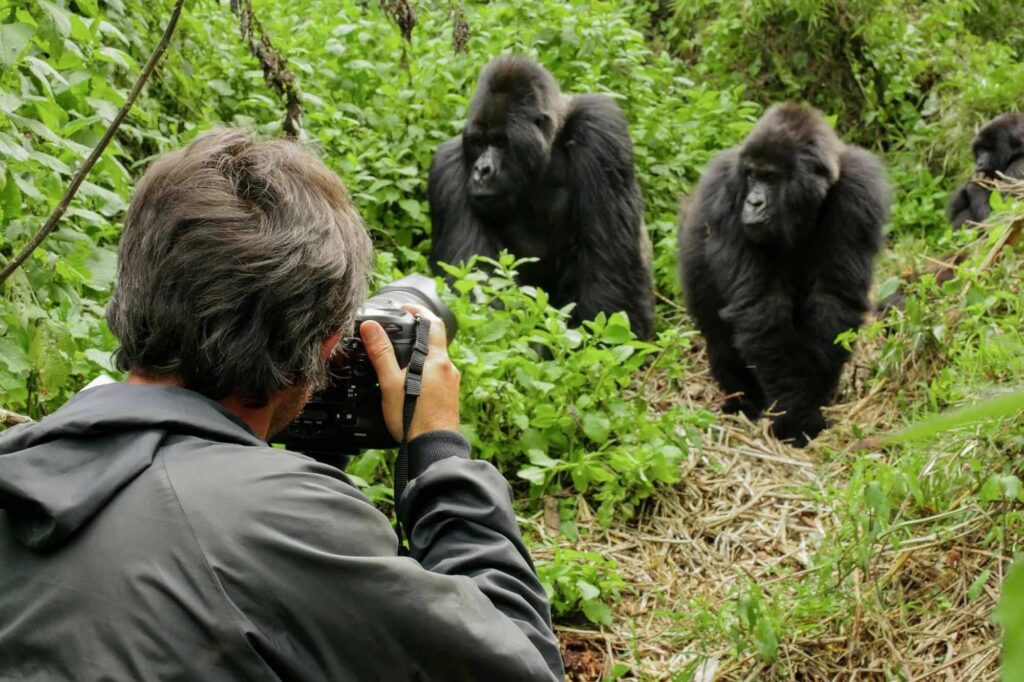
Rwanda offers visitors an opportunity to observe habituated mountain gorilla families in Volcanoes National Park. During a trek, the silverback may be feeding, resting, moving through vegetation or interacting with other family members.
You might see him sitting calmly while young gorillas play nearby. At another moment, he may stand up, move through the forest or respond to a sound. These behaviours offer a glimpse into his daily responsibilities.
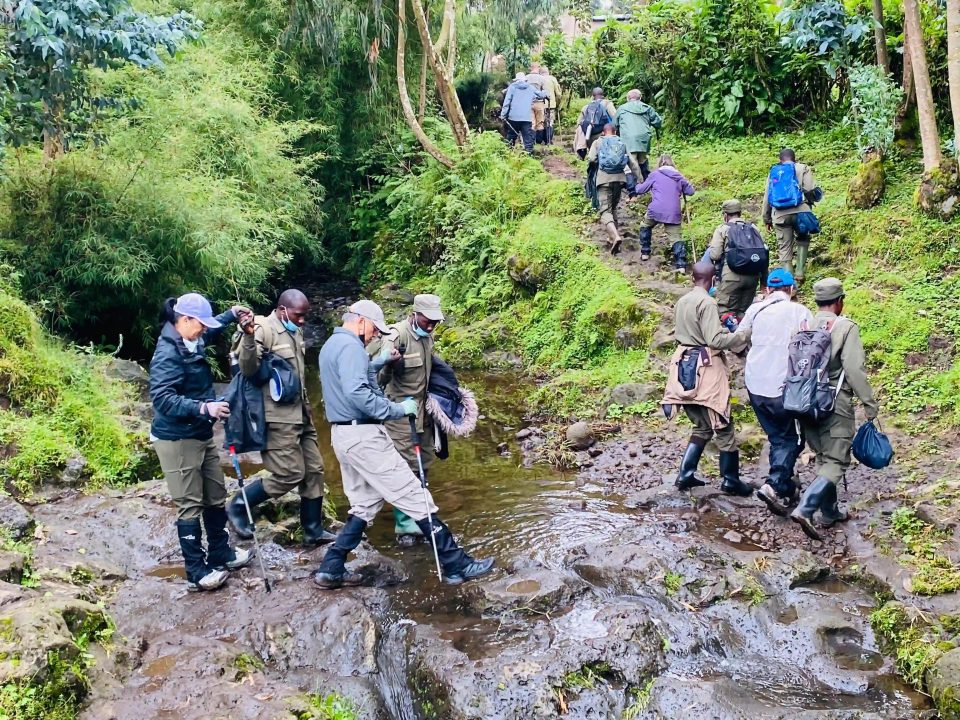
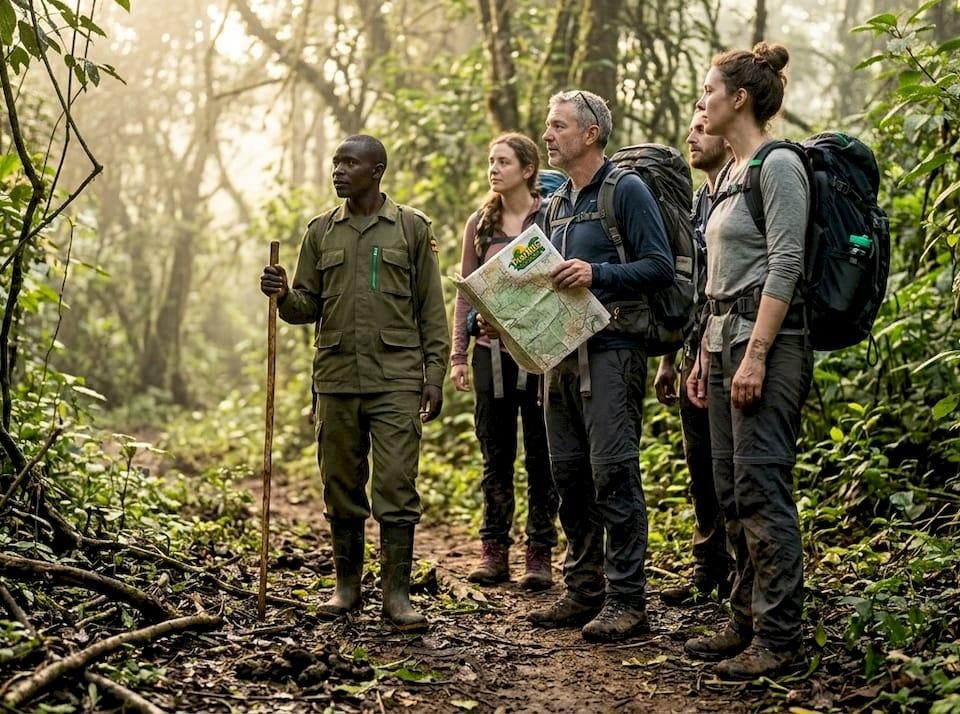
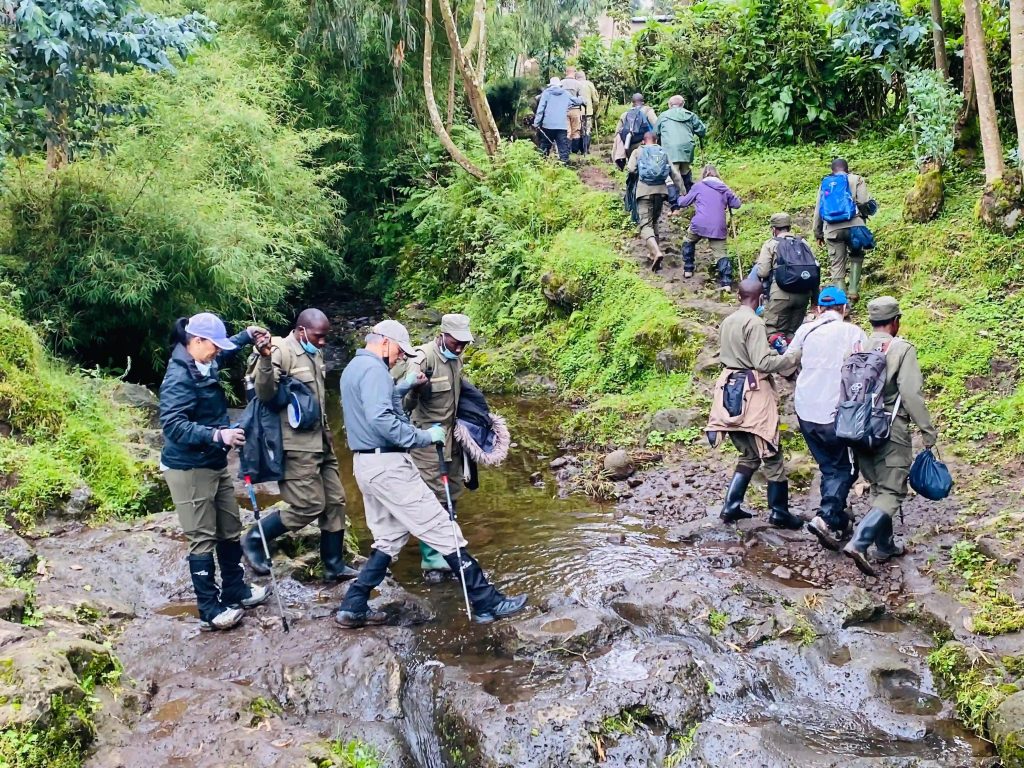
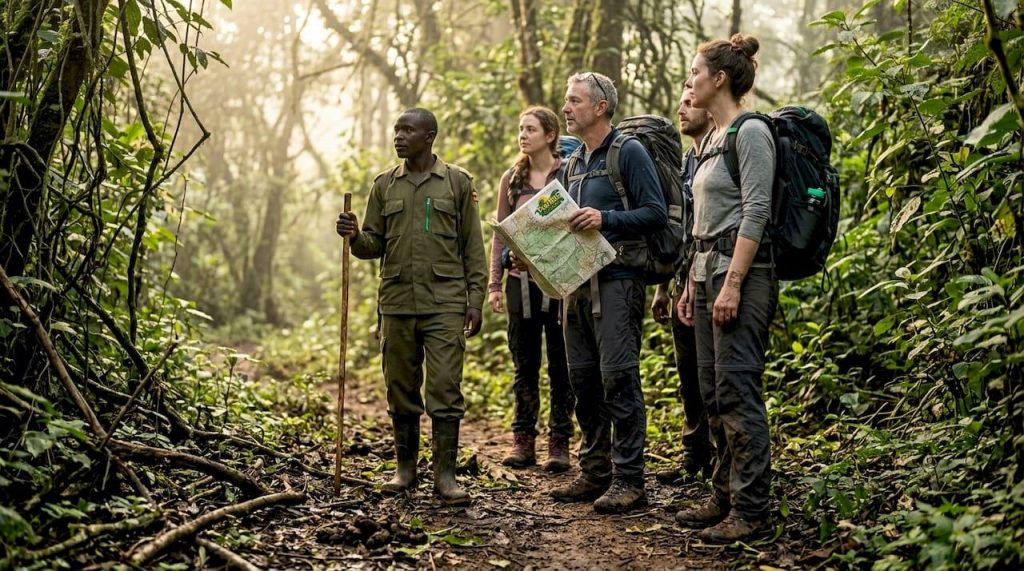
However, visitors should remember that they are entering the natural habitat of wild animals. They must follow the instructions of their guides and trackers throughout the encounter.
The Rwanda Development Board provides important visitor rules. These include keeping the required distance, maintaining a low voice and avoiding sudden movements. Visitors should also avoid trekking when they have contagious illnesses.
Gorilla viewing time is limited. Therefore, use the opportunity to observe the whole family rather than focusing only on the silverback. Watch how the females, infants and younger gorillas interact with one another.
Safari O’clock can help travellers plan their Rwanda gorilla trekking experience. From arranging the journey to explaining what to expect, the company helps visitors prepare for a respectful wildlife encounter.
Why Understanding the Silverback Gorilla Role Makes Your Trek More Meaningful
Seeing a mountain gorilla in the wild is already a memorable experience. However, understanding the silverback’s role adds another layer of meaning to the encounter.
You begin to recognise that the family is not simply a group of animals feeding in the forest. It is a social community with leadership, relationships, communication and changing responsibilities.
The silverback may protect the group, influence its movements and maintain social order. He may also form close relationships with younger members. Yet, the family’s survival and stability depend on more than one individual.
Females, infants, juveniles and other adult males all contribute to the group’s social life. Their relationships help shape the family over time.
With Safari O’clock, travellers can look forward to discovering more about Rwanda’s mountain gorillas and the remarkable environment they call home. A little knowledge before the trek can make every moment in the forest more rewarding.
Final Thoughts
The silverback plays a central role in many mountain gorilla families. He often provides leadership, protection and stability. He also influences daily movements, social relationships and communication within the group.
Nevertheless, he does not act alone. Mountain gorilla families have complex social structures, and other members also contribute to their wellbeing.
Understanding these relationships helps visitors appreciate the intelligence and social lives of mountain gorillas. It also encourages responsible tourism and respect for wildlife.
When you plan your next gorilla trekking adventure in Rwanda, let Safari O’clock help you experience the forest with greater knowledge and appreciation.