- DIRECT CONTACTS:
- +256394517569
- tours@safarioclock.africa

Antelope Species in Murchison Falls: A Complete Guide to Uganda’s Savannah Antelopes

Rothschild’s Giraffe in Murchison Falls: Uganda’s Towering Safari Attraction
September 15, 2026
Watching Hippos Along the Victoria Nile: A Complete Murchison Falls Safari Guide
September 15, 2026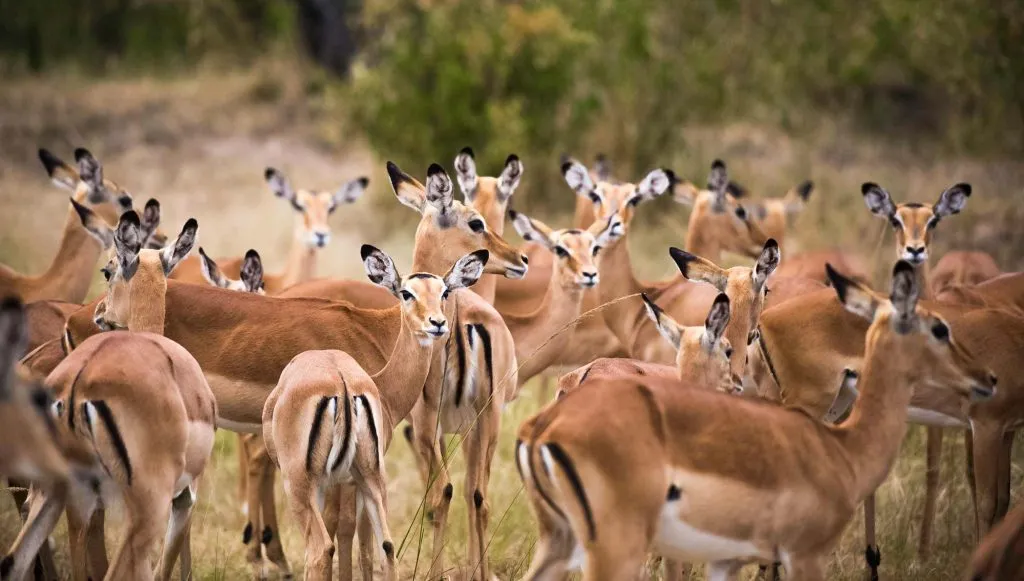
When travellers plan a Uganda safari, they often make a list of lions, elephants, giraffes, leopards and buffaloes. However, there is another group of animals that shapes almost every game drive in Murchison Falls National Park. These are the antelopes. They graze across open plains, browse around woodland edges and move through areas close to the Nile. Some gather in large herds, while others live alone or remain hidden in thick vegetation. Because of this variety, learning about the antelope species Murchison Falls protects can make a game drive much more rewarding.
Murchison Falls is one of Uganda’s great savannah safari destinations. The park covers a vast landscape with open grassland, Borassus palms, woodland, riverine vegetation and the Victoria Nile. These different habitats support a remarkable range of wildlife. Uganda Wildlife Authority currently lists 144 mammal species in the park. Its official park information also highlights the northern savannah as an important wildlife-viewing landscape where visitors can encounter giraffes, elephants, buffaloes and other animals.
Antelopes play an important role in this ecosystem. They convert vegetation into animal biomass and provide food for predators such as lions and leopards. They also give visitors some of the most frequent wildlife encounters on a game drive. With Safari O’clock, travellers can learn to identify these animals instead of simply calling every four-legged herbivore a “deer” or “antelope.” Each species has its own appearance, habitat, behaviour and place in the Murchison ecosystem.
Why Antelope Species Murchison Falls Are Important
Antelopes are among the most visible herbivores on the Murchison savannah. Yet their importance goes far beyond what visitors see from a safari vehicle. These animals help shape the ecosystem by feeding on grasses, leaves and other vegetation. Their grazing patterns influence the structure of grasslands, while their presence supports the predators that depend on herbivores for food.
Murchison Falls also demonstrates why habitat diversity matters. A Uganda kob can thrive on open grassland, while a bushbuck prefers thicker cover. Waterbuck often remain close to water and wetter vegetation. Oribi favour open grassland and can appear surprisingly small when compared with larger antelope. Consequently, one game drive can reveal several different antelope species without travelling across the entire park.
The variety also makes wildlife watching more engaging. Once travellers understand the differences between species, they start looking more carefully. A pair of curved horns may identify one animal. A particular body shape may identify another. Even the way an animal stands can provide useful clues.
For Safari O’clock, this is an important part of responsible safari guiding. Wildlife viewing should not simply involve counting animals. It should help visitors understand what they are seeing and why those animals matter.
The Uganda Kob: Murchison Falls’ Famous Antelope
The Uganda kob is arguably the most iconic antelope of Murchison Falls. It is the national antelope of Uganda and is closely associated with the country’s savannah landscapes. The animal has a reddish-brown coat, a lighter underside and curved horns in adult males. Herds can create spectacular scenes across open grassland.
Murchison’s northern plains are particularly important for Uganda kob. UWA’s own Murchison material describes substantial kob herds in the Heart of Murchison area. These herds also help explain why the area has become a notable location for predators, especially lions.
A kob herd can contain animals of different ages and sexes. Males may also compete for access to females. During a game drive, visitors may notice males standing apart from the main group or displaying territorial behaviour. These moments can add another layer to what might otherwise seem like a simple grazing sighting.
The latest national wildlife assessment gives a useful indication of how important Uganda kob remain at national level. UWA reported an estimated 175,109 Uganda kob in the 2023–2025 assessment period, up from 166,526 in 2021–2022. These figures are national protected-area estimates and should not be confused with a current Murchison-only count.
For Safari O’clock guests, Uganda kob are often among the animals that bring the Murchison plains to life. A herd feeding peacefully can suddenly become alert when a predator appears nearby. Therefore, a kob sighting can also become a lesson in predator-prey relationships.
Antelope Species Murchison Falls: Jackson’s Hartebeest
Jackson’s hartebeest is another distinctive antelope found in Murchison Falls. It has a high-shouldered appearance, a long face and a sloping back that makes it easy to distinguish from the more compact Uganda kob once visitors know what to look for.
Hartebeest are well adapted to open and relatively dry savannah habitats. They often appear alert as they scan their surroundings. Their unusual body shape can look almost awkward at first, but that appearance reflects their adaptation to fast movement across open country.
The latest UWA national wildlife report estimated 10,414 hartebeest across the relevant protected-area population assessments for 2023–2025. The same report recorded 8,154 in 2021–2022. Again, these figures represent the national assessment rather than a Murchison-specific count.
On safari, hartebeest are especially interesting because they can be mistaken for other large antelopes at a distance. A knowledgeable guide can point out the long face, body profile and horn shape. Once travellers learn those features, they often begin spotting hartebeest for themselves.
This is one of the advantages of travelling with Safari O’clock. A guide can turn a routine game drive into an identification exercise. Instead of passing an animal without a second thought, you begin to understand its behaviour and habitat.
Waterbuck: The Antelope of Wet Areas
Waterbuck has a different relationship with the landscape. As its name suggests, it has a strong association with water and often occurs around rivers, wetlands and areas with reliable moisture.
In Murchison Falls, this makes the Victoria Nile and nearby habitats important areas to watch. Waterbuck are large antelopes with a distinctive shaggy coat. Many individuals also have a conspicuous white ring around the rump, which can help with identification from a distance.
The latest national UWA assessment recorded 22,623 waterbuck for the 2023–2025 period, compared with 16,638 in 2021–2022. UWA reported the increase as part of broader positive population trends among several large mammals.
Waterbuck can be rewarding to watch because they often remain relatively close to water and vegetation. During a Murchison safari, therefore, scanning riverine areas can reveal different animals from those found in the drier open plains.
A waterbuck sighting also demonstrates the importance of combining habitats during a safari. Murchison is not one uniform grassland. Its rivers, woodlands, grasslands and wetlands each support different wildlife communities.
Oribi: A Small Antelope With a Big Personality
The oribi is much smaller than the Uganda kob, hartebeest or waterbuck. That difference in size makes it an easy animal to overlook. However, once you know where and how to look, oribi can become one of the most enjoyable antelope sightings in Murchison Falls.
Oribi are small, elegant grassland antelopes. They have a compact body, slender legs and a distinctive upright posture. Males carry short, pointed horns, while females do not. Their smaller size helps them move quickly through grassland.
The latest national wildlife assessment estimated 11,005 oribi during the 2023–2025 assessment period, compared with 13,851 in 2021–2022. These are national protected-area figures rather than a Murchison-only population estimate.
Because oribi are smaller, they can disappear into vegetation much more easily than a giraffe or buffalo. A good guide therefore makes a difference. Safari O’clock guides can help travellers scan grassland carefully and recognise small movements that might otherwise go unnoticed.
The experience also teaches an important safari lesson: the biggest animal is not always the most interesting. A tiny antelope standing alert in the grass can reveal just as much about the ecosystem as a much larger mammal.
Bushbuck: The Shy Antelope of Murchison
Bushbuck offers a completely different experience. Unlike the large herds of Uganda kob found in open areas, bushbuck usually prefer thicker vegetation, woodland and riverine cover.
Their coats can show attractive white spots and markings. Adult males develop horns, while females lack horns. Bushbuck also tend to be more solitary than many of the open-plains antelopes.
This behaviour makes them harder to spot. A bushbuck may appear briefly beside a track before disappearing into vegetation. Consequently, travellers should avoid assuming that every antelope will remain in view long enough for a perfect photograph.
Murchison’s combination of woodland, riverine vegetation and savannah creates suitable conditions for different wildlife strategies. UWA’s wider wildlife information confirms bushbuck as one of Uganda’s recognised mammal species, while wildlife records and safari observations report them in Murchison and other savannah landscapes.
For Safari O’clock guests, a bushbuck encounter can feel especially rewarding because it often requires patience. The animal may not present itself immediately. However, once it steps into the open, its markings and compact body make it a beautiful sight.
Bohor Reedbuck in Murchison Falls
The Bohor reedbuck is another antelope that deserves attention. It is associated with grassland and wetter habitats, particularly areas where taller vegetation provides suitable cover.
Reedbuck have a somewhat stocky appearance compared with the more slender oribi. Their brown coats blend well with grassland, which can make them difficult to see when they remain still.
Bohor reedbuck occur in Murchison Falls, Kidepo Valley and other Ugandan protected areas. They are particularly interesting for visitors who want to go beyond the best-known safari animals.
A reedbuck sighting can also demonstrate why the time of day matters. Early morning light can reveal animals before they retreat deeper into cover. Later, changing temperatures and vegetation conditions can alter where animals choose to feed.
Safari O’clock guides can therefore use recent sightings and habitat knowledge to improve the chances of finding smaller antelopes. No wildlife sighting is guaranteed, but careful observation can make a significant difference.
Common Duiker: The Small and Secretive Antelope
The common duiker is another small antelope that can occur in Uganda’s savannah ecosystems. The word “duiker” comes from behaviour associated with diving into vegetation when alarmed. That behaviour tells you something important about why these animals can be difficult to see.
A duiker may remain close to cover rather than standing prominently in the middle of a grassland. When disturbed, it can quickly disappear into bushes. Its small size also makes it less obvious from a moving safari vehicle.
UWA’s wildlife directory includes the common duiker among Uganda’s mammal species. The latest national wildlife assessment estimated 19,396 common duikers for the 2023–2025 period across the relevant protected-area data, almost unchanged from the previous estimate of 19,384.
Seeing one in Murchison can therefore become a special moment. The animal may only remain visible for a few seconds. However, that brief encounter adds variety to a game drive and reminds visitors that wildlife exists at many different scales.
Topi and Other Antelope Sightings
Travellers should also understand that not every antelope sighting in Uganda is equally common in every park. Species distribution changes with habitat, geography and ecological conditions.
Topi, for example, occur in several Ugandan savannah landscapes. However, they are more strongly associated with some other parks than with Murchison. Therefore, Safari O’clock guides should avoid promising visitors that they will see every antelope species listed in a general Uganda wildlife guide.
This is an important principle for responsible safari marketing. A good company should distinguish between animals that are regularly encountered, animals that occur in the ecosystem but are less predictable, and species that are better viewed elsewhere.
Murchison’s greatest antelope strengths remain its large Uganda kob population, Jackson’s hartebeest, waterbuck, oribi and other savannah and woodland species. The official UWA Murchison brochure simply and accurately describes the game-drive experience as offering opportunities to see elephants, buffaloes, antelopes and giraffes, with predators such as lions and leopards adding further excitement.
Antelope Species Murchison Falls and the Predator Connection
Antelopes are central to the predator story in Murchison Falls. Lions do not exist separately from the herbivores around them. Their distribution often reflects the availability of prey.
The Uganda kob is particularly important because large herds can provide a substantial food source for large carnivores. This helps explain why areas with high kob concentrations can also attract lions.
Leopards use a different strategy. They are more secretive and often rely on cover, surprise and smaller prey. A bushbuck or duiker can therefore play a different role in the food web from a large kob herd.
This relationship makes a game drive more meaningful when guides explain it. Seeing a herd of antelope is not just a pleasant wildlife moment. It is also evidence of the ecological foundation supporting the park’s predators.
For Safari O’clock, this is one reason antelope identification belongs in every Murchison safari conversation. Understanding prey animals makes predator sightings more interesting because visitors begin to understand why predators occur in particular areas.
Where to Look for Antelope in Murchison Falls
The northern sector is the obvious starting point for many antelope searches. It contains broad savannah, open grassland and woodland that provide excellent conditions for game viewing. UWA describes the northern part of Murchison as being characterised by open savannah, Borassus palms and acacia woodland.
Open plains are particularly useful for spotting Uganda kob and hartebeest. Their bodies rise above shorter grass, and their movement can attract attention from a considerable distance.
Wetter areas and river margins offer different possibilities. Waterbuck may occur closer to water and associated vegetation. Meanwhile, thicker woodland and riverine cover can produce bushbuck and smaller antelopes.
The key is to avoid treating the entire park as one habitat. Experienced guides read the vegetation and terrain. They understand that different animals prefer different environments. This knowledge helps Safari O’clock build game drives around wildlife behaviour rather than simply following a fixed route.
The Best Time to See Antelope Species Murchison Falls
Murchison Falls offers wildlife viewing throughout much of the year. However, dry periods can make some wildlife easier to observe because vegetation becomes less dense and animals may concentrate around reliable water sources.
UWA’s general wildlife information identifies the dry season, particularly June to August and December to February, as a favourable period for wildlife viewing in Uganda’s savannah reserves.
Early morning game drives are especially valuable for travellers interested in antelopes. Temperatures are cooler, the light is attractive and many animals are active. Late afternoon can also provide excellent opportunities as temperatures fall.
Nevertheless, travellers should not dismiss wetter months. Rain can transform the Murchison landscape. Grass becomes greener, the sky becomes dramatic and some areas can look completely different from their dry-season appearance.
Safari O’clock can help travellers choose the timing that best matches their priorities. If photography, general game viewing or predator sightings are important, the itinerary can be designed around those goals.
How to Identify Antelope Species on Safari
Learning a few basic identification features can transform a Murchison game drive.
Start with size. A waterbuck is much larger than an oribi. A Uganda kob has a different body shape from a hartebeest. A small duiker can disappear beside animals that are much larger.
Next, examine the horns. Horn shape varies significantly between species and can help identify adult males. However, not every animal has horns, so body shape and markings remain important.
Then look at the coat. Some species have distinctive colours or patterns. Bushbuck, for example, can show white markings. Waterbuck often has a recognisable white rump ring. Uganda kob has a warm reddish-brown appearance.
Finally, consider the habitat. Ask where the animal is standing. Is it in open grassland? Near water? In woodland? Along a thick riverbank? Habitat can narrow down the possibilities before you even examine the animal closely.
With Safari O’clock, these small identification lessons can turn a normal game drive into a practical wildlife class.
Antelope Photography in Murchison Falls
Antelopes provide excellent photography opportunities because they display such a range of shapes, colours and behaviours.
For herd species such as Uganda kob, wide photographs can show the relationship between animals and the Murchison landscape. A single animal can make a stronger portrait. Hartebeest photographs often benefit from side angles because the unusual body shape becomes easier to appreciate.
Smaller antelopes require more patience. Oribi and duiker can disappear quickly, so keeping the camera ready can help. Bushbuck may appear from thick vegetation without warning.
Avoid rushing the animals for a photograph. Wildlife photography should always come after the animal’s welfare and park rules. Stay inside the vehicle unless your guide and park regulations specifically allow otherwise.
The best photograph is not necessarily the closest photograph. A picture that shows an antelope behaving naturally in its habitat often tells a better story.
Why Antelopes Make Murchison Falls Safaris Better
A Murchison Falls safari would feel very different without antelopes. They provide movement across the plains and form an important part of the ecosystem’s food web.
They also make game drives unpredictable in a good way. You may begin the morning looking for lions and encounter a large kob herd instead. While watching the kob, you may notice hartebeest farther away. Then a waterbuck may appear near a wet area.
These encounters make safari exciting because the landscape constantly changes.
Antelopes also help travellers appreciate the quieter side of wildlife. Elephants attract attention because of their size. Lions attract attention because they are predators. Giraffes attract attention because of their height. Antelopes often require a little more observation.
That extra attention can create a deeper safari experience. Once you begin identifying species, you start noticing behaviour, habitat and interactions that you might previously have missed.
Conservation of Antelope Species in Uganda
Antelope conservation is part of the wider effort to protect Uganda’s savannah ecosystems. Recent UWA population assessments show encouraging trends for several herbivores.
Between 2021–2022 and 2023–2025, Uganda’s assessed populations increased for several species. Uganda kob rose from 166,526 to 175,109. Waterbuck rose from 16,638 to 22,623. Hartebeest rose from 8,154 to 10,414. Topi rose from 1,805 to 3,809. Common duiker remained almost stable at around 19,400.
These figures are valuable because they show that conservation success involves more than protecting famous species. Healthy wildlife areas need thriving herbivore populations as well.
However, national figures should never be treated as a guarantee for one particular park. Wildlife surveys cover different protected areas and use different methods. Population trends can also vary between locations.
For travellers, the lesson is simple. A safari supports the economic value of living wildlife. Responsible tourism gives parks and surrounding communities a reason to continue protecting habitats.
How Safari O’clock Helps You Discover Murchison’s Antelopes
Safari O’clock sees a Murchison Falls safari as an opportunity to explore the complete ecosystem. That means going beyond the animals that appear on the front page of most safari brochures.
Our guides can help travellers distinguish Uganda kob from hartebeest, identify waterbuck near the Nile and look carefully for smaller animals such as oribi, bushbuck and duiker.
The experience becomes even more valuable when these sightings connect with the wider story. A kob herd can lead to a discussion about lions. A waterbuck near the Nile can introduce the importance of wetlands. A bushbuck disappearing into woodland can demonstrate why habitat diversity matters.
This approach gives every game drive a purpose. You are not simply moving from one sighting to another. You are learning how the Murchison ecosystem works.
Responsible Antelope Viewing in Murchison Falls
Wildlife needs space. Visitors should never chase an antelope, block its movement or encourage it to approach a vehicle.
Drivers should follow UWA regulations and their guides’ instructions. Visitors should also avoid shouting, feeding wildlife or creating unnecessary disturbance. UWA states that Murchison Falls National Park operates from 7:00 AM to 7:00 PM, and its visitor guidance emphasises compliance with regulations designed to protect both people and wildlife.
Responsible viewing is particularly important for smaller and more secretive antelopes. A bushbuck or duiker may already feel vulnerable when a vehicle approaches. Giving the animal space allows it to behave naturally.
Safari O’clock encourages guests to treat every wildlife sighting as a privilege. A good safari does not measure success by how close the vehicle gets. It measures success by how well visitors experience and understand the wildlife.
Frequently Asked Questions About Antelope Species Murchison Falls
How many antelope species can I see in Murchison Falls?
Murchison Falls supports several antelope species, including Uganda kob, Jackson’s hartebeest, waterbuck, oribi, bushbuck and reedbuck. Common duiker also occurs within Uganda’s wider wildlife community. The exact species encountered on a safari depends on habitat, season and animal movement.
Which is the most common antelope in Murchison Falls?
The Uganda kob is one of the most prominent and characteristic antelopes of Murchison Falls. Large herds are particularly associated with the open savannah and areas such as the Heart of Murchison.
Can I see waterbuck in Murchison Falls?
Yes. Waterbuck occur in the Murchison ecosystem, especially around wetter habitats and areas associated with water. Their distinctive body size and white rump marking can make them easier to identify once you know what to look for.
Are there small antelopes in Murchison Falls?
Yes. Visitors may encounter smaller species such as oribi and duiker. Bushbuck can also occur in thicker vegetation. These animals can be more difficult to spot because they are smaller and often use cover.
Are antelopes dangerous?
Antelopes generally avoid people and are not animals that visitors should fear during a properly managed game drive. However, wild animals can react unpredictably if threatened or approached too closely. Visitors should always remain inside the safari vehicle when required and follow their guide’s instructions.
What is the best time to see antelopes in Murchison Falls?
Early morning and late afternoon game drives are excellent periods for wildlife viewing. The dry season can also make animals easier to locate in some areas. However, Murchison Falls offers wildlife experiences throughout the year.
Are antelopes important to lions?
Yes. Antelopes form an important part of the prey base for large African predators. Uganda kob in particular can occur in substantial herds, creating important feeding opportunities for lions and other carnivores.
Can Safari O’clock arrange a Murchison Falls safari focused on wildlife?
Yes. Safari O’clock can design a Murchison Falls itinerary around wildlife viewing, including game drives in areas where travellers have opportunities to encounter the park’s diverse herbivores, predators and birdlife. A flexible itinerary allows the guide to respond to current wildlife conditions rather than treating sightings as guaranteed.
Final Thoughts: Discover the Antelope Species Murchison Falls Protects
Murchison Falls is famous for its waterfall, the Victoria Nile, elephants, lions and giraffes. Yet the park’s antelopes deserve just as much attention.
The Uganda kob fills the open plains with movement. Jackson’s hartebeest adds another distinctive shape to the savannah. Waterbuck connect wildlife viewing with the park’s rivers and wetlands. Oribi bring a smaller and more delicate presence. Bushbuck disappear into woodland, while reedbuck and duikers remind visitors that some of the most interesting wildlife requires patience.
Together, these animals create the living foundation of the Murchison ecosystem.
For travellers with Safari O’clock, learning about the antelope species Murchison Falls offers a different way to experience Uganda. Instead of looking only for the famous predators, you begin to understand the animals that support the entire food web.
So, on your next Murchison Falls game drive, do not look only for lions.
Look carefully at the grass.
Watch the woodland edges.
Scan the wetlands.
Study the herds.
You may discover that some of the most rewarding moments of your Uganda safari are standing quietly among the antelopes of Murchison Falls.