- DIRECT CONTACTS:
- +256394517569
- tours@safarioclock.africa

Rothschild’s Giraffe in Murchison Falls: Uganda’s Towering Safari Attraction

Where to Spot Buffaloes in Murchison Falls National Park
September 15, 2026
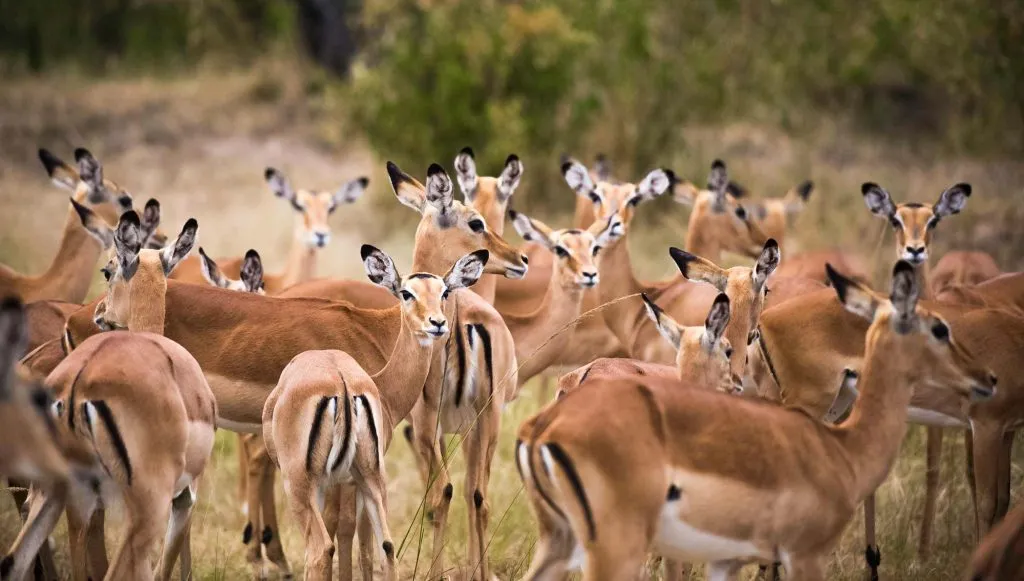
Antelope Species in Murchison Falls: A Complete Guide to Uganda’s Savannah Antelopes
September 15, 2026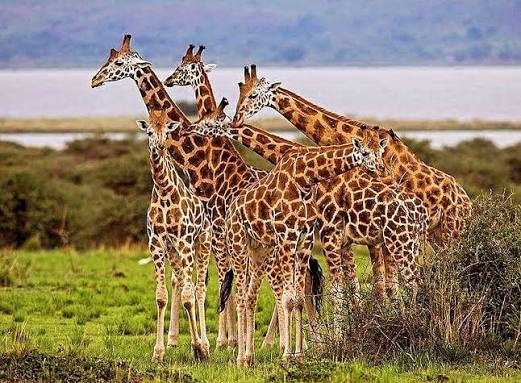
When people imagine an African safari, they often picture lions resting under trees, elephants crossing dusty tracks, or hippos gathered along a river. Yet Uganda offers another unforgettable sight: a giraffe standing tall above the savannah, calmly browsing on leaves while the safari vehicle approaches. In Murchison Falls National Park, this experience is especially memorable because the park protects Uganda’s largest population of the giraffe once widely known as Rothschild’s giraffe. Today, Uganda Wildlife Authority uses the name Nubian giraffe, following a 2025 taxonomic reclassification. However, many travellers, safari guides, and tourism businesses still know this remarkable animal as Rothschild’s giraffe. For visitors planning a Uganda safari, seeing these towering animals in their natural habitat adds a distinctive dimension to the Murchison Falls experience.
Murchison Falls National Park is one of Uganda’s most important savannah destinations. The park combines expansive grasslands, woodland, riverine habitats and the dramatic Victoria Nile. It also supports elephants, buffaloes, lions, leopards, Uganda kob, hartebeest, hippos, crocodiles and hundreds of bird species. Among all these animals, however, giraffes have a special visual presence. Their height allows them to rise above much of the vegetation, making them surprisingly easy to notice when conditions are right. For travellers with Safari O’clock, a giraffe sighting can become one of those quiet safari moments that remains memorable long after the journey ends.
Why Rothschild Giraffe Murchison Falls Is Such a Special Attraction
The appeal of Rothschild giraffe Murchison Falls goes beyond the animal’s impressive height. Giraffes are the tallest land mammals in the world, and their unusual body structure makes them instantly recognisable. They move with a graceful rolling gait, use their long necks to reach vegetation above other herbivores, and have remarkably long tongues that help them strip leaves from thorny plants. Uganda Wildlife Authority notes that even a newborn giraffe can stand about two metres tall. It also highlights an interesting anatomical fact: despite their extremely long necks, giraffes have only seven neck vertebrae, the same basic number found in humans.
That combination of size, elegance and behaviour makes a giraffe encounter very different from watching a large herd of buffalo or elephants. A giraffe may stand quietly beside a track, slowly chew leaves, look towards the vehicle and then continue browsing as if nothing unusual has happened. Because the animal spends much of its time feeding and moving calmly through the savannah, travellers often have an opportunity to observe natural behaviour rather than simply catching a quick glimpse.
For Safari O’clock guests, this is one reason Murchison Falls works so well as a classic Uganda safari destination. The park offers varied wildlife experiences in one landscape. A morning game drive can bring sightings of giraffes, elephants, Uganda kob and buffaloes. Later, visitors can experience the Nile and the spectacular Murchison Falls itself. The result is a safari that combines wildlife, scenery and adventure instead of depending on a single attraction.
What Is the Rothschild Giraffe Called Today?
The name Rothschild’s giraffe remains widely used in safari tourism, but travellers should know about an important scientific update. Uganda’s giraffe population is now officially described by UWA as the Nubian giraffe, Giraffa camelopardalis camelopardalis. The 2026 UWA State of Wildlife Resources report explains that this population was formerly known as Rothschild’s giraffe, Giraffa camelopardalis rothschildi. In 2025, the IUCN SSC Giraffe and Okapi Specialist Group reclassified it within the northern giraffe species.
This change does not mean that Murchison Falls suddenly has a different giraffe. Instead, it reflects an update in scientific classification. Therefore, someone searching online for “Rothschild giraffe Murchison Falls” is looking for the same famous Ugandan giraffe that conservation authorities now call the Nubian giraffe. Safari O’clock can use both terms when explaining the animal to travellers, because the traditional tourism name remains useful while the current scientific terminology provides greater accuracy.
This distinction also makes the subject more interesting. A visitor can learn about the history of giraffe conservation while also understanding how wildlife science changes as researchers collect better information. For a responsible safari company, using current conservation terminology matters because good tourism should connect visitors with accurate information about the wildlife they are travelling to see.
Where to See Rothschild Giraffe Murchison Falls
The best-known giraffe habitat in Murchison Falls has historically been the northern part of the park. Older UWA material records giraffes as being concentrated on the northern side of the Nile, while more recent conservation work has expanded their range.
The northern sector is particularly attractive for wildlife viewing because it contains broad savannah landscapes and woodland. These open habitats create excellent conditions for spotting tall animals from a safari vehicle. A giraffe may rise above bushes and smaller trees long before the vehicle reaches it. Consequently, keeping your eyes on the horizon can be just as important as watching the road.
The Buligi area is also an important part of the wider Murchison game-viewing experience. Its open landscapes support many of the park’s large mammals. When Safari O’clock guides take guests through the northern sector, they can combine giraffe searches with opportunities to see elephants, buffaloes, Uganda kob, hartebeest and predators.
However, wildlife never follows a fixed timetable. A giraffe can be standing beside a track one morning and somewhere else the next. That is why experienced guiding matters. Rather than promising a specific sighting, a good guide reads recent animal activity, habitat conditions, tracks and the behaviour of other wildlife to improve the chances of a memorable encounter.
Rothschild Giraffe Murchison Falls and the Northern Savannah
The relationship between giraffes and Murchison’s northern savannah is one of the most interesting parts of the story. Historically, the park’s giraffes were concentrated in the northern sector. This distribution made the northern savannah particularly important for giraffe conservation and tourism.
The landscape also gives visitors an excellent opportunity to appreciate how different herbivores use the same ecosystem. Uganda kob often feed across open grassland. Buffaloes may gather in large herds. Elephants move between feeding areas and water sources. Giraffes, meanwhile, can browse higher vegetation that many other herbivores cannot reach.
This creates an ecological balance that becomes visible during a game drive. Instead of seeing every herbivore competing for exactly the same food, visitors can observe animals using different parts of the habitat. The giraffe’s height gives it access to leaves higher in trees, while other grazers focus on grasses and lower vegetation.
For photographers, this setting can also produce dramatic images. A giraffe framed against the wide Murchison savannah gives a strong sense of scale. If the animal stands beside an acacia or another suitable tree, the photograph can show both its enormous height and the environment that supports it.
How Many Rothschild Giraffes Are in Murchison Falls?
The latest UWA data makes Murchison Falls especially important in the story of Uganda’s giraffes. According to the 2026 State of Wildlife Resources in Uganda report, Uganda’s total Nubian giraffe population stood at 2,519 individuals based on surveys conducted between 2023 and 2025. Of these, 2,250 were recorded in Murchison Falls National Park. That makes Murchison by far the largest population among the protected areas where Uganda’s Nubian giraffes occur.
This figure is more useful than older online estimates that still circulate on tourism websites. UWA’s dedicated giraffe page, for example, contains an older estimate of more than 1,500 giraffes in Murchison. It also describes the historical translocations that expanded the animals’ range. For current planning and conservation discussions, however, the newer 2023–2025 survey figure of 2,250 is the better reference.
There is another important detail in the 2026 report. UWA notes that the decline observed in Murchison between 2023 and 2025 may relate to ecological habitat changes that affected giraffe visibility in a heavily invaded area rather than representing an actual biological population loss. This is an important reminder that wildlife survey numbers can be influenced by habitat conditions and how easily researchers can detect individual animals.
The surveys themselves use individual-based photographic identification. Researchers can recognise giraffes by their unique spot patterns. This approach allows conservationists to build a much more detailed picture of the population than simply counting animals during occasional game drives.
The Remarkable Range Expansion of Rothschild Giraffe Murchison Falls
One of the most fascinating chapters in the story of Rothschild giraffe Murchison Falls involves the expansion of their range within the park. Historically, giraffes were restricted largely to the northern sector. Conservationists later began moving giraffes to the southern bank of the Nile to establish a population there.
According to UWA’s latest report, 18 giraffes were translocated in 2016 and another 19 in 2017. These movements helped expand the giraffes’ range within Murchison Falls National Park and contributed to population growth.
The story shows how wildlife conservation can involve more than simply protecting animals where they already live. Sometimes conservation managers need to carefully restore animals to suitable areas within a protected landscape. Such work requires planning, veterinary expertise, monitoring and an understanding of habitat conditions.
UWA’s earlier giraffe information also records the 2016 introduction to the southern bank and the additional translocation in 2017. These efforts form part of a wider history of giraffe conservation in Uganda. Giraffes have also been moved between protected areas to restore populations and expand their range.
For safari travellers, the result is simple but meaningful: a giraffe sighting in Murchison is not just a beautiful wildlife moment. It can also represent decades of conservation work aimed at keeping one of Uganda’s most distinctive animals on the landscape.
What Do Rothschild Giraffes Eat?
Giraffes are specialist browsers. Instead of relying mainly on grass like many grazing animals, they use their height and long necks to feed on leaves, shoots and other vegetation. UWA specifically highlights acacia among their favourite foods and notes how giraffes use their long, dark-coloured tongues to strip leaves from thorny branches.
This feeding strategy gives giraffes an ecological advantage. They can reach vegetation that is difficult for many other herbivores to access. Their height also allows them to feed while keeping a wide view of the surrounding landscape.
During a game drive, watching a giraffe feed can therefore be more interesting than simply photographing the animal. Notice how the giraffe positions its neck. Watch how it reaches between branches. Look at how it uses its tongue around thorns. These small details turn a normal sighting into a deeper wildlife experience.
Safari O’clock guides can help guests understand these behaviours rather than rushing from one animal to another. That approach encourages travellers to slow down and appreciate what they are actually seeing.
Rothschild Giraffe Murchison Falls: Understanding Their Behaviour
Giraffes often appear calm and unhurried, but they are highly adapted animals. Their height provides an excellent view over the surrounding vegetation. Their long legs allow them to cover ground efficiently, while their distinctive gait gives them a graceful appearance when they move across open savannah.
They also do not always stand alone. Depending on the situation, visitors may encounter several giraffes feeding within the same general area. Their social associations can change, so a safari should never assume that every giraffe encounter will look the same.
One of the most rewarding experiences is watching giraffes interact with their environment. A giraffe may move from one tree to another, pause to look across the grassland, or continue browsing while other animals pass nearby. These quiet moments often become some of the most memorable parts of a safari.
Their size can also be deceptive. A giraffe may look close when it stands beside a road, yet its true height becomes obvious when it stretches its neck towards the upper branches of a tree. A good photograph can capture this contrast and show why the giraffe has earned its reputation as one of Africa’s most spectacular animals.
The Best Time to See Rothschild Giraffe Murchison Falls
There is no guaranteed hour for finding a giraffe in Murchison Falls. Wildlife moves according to food, water, temperature, weather and disturbance. Nevertheless, early morning and later afternoon game drives are generally rewarding periods for safari viewing because the light is softer and many animals are active.
Morning drives can offer beautiful photographic conditions. The lower sun can create warm light across the savannah while giraffes move between feeding areas. Later in the day, the changing light can produce striking silhouettes and long shadows.
The dry season can also make wildlife easier to observe in some areas because vegetation may be less dense. However, Uganda remains a year-round safari destination, and wetter periods can transform the landscape with fresh vegetation and dramatic skies.
For Safari O’clock travellers, the best approach is to plan the safari around the broader wildlife experience rather than chasing one animal at one precise time. A flexible itinerary gives guides more opportunities to respond to current conditions.
Seeing Giraffes Alongside Murchison Falls Wildlife
One of the greatest strengths of Murchison Falls National Park is the variety of wildlife found within the same safari landscape. A giraffe drive does not need to be a giraffe-only experience.
The same northern savannah can produce sightings of elephants moving through woodland, buffaloes grazing or resting, Uganda kob feeding across open grassland, and hartebeest standing alert on higher ground. Lions may also be encountered in areas where prey concentrations attract them.
Leopards are more elusive. Their secretive nature makes them a bonus sighting rather than an animal visitors should expect on every drive. Nevertheless, Murchison supports an important large-carnivore community, adding another layer to the safari experience.
Then there is the Nile. A boat safari offers a completely different perspective of the park, with hippos, crocodiles, waterbirds and other animals concentrated around the river. Combining a game drive with a Nile experience creates a much fuller picture of Murchison Falls.
That combination is one of the reasons Safari O’clock recommends Murchison Falls to travellers who want more than a conventional game drive. The park gives visitors opportunities to experience land, water, wildlife and one of Uganda’s most famous waterfalls within the same destination.
How to Photograph Rothschild Giraffe Murchison Falls
Giraffes are naturally photogenic, but photographing them well requires more than simply pointing a camera at a tall animal. Start by considering the background. A giraffe against open sky can create a powerful silhouette, while a giraffe feeding among trees can show the animal’s relationship with its habitat.
Avoid rushing. Once the vehicle is in a safe position, give the animal time to behave naturally. Watch its movement before taking a series of photographs. You may capture a much stronger image when the giraffe turns its head, stretches its neck, feeds from a branch or walks across the savannah.
Try both close portraits and environmental photographs. A portrait can show the giraffe’s eyes, patterned coat and facial structure. A wider photograph can show its extraordinary height against Murchison’s landscape.
Most importantly, follow park rules and your guide’s instructions. Wildlife photography should never come at the expense of the animal’s comfort. UWA’s regulations emphasise responsible behaviour around wildlife, including restrictions on unnecessary stops, hooting and feeding animals.
Rothschild Giraffe Murchison Falls and Conservation
The conservation story behind Uganda’s giraffes is one of both progress and responsibility. UWA describes the Nubian giraffe as critically endangered. Its latest national wildlife report identifies four Ugandan protected areas where the population occurs: Murchison Falls National Park, Kidepo Valley National Park, Pian Upe Wildlife Reserve and Lake Mburo National Park.
Murchison is therefore not simply a good place to photograph giraffes. It is one of the most important places on Earth for this population.
That importance makes habitat management essential. UWA’s 2026 report points to ecological changes affecting giraffe visibility in parts of Murchison. This highlights a broader conservation lesson: protecting wildlife requires protecting the habitats and ecological processes that support them.
Tourism can contribute positively when it is managed responsibly. Visitors pay for park experiences, employ guides and drivers, support accommodation businesses and create demand for wildlife-based tourism. Responsible tourism also encourages people to value living animals more highly than wildlife products.
For Safari O’clock, this connection matters. A safari should not simply deliver photographs. It should help travellers understand why the animals matter and why their habitats deserve protection.
Why the Giraffe Matters to Uganda Safari Tourism
A Uganda safari is often associated with mountain gorillas and chimpanzees, but the country’s savannah wildlife deserves equal attention. The giraffe is a perfect example.
The animal gives visitors a chance to experience a species that feels almost surreal in its natural environment. Its height, patterned coat and unusual body structure make it instantly recognisable. Yet the deeper story makes the experience even more valuable.
When a traveller sees a giraffe in Murchison Falls, they are seeing an animal connected to Uganda’s conservation history. They are also seeing part of a population that remains globally important and scientifically interesting.
This makes giraffe viewing an excellent addition to a wider Murchison itinerary. Instead of rushing through the park in search of the traditional Big Five, travellers can slow down and appreciate the full ecosystem. That approach often produces richer memories.
How Safari O’clock Creates a Better Giraffe Experience
Safari O’clock approaches wildlife viewing as more than ticking animals off a checklist. The goal is to help travellers understand the destination while enjoying it.
When searching for giraffes, that means paying attention to the landscape. It means looking beyond the road and scanning tree lines. It means understanding why giraffes favour certain vegetation and recognising how their behaviour changes with conditions.
It also means remaining flexible. Wildlife does not operate according to a human itinerary. A good safari guide knows that one area may be quiet while another suddenly becomes active. Therefore, a strong safari plan leaves room for observation and adaptation.
With Safari O’clock, a Murchison Falls itinerary can combine game drives, the Nile boat experience and a visit to the falls. Giraffe sightings then become part of a larger story about Uganda’s wildlife, landscapes and conservation.
Responsible Giraffe Viewing in Murchison Falls
Responsible wildlife viewing begins with respect. Visitors should never feed giraffes or attempt to attract them towards a vehicle. They should also avoid shouting, excessive noise or actions that disturb animals.
UWA’s guidance for Murchison Falls prohibits hooting and feeding wildlife. The authority also sets speed limits within the park and stresses the importance of protecting both visitors and wildlife.
Photography should follow the same principle. If an animal appears uncomfortable, the vehicle should give it space. The best safari photographs are those captured without changing the animal’s natural behaviour.
Visitors can also contribute by supporting legitimate conservation-based tourism. Choosing responsible operators, respecting park rules and learning about local conservation work all help strengthen the relationship between tourism and wildlife protection.
Frequently Asked Questions About Rothschild Giraffe Murchison Falls
Is Rothschild’s giraffe still the official name?
Rothschild’s giraffe remains a widely used tourism and historical name. However, Uganda Wildlife Authority’s current terminology identifies Uganda’s population as the Nubian giraffe. UWA’s 2026 report states that the animal was formerly known as Rothschild’s giraffe and was reclassified in 2025 by the IUCN SSC Giraffe and Okapi Specialist Group.
How many giraffes are in Murchison Falls?
The latest UWA national wildlife report records 2,250 Nubian giraffes in Murchison Falls National Park, based on surveys conducted between 2023 and 2025. Uganda’s total population across the four protected areas was 2,519.
Where are giraffes found in Uganda?
Nubian giraffes occur in Murchison Falls National Park, Kidepo Valley National Park, Pian Upe Wildlife Reserve and Lake Mburo National Park.
Can I see giraffes during a Murchison Falls safari?
Yes. Murchison Falls is Uganda’s most important giraffe stronghold, and giraffes are an important part of the park’s savannah wildlife experience. Sightings are never guaranteed because animals move freely, but the large population makes the park an excellent destination for giraffe viewing.
Can I see giraffes on the Nile boat safari?
The classic Nile boat experience is primarily focused on animals around the river, including hippos, crocodiles and waterbirds. Giraffes are more naturally associated with the savannah game-drive experience. Therefore, travellers should plan a game drive if giraffe viewing is a priority.
What is the best way to see giraffes in Murchison Falls?
A guided game drive in the northern sector is the most appropriate approach. Experienced guides can interpret the landscape and help locate wildlife while maintaining safe distances.
Why are giraffes important to Murchison Falls?
Giraffes form an important part of the park’s herbivore community and are also significant from a conservation perspective. Murchison Falls supports the largest Nubian giraffe population in Uganda, with 2,250 individuals recorded in the latest UWA survey period.
Final Thoughts: A Towering Symbol of Murchison Falls
The giraffe is more than a beautiful animal standing above the Murchison Falls savannah. It represents one of Uganda’s most important wildlife conservation stories.
For generations, travellers have known these animals as Rothschild’s giraffes. Today, UWA identifies them as Nubian giraffes, reflecting the latest scientific classification. Yet the wonder remains unchanged. They are still the extraordinary tall browsers that rise above the savannah, move gracefully between trees and create unforgettable moments for visitors.
With 2,250 Nubian giraffes recorded in Murchison Falls during the latest 2023–2025 survey period, the park remains the country’s strongest destination for encountering this remarkable population.
A Uganda safari with Safari O’clock can turn that encounter into much more than a photograph. It can become an opportunity to understand the animal, its habitat, its conservation history and its place within the wider Murchison Falls ecosystem.
So, when planning your next Uganda safari, do not look only for lions, elephants or buffaloes. Look towards the treetops too. Somewhere beyond the golden grass, a giraffe may be standing quietly above the landscape, offering one of the most distinctive wildlife encounters that Murchison Falls can provide.