- DIRECT CONTACTS:
- +256394517569
- tours@safarioclock.africa

Seasonal Wildlife Changes in Murchison Falls National Park: What Happens Throughout the Year?

What Animals Are Most Active During an Evening Safari in Rwanda?
September 16, 2026
What Animals Can You See on a Boat Cruise in Murchison Falls?
September 16, 2026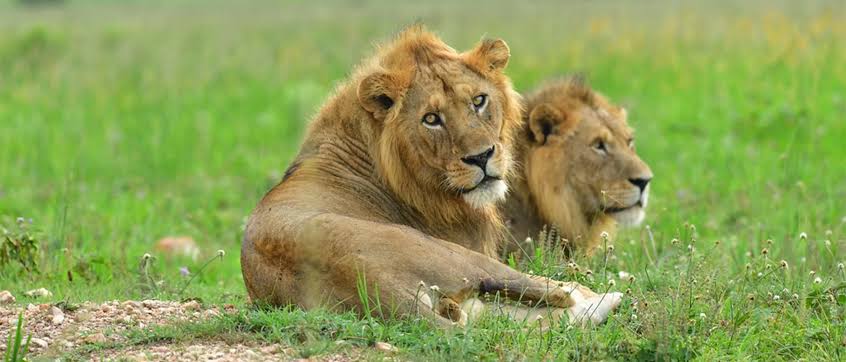
Murchison Falls National Park does not look or behave exactly the same throughout the year. The savannah changes with rainfall, grasses respond to moisture, water availability shifts across the landscape and wildlife adjusts its movements accordingly. For travellers planning a Uganda safari, understanding these seasonal changes can make a big difference to expectations. The animals do not simply disappear during the rainy months, and the dry season does not guarantee a spectacular sighting every time. Instead, each period creates different conditions for wildlife viewing.
Understanding seasonal wildlife Murchison patterns is especially useful when planning a safari with Safari O’clock. The timing of your visit can influence how easy it is to spot animals, how green the landscape looks, how comfortable the roads are and what type of birdlife you may encounter. More importantly, the season changes the character of the safari itself. A dry-season drive may offer open views and animals concentrated around water. A wet-season drive can bring lush vegetation, dramatic skies and a landscape full of fresh growth.
Murchison Falls is Uganda’s largest national park, and its wildlife lives across several habitats. The northern sector contains open savannah, Borassus palms and acacia woodland. The southern section contains more woodland and forest patches. The Victoria Nile and Albert Delta add another layer of habitats, supporting hippos, crocodiles, aquatic birds and wildlife that use the river and wetlands as sources of water and food. UWA currently lists 144 mammal species and 556 bird species for the park.
For that reason, seasonal change is not simply about whether it rains. It affects the entire relationship between animals, vegetation, water and the landscape.
Understanding Seasonal Wildlife Murchison Patterns
The first thing visitors should understand is that Murchison Falls has distinct wet and dry periods, but wildlife does not follow a rigid calendar. UWA’s current climate information identifies the wetter periods as roughly March to May and October to November, with April usually receiving particularly heavy rainfall. The drier periods generally fall between December and February and June and September.
These seasons influence the safari in different ways.
During the dry months, grasses can become shorter and water becomes more important to wildlife. This can make some animals easier to locate because they concentrate around remaining water sources. UWA’s Murchison Falls information specifically identifies the dry seasons as a strong time to visit because animals tend to concentrate around water points.
During wetter months, rain encourages new vegetation and changes the appearance of the savannah. Water becomes more widely distributed, so animals may not need to remain close to the permanent river and other dependable water sources. At the same time, the greener landscape can provide abundant food and create beautiful conditions for photography.
Therefore, seasonal wildlife Murchison patterns are best understood as changes in animal distribution and behaviour, rather than a simple difference between a good season and a bad season.
Seasonal Wildlife Murchison Changes During the Dry Season
The dry season is often the easiest period for first-time safari visitors to understand. Rainfall decreases, temperatures can rise and vegetation becomes less lush. UWA’s climate assessment gives typical daytime temperatures of about 25°C to 32°C during the dry periods, with occasional temperatures above 35°C.
As water becomes less evenly distributed, permanent water sources become increasingly important. The Victoria Nile is therefore a major feature of the Murchison wildlife landscape. UWA describes the river below the falls as one of Uganda’s important wildlife-viewing areas, with elephants, giraffes and buffaloes using the riverbanks while hippos, Nile crocodiles and aquatic birds remain closely associated with the water.
The dry season can also make the landscape more open. Shorter grass may give visitors better visibility across plains. Animals can stand out more clearly against dry grass and open ground.
However, the heat matters too.
Wildlife may reduce movement during the hottest part of the day. Elephants, buffaloes and antelopes can seek shade or remain closer to water. Consequently, early morning and late afternoon game drives can be particularly comfortable for both visitors and wildlife.
How Dry Weather Changes Animal Movements
Water availability is one of the most important drivers of animal movement during dry conditions.
The Albert Delta is especially significant because UWA identifies it as a feeding and watering refuge for wildlife during dry seasons. The delta is also a Ramsar wetland and an important habitat for waterbirds, including the shoebill.
This does not mean that every animal gathers in one location. Murchison is a huge protected landscape, and animals continue to move between habitats.
Nevertheless, permanent water sources become more valuable as seasonal pools and wet areas shrink.
This is why an experienced Safari O’clock guide pays attention to rivers, wetlands, vegetation and recent animal activity when planning a game drive.
Seasonal Wildlife Murchison During the Wet Season
The wet season changes the visual character of Murchison dramatically.
UWA identifies March to May and October to November as the main rainy periods. During these months, showers and thunderstorms can occur frequently, while humidity also increases.
The landscape becomes greener. Grass and other vegetation respond to rainfall, while seasonal water sources become available in areas that may be dry during other months.
For herbivores, fresh vegetation can create attractive feeding opportunities. Uganda kob, waterbuck, hartebeest, oribi, buffaloes and other grazers depend on the park’s grassland and woodland habitats. However, their distribution can become more dispersed because water is no longer concentrated around only a few permanent sources.
That difference can influence the way a game drive feels.
In the dry season, your guide may spend more time checking areas around water. In the wet season, the search can involve a wider landscape.
Why the Green Season Can Be Special
Many safari visitors automatically associate the dry season with the best wildlife experience. However, the wet season has its own advantages.
Fresh vegetation can make the landscape exceptionally attractive. Clouds can create dramatic backgrounds for photography, while rain can clear the air and make distant scenery look crisp.
Bird activity can also be rewarding.
UWA states that Uganda is good for birding throughout the year, although wet conditions can affect roads and trails. The authority also notes that late May through September is generally favourable for birdwatching because there is less rain and food is abundant.
Therefore, travellers interested in both mammals and birds should consider their priorities rather than choosing a season based on wildlife alone.
How Seasonal Wildlife Murchison Affects Elephants
Elephants respond to water, food and temperature throughout the year.
Murchison Falls is one of Uganda’s important elephant landscapes. UWA’s current park information notes that an aerial survey counted more than 900 elephants in the park.
During dry periods, water becomes especially important. Elephants may spend more time around rivers and other dependable sources. The Victoria Nile provides a major permanent water feature, so riverine areas can be valuable places to look for elephants.
During wetter periods, however, elephants have more access to water across the wider landscape. They may therefore spread out and spend more time feeding away from the river.
This does not mean elephants are easier to see in one season every time. Instead, the landscape changes the places where guides are likely to search.
Safari O’clock uses this understanding when planning game drives. Rather than treating every season the same, we consider rainfall, recent sightings and the day’s conditions.
Seasonal Wildlife Murchison and Giraffe Sightings
Giraffes are another excellent example of how vegetation influences wildlife viewing.
UWA identifies Murchison Falls as one of the key giraffe habitats in Uganda. Its giraffe information records a large population in the park and notes that giraffes historically occupied the northern sector, while translocations have also expanded their range within the park.
Giraffes feed on trees and shrubs, so their movements are closely connected to available browse.
In the dry season, their tall bodies can stand out clearly against open grassland. This can make them easier to spot from a distance.
During wetter periods, vegetation becomes denser and greener in some areas. That can create excellent feeding conditions, but thicker vegetation may sometimes make animals less obvious from a safari vehicle.
This is an important distinction.
More food does not necessarily mean easier sightings.
Sometimes the conditions that benefit an animal ecologically make that animal harder for visitors to see.
Seasonal Wildlife Murchison and Uganda Kob
Uganda kob are among the most characteristic antelopes of Murchison Falls.
The species is strongly associated with open grassland and forms an important prey base for large predators such as lions. UWA’s Murchison information specifically highlights substantial Uganda kob herds in the Heart of Murchison and identifies this area as important for lion viewing.
Seasonal vegetation can influence where kob feed.
When fresh grass is available after rain, grazing areas can change. During drier periods, animals may make greater use of areas where suitable forage remains available.
This relationship between prey and predators is one reason seasonal changes can affect the entire safari ecosystem.
If herbivore distribution changes, predators may adjust their movements as well.
Consequently, seasonal wildlife Murchison patterns are not isolated to individual species. They can influence relationships between several species.
Seasonal Wildlife Murchison and Buffalo Herds
Buffaloes are highly adaptable herbivores, and Murchison supports important buffalo populations.
The park’s open grasslands provide extensive grazing habitat. During dry conditions, buffaloes may spend more time around dependable water and areas where forage remains available.
The Victoria Nile can therefore become an important feature of their daily movements.
During wetter periods, fresh vegetation becomes more widely available. Herds can use broader sections of the landscape, depending on local conditions.
For visitors, this means that a large buffalo herd can appear in different places from one season to another.
That is why guides rely on current conditions rather than simply following a fixed route.
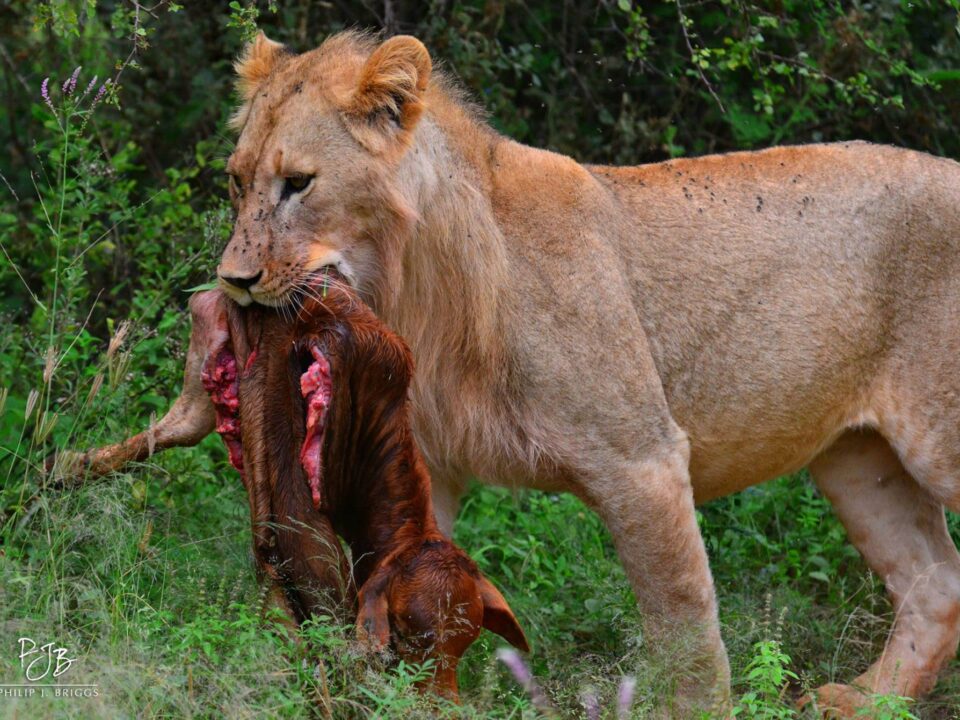
How Seasonal Wildlife Murchison Affects Lions
Lions respond indirectly to seasonal changes because their prey responds to those changes.
Murchison supports lions, and UWA identifies the Heart of Murchison as an important area for lion viewing because of its Uganda kob herds.
When prey animals change their movements, predators may follow them.
During dry conditions, animals can concentrate around water and remaining grazing areas. This can create areas where predators have more opportunities to encounter prey.
However, lions are territorial and mobile. They do not simply remain beside a waterhole waiting for prey.
Therefore, even during a season known for strong wildlife viewing, a lion sighting remains a matter of chance and skilled searching.
Safari O’clock guides can improve the search by understanding recent sightings and habitat conditions, but we never promise a particular predator.
Seasonal Wildlife Murchison and Leopards
Leopards are more difficult to connect directly to seasonal changes because they are secretive and adaptable.
Murchison’s woodland, grassland and riverine habitats provide suitable environments for leopards. Research supported by UWA has documented leopard presence in the Nile Delta area, showing the importance of this part of the park for large carnivores.
Seasonal changes can alter vegetation and prey distribution, which may influence where leopards move.
Yet leopard sightings remain unpredictable.
A leopard may remain hidden in dense vegetation during a period when prey is plentiful. Another may cross a road unexpectedly when the conditions are completely different.
This is why leopard viewing requires patience.
For Safari O’clock guests, the objective is to search carefully while respecting the animal’s space.
Seasonal Wildlife Murchison and Hippos
Hippos are strongly associated with permanent water, so their seasonal pattern differs from many terrestrial herbivores.
The Victoria Nile provides an important year-round aquatic habitat. UWA describes hippos as permanent residents along the river below Murchison Falls.
This means that visitors can expect the river to remain important even when surrounding grasslands become dry.
During the hotter dry months, water provides essential relief. Hippos spend much of their day in water and emerge to graze, particularly around cooler periods.
For safari visitors, this makes the Nile one of the most reliable places to experience the park’s aquatic wildlife.
The boat safari therefore complements the game drive beautifully.
Seasonal Wildlife Murchison and Nile Crocodiles
Nile crocodiles also remain closely connected to the river.
The Victoria Nile below the falls provides suitable habitat, and crocodiles can be seen basking along the banks or lying quietly near the water.
Unlike many savannah mammals, their relationship with the river means that seasonal changes in surrounding grassland do not necessarily determine their visibility in the same way.
The river remains a constant feature.
That permanence is one reason the Nile creates such a strong wildlife corridor through Murchison Falls.
A Safari O’clock itinerary that combines a game drive with a boat cruise therefore allows visitors to experience both the terrestrial and aquatic sides of the ecosystem.
Seasonal Wildlife Murchison and Birdlife
Birdlife may be one of the biggest reasons to think beyond the classic dry-season safari.
Murchison Falls currently has a remarkable bird list, with UWA recording 556 bird species. The Albert Delta is particularly important for waterbirds and includes habitat for the shoebill, pelicans, darters and several heron species.
The wet season can create abundant food and fresh habitat. However, rain can also make roads and trails more difficult.
UWA advises that Uganda is good for birding year-round, but identifies late May through September as a generally favourable period because rainfall is lower and food is abundant.
For Safari O’clock travellers who combine birding with a traditional wildlife safari, this is useful information.
The best season for your trip may depend on whether your priority is large mammals, birds, photography, scenery or a combination of all four.
Seasonal Wildlife Murchison and the Albert Delta
The Albert Delta deserves special attention because it demonstrates how wetlands can buffer seasonal changes.
UWA identifies the Albert Delta wetland system as a feeding and watering refuge for wildlife during dry seasons. The delta is also recognised as a Ramsar site and an Important Bird Area.
When surrounding areas become drier, wetlands retain ecological importance.
This creates a fascinating contrast.
The grassland may appear dry and golden, while the wetland remains green and productive.
Animals can move between these habitats depending on their needs.
For visitors, this creates opportunities for both wildlife viewing and birdwatching in a relatively compact part of the larger Murchison ecosystem.
Does Rain Make Wildlife Harder to See?
Sometimes, but not always.
Heavy rainfall can reduce visibility for visitors. Roads may become muddy, and animals can be harder to spot when vegetation becomes dense.
UWA’s birding guidance also notes that wet-season rain can interfere with birding and that roads and forest trails may become more difficult.
However, rain itself does not mean that wildlife disappears.
In fact, the period after rain can be fascinating. Fresh vegetation attracts herbivores, insects become active and birds may take advantage of new feeding opportunities.
The key is flexibility.
Safari O’clock can plan the day’s activities around the prevailing weather rather than assuming that every day will follow exactly the same schedule.
Does the Dry Season Guarantee Better Wildlife?
No.
The dry season is generally considered a strong period for wildlife viewing because animals tend to concentrate around water sources. UWA explicitly identifies the dry seasons as the best general time to visit Murchison for this reason.
However, concentration does not mean guaranteed sightings.
Animals still move. Predators can be hidden. Elephants can be far from the river. Leopards can disappear into woodland. Weather can change quickly.
A skilled guide improves your chances, but nature always retains an element of uncertainty.
That uncertainty is part of the safari experience.
Seasonal Wildlife Murchison and Photography
Every season offers a different photographic story.
Dry-season photography often produces open landscapes, golden grass and strong contrasts between animals and their surroundings.
Wet-season photography can produce deep greens, dramatic clouds, reflections and colourful vegetation.
Giraffes can stand out beautifully against dry plains, while elephants may create striking photographs against green vegetation after rainfall.
Bird photographers may also appreciate wetland activity and seasonal changes in bird behaviour.
At Safari O’clock, we encourage photographers to choose their travel period according to the kind of images they want to create rather than assuming one season is universally superior.
Seasonal Wildlife Murchison and Game Drive Timing
The season can influence not only where animals are found but also how comfortable it is to search for them.
During hotter dry periods, early morning and late afternoon drives can be particularly attractive because temperatures are lower.
Midday can become hot, with UWA reporting dry-season daytime temperatures that can occasionally rise above 35°C.
During wet periods, the main consideration may instead be rainfall.
A morning can begin dry and later become wet. Another day can bring a short shower followed by sunshine.
Therefore, flexibility matters.
Safari O’clock can structure game drives and other activities so that travellers have a better chance of enjoying the park without making the itinerary unnecessarily rigid.
Seasonal Wildlife Murchison and the Safari Experience
One of the biggest mistakes travellers make is thinking only about animals.
Season changes the entire safari experience.
In the dry season, the landscape can feel open, warm and expansive. Dust may rise behind the vehicle, golden grass covers the plains and animals become strongly associated with permanent water sources.
In the wet season, the same landscape can look almost transformed. Grass becomes greener, clouds build over the savannah and fresh growth appears across the plains.
The animals are still there.
The landscape simply tells a different story.
That is one reason returning to Murchison Falls in a different season can feel like visiting a different destination.
Which Season Is Best for Seasonal Wildlife Murchison?
There is no single answer for every traveller.
If your main priority is traditional savannah wildlife viewing, the dry seasons are generally the easiest choice. UWA specifically recommends December to late February and June to September because animals tend to concentrate around water.
If you enjoy green landscapes, fewer-weather-dependent expectations and the visual drama of rain, the wet season can offer a different experience.
Birdwatchers may also consider the timing of their trip carefully. UWA describes Uganda as a year-round birding destination but highlights late May through September as generally favourable.
Therefore, the right season depends on your priorities.
Murchison Falls Wildlife Month by Month
January in Murchison Falls
January falls within the dry season. The landscape can be relatively dry, and animals may make greater use of permanent water sources. It can be a strong month for traditional game viewing, although conditions can become hot.
February in Murchison Falls
February remains part of the dry period. Temperatures can rise, and water becomes increasingly important to wildlife. Early morning and late afternoon drives can provide comfortable viewing conditions.
March in Murchison Falls
March marks the beginning of the wetter period identified by UWA. Rain can begin transforming the vegetation, although conditions vary from year to year. Wildlife remains present, and the landscape starts becoming greener.
April in Murchison Falls
April is usually one of the wetter months. UWA’s climate assessment identifies it as the month that typically receives the heaviest rainfall.
The landscape can be lush, but heavy showers may affect road conditions.
May in Murchison Falls
May is still within the main wet period. Vegetation can remain green, while rain gradually becomes less dominant toward the end of the month.
This can be an attractive period for travellers who appreciate scenery and birdlife.
June in Murchison Falls
June begins the longer dry period. The landscape starts becoming drier, and wildlife viewing conditions generally become stronger.
UWA identifies June through September as part of the main dry season.
July in Murchison Falls
July is within the dry season and is often a popular safari period.
Open vegetation and lower rainfall can make game drives comfortable and productive, although wildlife sightings still depend on daily conditions.
August in Murchison Falls
August continues the dry period. Water sources remain important, while grassland conditions become increasingly dry.
This can create good visibility across open savannah.
September in Murchison Falls
September remains within UWA’s identified dry season. It can provide a combination of relatively dry roads and good wildlife-viewing conditions.
However, temperatures can still be high.
October in Murchison Falls
October marks the return of the wetter period.
Rainfall can begin restoring vegetation, and the landscape may gradually become greener.
November in Murchison Falls
November remains part of the wet season. Fresh vegetation can be widespread, while rainfall can affect road conditions.
The park continues to support excellent wildlife and birdlife.
December in Murchison Falls
December marks the beginning of the second dry period. Conditions often become drier, and animals can gradually become more concentrated around reliable water sources.
UWA includes December through February among the main dry periods.
How Safari O’clock Uses Seasonal Knowledge
At Safari O’clock, we do not treat a Murchison Falls safari as a fixed product that looks exactly the same in January, April and August.
The season matters.
We consider rainfall, road conditions, wildlife distribution, your interests and the activities you want to combine.
A traveller focused on lions may benefit from a different game-drive strategy from a photographer focused on landscapes. A birdwatcher may choose a different travel period from someone whose priority is large mammals.
We can also combine game drives with the Nile boat safari, which gives visitors access to a different part of the ecosystem.
That flexibility is especially important because Murchison Falls is a large landscape.
Combining Seasonal Wildlife Murchison With a Nile Boat Safari
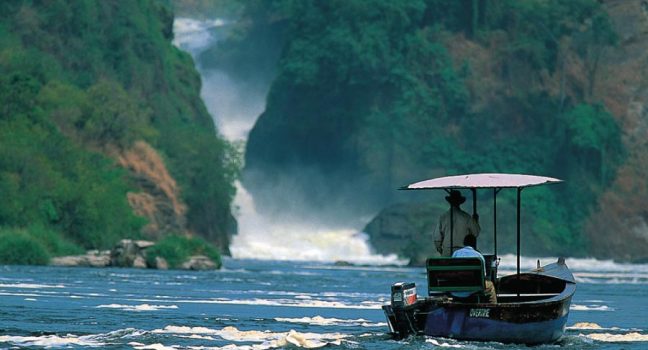
The Victoria Nile remains one of the strongest constants in Murchison Falls.
UWA describes the river below the falls as an important wildlife-viewing area where elephants, giraffes and buffaloes come to the riverbanks, while hippos and crocodiles remain associated with the water.
A boat safari therefore complements seasonal game drives.
During the dry season, the river can become even more important as a dependable source of water.
During wetter months, the surrounding landscape may contain more temporary water, but the Nile remains a permanent feature.
The boat also changes your perspective. Instead of looking across grassland from a vehicle, you watch wildlife from the river.
Safari O’clock can combine both experiences into the same itinerary.
What Should You Pack for Different Seasons?
Your packing list should reflect the weather.
During dry periods, lightweight clothing, a hat, sunglasses, sunscreen and sufficient drinking water are useful. A light jacket can also help during cooler early-morning drives.
During wet periods, add a waterproof jacket, suitable footwear and protection for cameras and other electronics.
Binoculars remain useful in every season.
A camera with a flexible lens can also help because wildlife may appear close to the road one moment and far across the plains the next.
Most importantly, dress for changing conditions rather than assuming the park will remain hot and dry all day.
Does Seasonal Change Affect Road Conditions?
Yes.
Rain can affect unpaved roads, tracks and access routes. UWA’s birding information warns that wet-season conditions can make roads and trails more difficult.
This is another reason why experienced safari planning matters.
A route that works well in dry conditions may not be the best choice immediately after heavy rain.
Your driver-guide can assess conditions and choose practical routes while following park regulations.
UWA also requires visitors and motorists to follow designated routes and speed regulations inside Murchison Falls National Park. The authority currently states a 40 km/h speed limit within the park and prohibits unnecessary stops, hooting and feeding wildlife.
Seasonal Wildlife Murchison and Conservation
Seasonal change is not only a tourism issue.
It is part of the ecological system that supports Murchison Falls.
Rainfall influences vegetation. Vegetation influences herbivores. Herbivores influence predators. Water influences almost every part of the ecosystem.
UWA’s climate-risk assessment notes that longer dry periods and increased temperatures can increase fire risk. It also explains that fire can affect wildlife and habitat, while moderate fire can stimulate new grass shoots that benefit some grazers such as Uganda kob.
This shows why seasonal ecology is more complicated than simply calling one period “good” and another “bad.”
Different conditions create different ecological opportunities and pressures.
Why Returning to Murchison in Another Season Can Be Worth It
If you have already visited Murchison Falls during the dry season, returning during a wetter period can completely change your impression of the park.
The landscape can look different.
The vegetation changes.
Bird activity can change.
Animal movements can change.
Even the colours of your photographs can change.
The same river remains at the centre of the park, but its surroundings may look dramatically different.
This is one of the great advantages of safari travel.
You are not simply visiting a collection of animals.
You are visiting a living ecosystem.
Frequently Asked Questions About Seasonal Wildlife Murchison
What is the best season for wildlife in Murchison Falls?
UWA identifies the dry periods from December to late February and June to September as the best general time to visit for wildlife viewing because animals tend to concentrate around water sources. However, wildlife viewing remains possible throughout the year.
What happens to wildlife during the rainy season?
Rain spreads water and stimulates fresh vegetation. As a result, some herbivores can use a wider range of the landscape. Wildlife does not disappear, but distribution can become less concentrated around permanent water.
Are lions easier to see in the dry season?
Dry conditions can make some wildlife more concentrated around water and remaining feeding areas. This can help wildlife viewing, but lion sightings remain unpredictable. Lions move across large territories and can remain hidden.
Are elephants easier to see during the dry season?
Dry conditions can increase the importance of permanent water sources, including the Nile. Elephants may therefore be encountered around water more often. However, they can move widely, so sightings are never guaranteed.
Is Murchison Falls worth visiting during the wet season?
Yes. The park remains open to wildlife viewing, and the green landscape can be beautiful. Wet-season travel can also be rewarding for birdwatchers and photographers. The main disadvantage is that heavy rainfall can affect road conditions.
Which months are dry in Murchison Falls?
UWA’s current climate information identifies December to February and June to September as the main dry periods.
Which months are rainy in Murchison Falls?
The main wet periods are March to May and October to November. UWA identifies April as the month that typically receives the heaviest rainfall.
Can I see giraffes throughout the year?
Yes. Giraffes are resident wildlife in Murchison Falls. Their visibility can change with vegetation and location, but the species does not disappear during the rainy season.
Can I see hippos during the dry season?
Yes. Hippos remain associated with the Victoria Nile and other permanent water habitats. UWA describes the river as supporting permanent hippo populations.
Is the wet season bad for a Uganda safari?
No. The wet season simply provides a different safari experience. Rain, greener vegetation and changing wildlife distribution can create excellent opportunities, although roads can become more challenging.
When is birding best in Murchison Falls?
UWA considers Uganda good for birding throughout the year. It identifies late May through September as generally favourable because rainfall is lower and food is abundant.
Should I choose Murchison Falls based only on the season?
No. Consider your wildlife interests, photography goals, travel schedule and tolerance for rain or heat. Safari O’clock can help match the itinerary to your priorities.
Final Thoughts on Seasonal Wildlife Murchison
Murchison Falls is never exactly the same from one season to another.
The dry season can bring open landscapes, strong wildlife concentrations around water and comfortable conditions for classic game viewing. The wet season can transform the park into a greener landscape filled with fresh vegetation, dramatic skies and different wildlife movements.
The Victoria Nile remains an important constant. Its water supports hippos and crocodiles and attracts elephants, buffaloes and other animals. The Albert Delta provides an important feeding and watering refuge during dry conditions, while its wetlands support remarkable birdlife.
So, when planning your Uganda safari, do not ask only, “Which season has the most animals?”
Ask a broader question:
What kind of Murchison Falls experience do I want?
If your priority is classic game viewing, the dry season is a strong choice. If you want lush scenery, birdlife and a quieter green-season atmosphere, the wet season can be rewarding. If you want the most complete experience, Safari O’clock can design an itinerary that combines game drives, the Victoria Nile boat safari and other activities around the conditions of your travel period.
Ultimately, seasonal wildlife Murchison is about understanding change.
Rain changes the grass.
Grass changes where herbivores feed.
Herbivores influence predator movements.
Water influences where animals gather.
And all of these changes shape what you experience from the safari vehicle.
That is what makes Murchison Falls so fascinating.
You are not visiting the same park every month.
You are watching one living ecosystem move through its annual cycle.