- DIRECT CONTACTS:
- +256394517569
- tours@safarioclock.africa

What Animals Are Most Active During an Evening Safari in Rwanda?

Morning vs Afternoon Game Drives in Murchison Falls National Park: Which Is Better?
September 15, 2026
Seasonal Wildlife Changes in Murchison Falls National Park: What Happens Throughout the Year?
September 16, 2026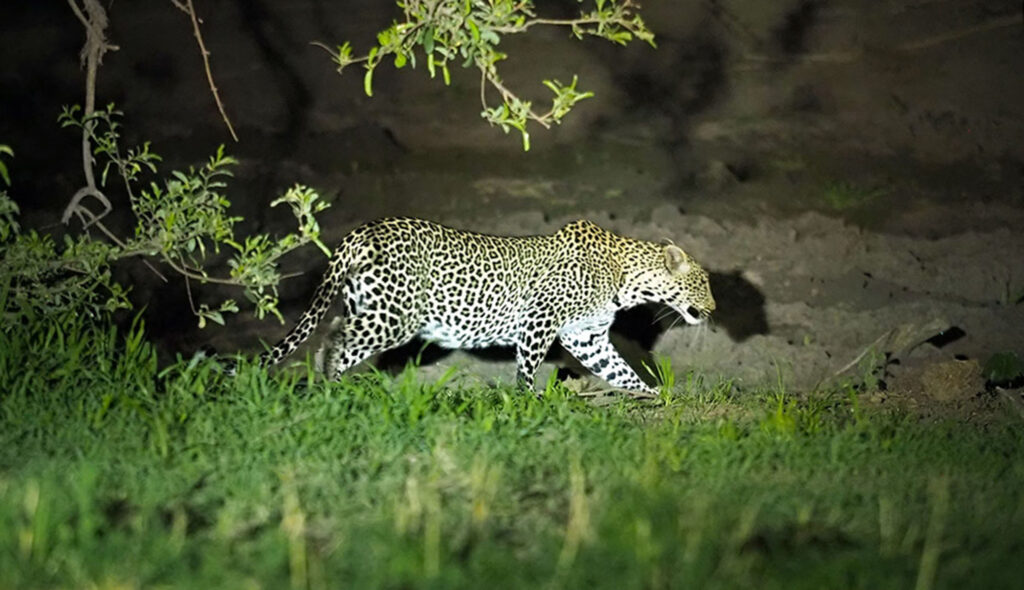
An evening safari in Rwanda offers a very different wildlife experience from a traditional morning game drive. As the sun drops toward the horizon, Akagera National Park begins to change character. The heat of the day starts to ease, shadows stretch across the savannah and some animals become more active. Then, as darkness arrives, the safari becomes even more specialised. A spotlight replaces natural daylight, and your guide begins searching for animals that are difficult to find during the day.
For travellers planning an evening safari Rwanda experience, this change is one of the biggest attractions. You are not simply repeating a daytime game drive at a later hour. Instead, you are entering a different phase of the ecosystem. Lions may become more active, leopards can be easier to search for, spotted hyenas may begin moving, and small nocturnal mammals such as bushbabies and potto become possible sightings. Rwanda’s tourism authority specifically describes Akagera’s guided night drives as an excellent way to finish the day and notes that they provide strong opportunities for nocturnal wildlife, including lions and leopards.
At Safari O’clock, we therefore treat an evening safari as a wildlife experience in its own right. The objective is not to promise a particular animal. Instead, we help travellers understand what changes after sunset, which species become more active and how guides search for wildlife in low light.
Why an Evening Safari Rwanda Experience Is Different
Akagera is Rwanda’s only protected savannah region and contains a mixture of open plains, woodland, wetlands, papyrus areas and lakes. This combination supports a remarkably varied wildlife community. African Parks, which manages the park in partnership with the Rwanda Development Board, currently describes Akagera as home to more than 8,000 large mammals and around 500 bird species.
During daylight hours, visitors can encounter elephants, buffaloes, giraffes, zebras, antelopes, lions, leopards, rhinos and many other species. However, not every animal uses the landscape in the same way after sunset. Some species become more active because the temperature falls. Others naturally prefer darkness because they are nocturnal. Meanwhile, some daytime animals simply continue feeding or moving before settling down for the night.
This creates layers of activity. The first part of an evening drive can still feel like a conventional safari. As darkness deepens, however, the experience becomes increasingly focused on nocturnal behaviour.
That transition is what makes an evening safari in Akagera so interesting.
Lions During an Evening Safari Rwanda
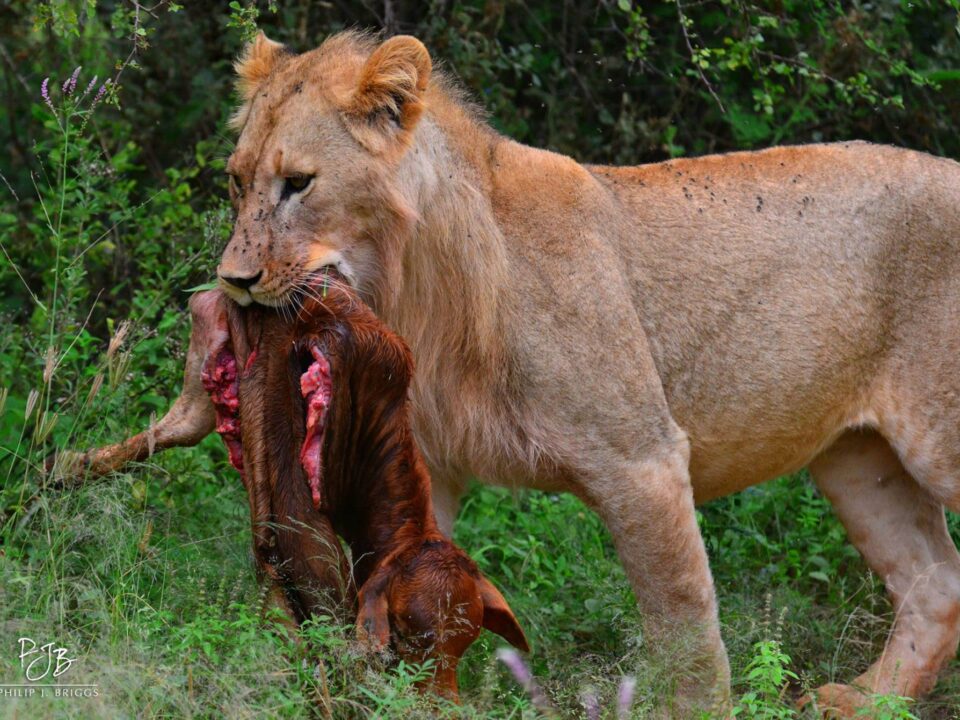
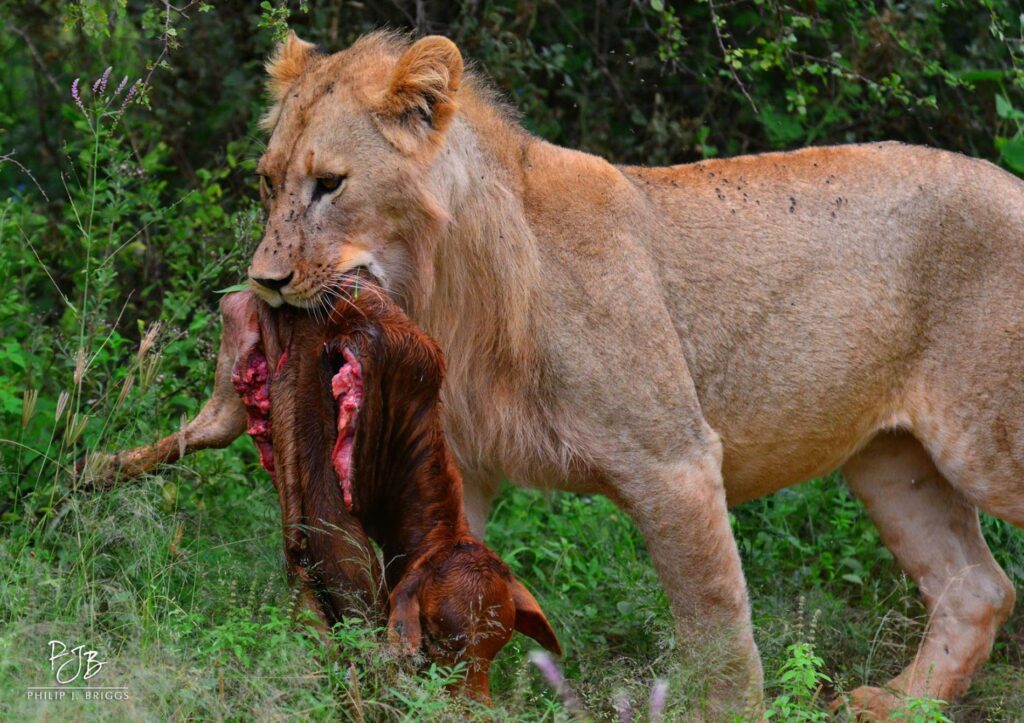
Lions are among the most exciting animals to search for after sunset. Rwanda’s tourism authority specifically includes lions among the nocturnal wildlife that visitors may encounter during guided night drives in Akagera.
Lions are not strictly nocturnal animals. They can hunt, rest and move during both day and night. However, cooler evening conditions can make activity more comfortable, particularly after the heat of the afternoon.
As darkness approaches, a pride may begin moving through its territory. Some individuals may rest while others become more alert. You may also find lions near prey species or moving between different areas of the savannah.
The important point is that an evening drive does not guarantee a lion sighting. Wildlife moves freely across a large landscape. A good guide therefore searches carefully rather than assuming that lions will be in a particular location.
For Safari O’clock guests, this is one reason we encourage patience. A few quiet minutes in the vehicle can suddenly become memorable when a spotlight catches the eyes of a lion in the grass.
Why Lions Become Interesting After Sunset
Temperature is one factor. During warmer parts of the day, lions often spend considerable time resting. As the temperature drops, they can become more comfortable moving around.
There is also the relationship between lions and their prey. Akagera supports numerous grazing and browsing animals, including zebra, impala, topi, buffalo, waterbuck and other antelope. The presence of prey helps shape where predators search and move.
Therefore, your guide may pay attention to areas where prey animals are concentrated rather than simply searching randomly for lions.
Leopards During an Evening Safari Rwanda
If there is one predator that can make an evening safari particularly exciting, it is the leopard.
Leopards are naturally difficult to see. They are secretive, highly adaptable and capable of moving quietly through woodland and grassland. Rwanda’s tourism authority describes Akagera as a hotspot for leopard viewing and specifically notes that leopards can be spotted during game drives, especially at night.
This makes the evening period especially valuable for travellers hoping to find one.
A leopard may walk along a track, move through grass or disappear into woodland before most people notice it. Its spotted coat also provides effective camouflage, particularly when vegetation and shadows reduce visibility.
Night-drive guides use lights carefully to search for the characteristic reflection from an animal’s eyes. Once a potential sighting appears, the guide can assess the animal and position the vehicle appropriately.
A leopard sighting is never guaranteed. However, the evening environment can give visitors a better opportunity to search for this elusive predator than a standard daytime drive.
Why Leopards Are Hard to Find
Leopards do not move around the park simply for visitors to photograph them. They have territories, hunting strategies and preferred habitats.
They can also avoid areas where lions or hyenas are active. As a result, finding one requires knowledge of the landscape and considerable patience.
This is where a professional guide adds value. Rather than driving quickly from one location to another, the guide watches the road, vegetation, tracks and surrounding terrain.
For Safari O’clock travellers, the search itself becomes part of the adventure.
Spotted Hyenas on an Evening Safari Rwanda
Spotted hyenas are another important animal to watch for as daylight fades.
Akagera supports spotted hyenas, and Rwanda’s tourism information lists them among the park’s wildlife.
Hyenas have a reputation for being primarily scavengers, but that description is incomplete. They are capable hunters and can play an important role as predators and scavengers within African ecosystems.
The evening can be a particularly interesting time to search for them because activity often increases as temperatures become cooler. You may encounter a hyena moving along a track, investigating a scent or travelling through the grasslands.
Their calls can also become part of the experience. Even before you see an animal, you may hear sounds coming from the darkness.
That combination of sound and limited visibility creates a very different atmosphere from a daytime game drive.
Bushbabies During an Evening Safari Rwanda
For travellers interested in smaller animals, bushbabies are among the most exciting possibilities.
Visit Rwanda specifically states that bushbabies are often seen on night drives in Akagera. Their large eyes help them see in darkness, while their large ears help them detect insects and other sounds.
Bushbabies are nocturnal primates. They spend the daylight hours hidden and become active after dark.
Finding one can therefore feel completely different from finding a large mammal. Instead of scanning open plains for elephants or buffaloes, your guide may search trees and vegetation with a spotlight.
A pair of reflective eyes may suddenly appear. Then, with careful observation, you may see the animal moving between branches.
For photographers, these encounters can be challenging. The animals are small, quick and often surrounded by darkness. Nevertheless, they can become some of the most memorable sightings of the entire safari.
Potto During an Evening Safari Rwanda
Akagera also offers the possibility of seeing potto, another nocturnal primate.
Visit Rwanda specifically lists the potto among species that can only be seen at night in Akagera.
The potto is small and secretive. Unlike the larger mammals that dominate most safari photographs, it requires a completely different style of observation.
Your guide may search branches and dense vegetation for eye-shine or movement. Even when the animal is difficult to see clearly, learning about its behaviour can make the encounter more meaningful.
This is an important reason to choose a knowledgeable guide for a night safari. A guide who understands nocturnal species can help you recognise animals that you might otherwise overlook.
Side-Striped Jackals After Dark
Side-striped jackals are also part of Akagera’s carnivore community. Visit Rwanda lists them alongside leopard and hyena among the park’s larger predators.
Jackals can move through open areas, woodland and grassland while searching for food. Their appearance may be brief, so you need to remain alert.
Unlike a daytime game drive, where a large animal may be visible from a considerable distance, an evening safari often requires you to look for smaller details.
A movement beside the road may be the only clue.
Then the spotlight reveals the animal.
This slower style of searching is one of the reasons night drives appeal to experienced safari travellers.
Hippos and Crocodiles Around Akagera’s Lakes
Not every interesting evening animal is strictly nocturnal.
Akagera contains a network of lakes and wetlands, with Lake Ihema among its best-known water bodies. Visit Rwanda highlights boat trips on Lake Ihema for sightings of hippos, Nile crocodiles and waterbirds.
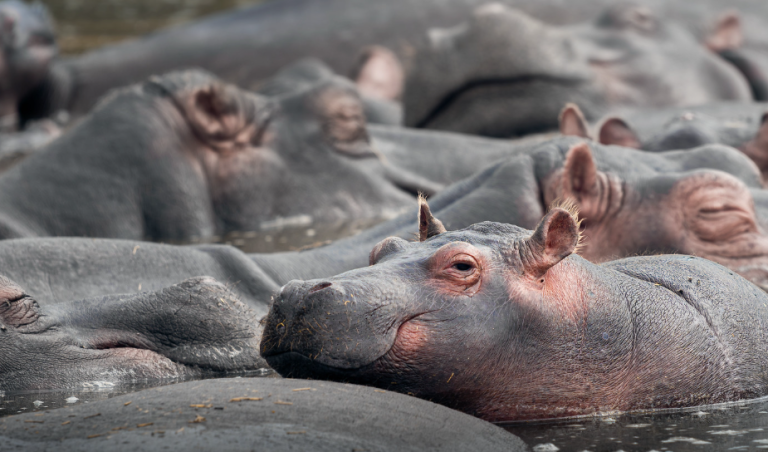
Hippos may remain in or around water after sunset. Their calls can carry across the lake, creating an impressive evening soundscape.
Crocodiles can also remain around the water after dark. However, a night game drive is not the same as a night boat trip. The two experiences provide different opportunities, so Safari O’clock can help you combine them where your itinerary allows.
An evening boat experience followed by a night drive can therefore provide a particularly varied wildlife day.
What About Elephants During an Evening Safari Rwanda?
Elephants are not nocturnal animals, but they can remain active into the evening.
Akagera is home to elephants, and the species can be encountered during both day and night activities.
As temperatures fall, elephants may continue feeding or moving through the landscape. Their large size makes them easier to recognise than smaller nocturnal species, even when visibility is limited.
However, visitors should never assume that elephants will appear simply because they are active at night. The animals can move over large areas, and their location changes continually.
If you encounter elephants after dark, the guide will manage the vehicle carefully and maintain a respectful distance.
Buffaloes and Other Grazers in the Evening
Buffaloes, zebras, antelopes and other herbivores may also remain active as the day cools.
Akagera’s savannah supports buffaloes, zebra, topi, waterbuck, roan, eland, impala and other plains species.
During the late afternoon, you may still encounter these animals feeding or moving across open areas. Once full darkness arrives, some may become less obvious, while others continue their normal activities.
This is why an evening safari should not be described only as a “predator drive.”
The sunset period can provide excellent opportunities for ordinary game viewing. Then, as darkness takes over, the focus can gradually shift toward nocturnal species.
What Happens During an Evening Safari Rwanda Drive?
The experience usually changes in stages.
You may begin the drive while there is still daylight. This gives you an opportunity to enjoy the landscape and observe animals in normal conditions.
As the sun approaches the horizon, the scenery changes. The light becomes softer, shadows grow longer and animals may begin moving again after the hotter part of the day.
Then darkness arrives.
At this point, a spotlight becomes an important tool. Instead of relying entirely on natural daylight, your guide searches for eye-shine, movement and silhouettes.
The atmosphere also changes. You hear insects, frogs and other sounds that are easily overlooked during a busy daytime safari.
Suddenly, the safari becomes less about scanning a wide landscape and more about discovering what is hiding within it.
Why the Guide Matters on a Night Safari
A night drive requires different skills from a daytime game drive.
During the day, you can often scan large areas of grassland with your eyes. At night, visibility becomes much more limited.
The guide therefore needs to understand animal behaviour and habitat. They must also use the spotlight responsibly and drive carefully.
For Safari O’clock, choosing the right guiding approach is part of creating a quality safari. The goal is not simply to find an animal quickly. The goal is to observe wildlife without unnecessary disturbance.
The guide can also explain what you are seeing. A pair of glowing eyes may belong to a bushbaby, genet, civet or another small nocturnal animal. Without knowledge, those sightings can easily be missed.
Evening Safari Rwanda for Wildlife Photography
Night photography is more demanding than ordinary safari photography.
Low light means you often need higher ISO settings, wider apertures and faster shutter speeds when animals are moving. The vehicle may also move while you are trying to frame the subject.
Consequently, travellers should adjust their expectations.
You may not return with the same number of sharp photographs that you would obtain during a bright morning drive. However, the images you do capture can be unusual because they show animals in a setting that most visitors never experience.
More importantly, do not let photography distract you from observation.
A bushbaby appearing briefly in a tree can be an incredible wildlife moment even if your camera cannot capture it perfectly.
Is an Evening Safari Suitable for Families?
It can be, but families should consider the children’s ages and routines.
Young children may become tired once darkness arrives. Older children, teenagers and wildlife-loving families may find the experience fascinating.
The novelty of searching for glowing eyes can also make a night drive educational. Children can learn that the African savannah remains active after the sun disappears.
Safari O’clock can help families structure the day so that the evening activity does not come after an exhausting schedule.
That matters because a tired traveller may enjoy a safari less, regardless of how many animals are present.
Evening Safari Rwanda During the Dry Season
Dry-season conditions can make wildlife viewing comfortable in many parts of Akagera, but travellers should still expect changes in animal behaviour.
The park’s varied habitats mean that water remains an important influence on wildlife distribution. Animals may gather around wetlands and other water sources, while predators follow areas where prey is available.
However, there is no fixed rule saying that every evening during the dry season will produce a particular species.
Wildlife remains unpredictable.
That uncertainty is not a weakness. It is part of what makes a genuine safari different from a zoo visit.
Evening Safari Rwanda During the Wet Season
The wet season can create a completely different landscape.
Rain brings fresh vegetation and changes the appearance of the savannah. It can also influence animal movement and road conditions.
For night drives, weather matters even more because visibility can become difficult during heavy rain.
Nevertheless, a wet evening can produce memorable conditions. The air may feel cooler, vegetation can appear lush and the sounds of frogs and insects can become more noticeable.
Safari O’clock can consider weather and road conditions when planning the timing of activities.
Is Akagera the Best Place in Rwanda for an Evening Safari?
Akagera is the natural choice for this type of experience because it is Rwanda’s protected savannah park and offers dedicated day and night game drives.
Rwanda’s official tourism information states that Akagera offers morning, afternoon and night game drives. It also describes guided night drives beginning at sunset as a strong opportunity for nocturnal wildlife.
This is different from Rwanda’s forest parks.
Nyungwe and Gishwati-Mukura are primarily forest ecosystems and are better known for primates, forest wildlife and birding. Akagera provides the classic savannah safari setting with large mammals and predators.
Therefore, travellers specifically looking for an evening wildlife drive should place Akagera high on their Rwanda itinerary.
Evening Safari Rwanda vs Uganda Night Drives
Uganda also offers night game-drive opportunities in selected protected areas.
UWA’s published tariff information includes night game drives in parks such as Murchison Falls, Queen Elizabeth and Kidepo Valley. UWA also states that night game drives are restricted to tourists sleeping within the park and that a UWA guide is mandatory.
Uganda’s night-drive experience can therefore be excellent for travellers already visiting those parks.
However, Rwanda’s Akagera has a particularly clear night-safari proposition. The official Rwanda tourism material directly promotes guided night drives and specifically highlights lions, leopards and other nocturnal wildlife.
For a Rwanda-focused itinerary, Akagera is therefore the destination Safari O’clock would build around when a night wildlife experience is one of the traveller’s priorities.
How Safari O’clock Can Combine an Evening Safari Rwanda Experience
An evening safari does not have to stand alone.
Safari O’clock can build it into a wider Akagera itinerary that includes a morning game drive, an afternoon wildlife activity or a boat trip on Lake Ihema.
For example, you could spend the morning exploring the savannah. After lunch, you could relax at your lodge. Then, as the afternoon begins to cool, you could head out again and continue into the evening.
Another option is to combine a daytime game drive with an evening boat experience. Lake Ihema provides opportunities to see hippos, crocodiles and waterbirds.
This creates a fuller picture of Akagera because you experience both land and water habitats.
What Should You Bring for an Evening Safari?
A few simple items can make the experience more comfortable.
Bring a light jacket because temperatures can fall after sunset. Closed shoes are useful, especially around lodges and vehicles. A camera with good low-light performance can help, while binoculars remain useful during the earlier daylight period.
A small amount of insect repellent may also be practical, particularly around wetlands and during warmer evenings.
Most importantly, bring patience.
Night wildlife is often smaller and harder to locate than the large animals you may see during the day.
What Should You Expect to See?
The honest answer is that you should expect variety rather than a guaranteed species list.
You could see a lion moving across the savannah. You might encounter a leopard along a track. A spotted hyena could appear in the distance. A bushbaby might leap between branches.
You could also spend considerable time searching without finding a major predator.
That is normal.
A successful evening safari is not necessarily the one with the longest list of animals. It can also be the drive where you learn how nocturnal ecosystems function and discover species you would never notice during the day.
The Most Exciting Animals to Look For
For travellers planning an evening safari in Akagera, the following animals deserve particular attention:
Leopard: One of the most sought-after evening sightings. Rwanda’s tourism authority specifically highlights Akagera as a strong location for leopard viewing, especially at night.
Lion: Lions can be active after sunset, and Rwanda specifically includes them among the nocturnal wildlife visitors may encounter on guided night drives.
Spotted hyena: A major Akagera predator that can become interesting as daylight fades.
Bushbaby: A genuinely nocturnal primate that Rwanda tourism information says is often seen on night drives.
Potto: A small nocturnal primate that Visit Rwanda identifies among species seen only at night in Akagera.
Side-striped jackal: Another carnivore that can be encountered in Akagera.
Elephant: Not strictly nocturnal, but elephants can remain active into the evening.
Hippo: Often associated with water and may be active after dark, particularly around Akagera’s lakes.
Crocodile: A water-associated species that can remain around lakes after sunset.
Evening Safari Rwanda: What Makes It Memorable?
The biggest difference is atmosphere.
During a morning drive, you can see the landscape stretching into the distance. You can easily identify trees, hills and animals. You can watch herds moving across the plains.
At night, your field of vision becomes smaller.
You hear more.
You wait more.
You notice the smallest movements.
A pair of eyes appears in the darkness. Your guide slows the vehicle. Everyone becomes quiet. For a moment, you do not know what will emerge from the vegetation.
That uncertainty creates a special kind of safari experience.
It is also a reminder that wildlife does not stop when tourists leave the park.
The African night has its own ecosystem.
Frequently Asked Questions About an Evening Safari Rwanda Experience
What animals are most active during an evening safari in Rwanda?
In Akagera, evening and night drives can provide opportunities to see lions, leopards, spotted hyenas, bushbabies, potto and side-striped jackals. Elephants, hippos and other daytime species may also remain active after sunset. Rwanda’s tourism authority specifically highlights lions, leopards and bushbabies for night wildlife experiences.
Are leopards easier to see at night in Akagera?
Night drives can improve opportunities to search for leopards because the species is elusive and can be active after dark. Visit Rwanda specifically describes Akagera as a leopard-viewing hotspot and notes that leopards can be seen especially at night.
Can I see lions during a night safari in Rwanda?
Yes, lions can be encountered during Akagera night drives. However, wildlife sightings are never guaranteed because the animals move freely throughout the park. Rwanda’s tourism guide identifies lions among the nocturnal wildlife visitors may encounter.
Can I see bushbabies in Akagera?
Yes. Visit Rwanda specifically says bushbabies are often seen on night drives in Akagera. Their nocturnal behaviour and large eyes make them one of the smaller but fascinating animals to look for after dark.
Can I see potto during a Rwanda night safari?
Pottos are among the nocturnal species associated with Akagera. Visit Rwanda lists the potto among species that can only be seen at night in the park.
Does Akagera offer night game drives?
Yes. Rwanda’s official tourism material states that Akagera offers morning, afternoon and night game drives. Guided night drives begin around sunset and focus on nocturnal wildlife.
Is a night safari the same as an evening safari?
Not always. An evening safari can begin before sunset and continue into darkness. A dedicated night drive generally focuses more heavily on nocturnal wildlife after dark. At Akagera, guided night drives are promoted as an activity beginning at sunset.
Is Akagera good for a first safari in Rwanda?
Yes. Akagera offers savannah landscapes and a wide range of large mammals, including the Big Five. African Parks currently describes the park as having more than 8,000 large mammals and around 500 bird species.
Can I combine a night drive with a boat safari?
Yes. Akagera also offers boat experiences on Lake Ihema, where visitors can look for hippos, Nile crocodiles and waterbirds. Combining land and water activities creates a broader wildlife experience.
Is an evening safari suitable for photographers?
Yes, but night photography requires different camera settings and more patience. The main value is often the experience itself rather than producing a large number of perfect photographs.
Will I definitely see a leopard on an evening safari?
No. Leopards are elusive and sightings cannot be guaranteed. A night drive can improve your opportunity to search for them, but wildlife remains free-ranging and unpredictable.
Final Thoughts on Evening Safari Rwanda Experiences
An evening safari Rwanda experience reveals a side of Akagera that many daytime visitors never see.
As the sun falls, the savannah changes. Lions may begin moving. Leopards become a major target for the night search. Hyenas can become active. Then, as darkness deepens, smaller nocturnal species such as bushbabies and potto become possible discoveries.
The experience is not simply about finding the Big Five.
It is about learning how an African ecosystem continues after sunset.
At Safari O’clock, we believe that is what makes a night safari worth adding to a Rwanda itinerary. You are not just extending a game drive. You are experiencing a different rhythm of the park.
If Akagera is already part of your Rwanda safari, adding an evening or night drive can give you another perspective on its wildlife. If you are building your itinerary from scratch, Safari O’clock can combine Akagera’s daytime game drives, evening wildlife viewing and Lake Ihema experiences into a well-paced safari.
The most important thing is to arrive with realistic expectations, a good guide and enough time to enjoy the search.
Because after the sun disappears, Akagera does not go quiet.
It simply becomes harder to see.