- DIRECT CONTACTS:
- +256394517569
- tours@safarioclock.africa

What Animals Can You See on a Boat Cruise in Murchison Falls?

Seasonal Wildlife Changes in Murchison Falls National Park: What Happens Throughout the Year?
September 16, 2026
Predator Prey Relationship in Murchison Falls National Park: How Wildlife Depends on Wildlife
September 16, 2026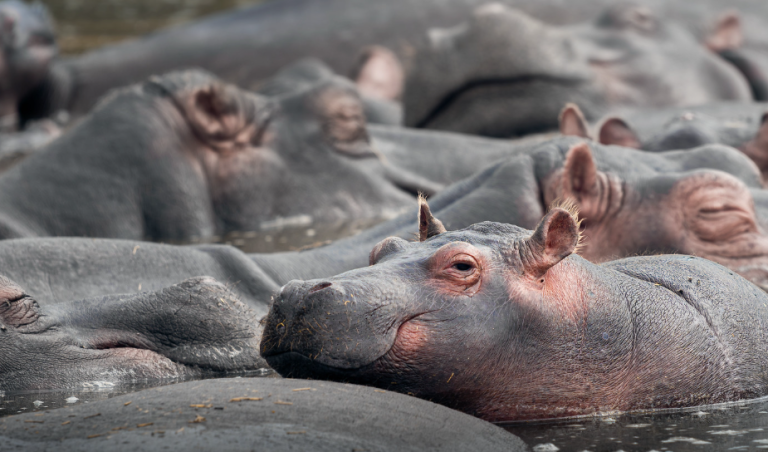
A boat cruise on the Victoria Nile is one of the most memorable experiences in Murchison Falls National Park. While many visitors first think about the dramatic waterfall, the journey toward the falls offers something equally special: wildlife along the river. From hippos resting in the water to Nile crocodiles lying quietly on the banks, the cruise gives you a different way to experience Uganda’s wildlife. You may also see elephants coming down to drink, buffaloes gathering near the river, giraffes feeding farther from the water, and a remarkable variety of waterbirds. The experience changes from one day to another because wildlife moves freely through the park. Therefore, nobody can promise a fixed list of sightings. However, with good timing, an experienced guide and a little patience, the animals on Murchison boat cruise can become some of the highlights of your Uganda safari.
For travellers planning a safari with Safari O’clock, the boat cruise also provides an important change of perspective. A game drive places you inside the savannah, while a boat places you on the Nile and lets you observe wildlife from the water. The river becomes your route through the wilderness. As a result, you can watch animals behaving naturally along the shoreline without the engine of a safari vehicle following them across the plains. The combination of a game drive and a boat cruise therefore gives you two very different ways to explore Murchison Falls National Park.
Why the Nile Boat Cruise Is Special for Wildlife Viewing
The Victoria Nile is one of the most productive wildlife-viewing areas in Murchison Falls National Park. The river flows through the park before reaching the narrow gorge where Murchison Falls forces the water through a tight passage. Before reaching the falls, the river becomes a broad wildlife corridor. Animals use the water for drinking, cooling down, feeding and crossing between habitats. UWA describes the riverbanks as an important place to see elephants, giraffes and buffaloes, while hippos, Nile crocodiles and aquatic birds remain closely associated with the river.
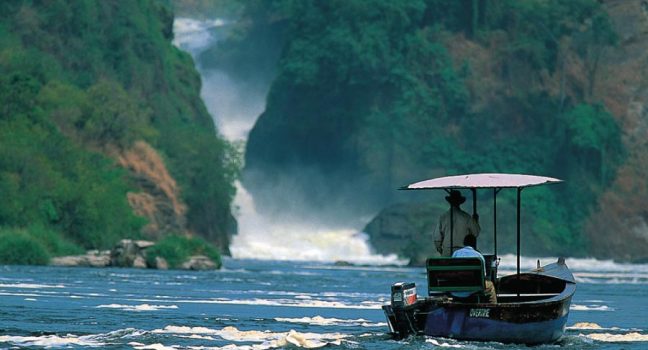
The classic cruise begins around Paraa and travels upstream toward the bottom of Murchison Falls. UWA’s park information describes this as a roughly three-hour return journey. Along the way, passengers can encounter resident hippos and crocodiles, as well as elephants and buffaloes that visit the river. The boat itself becomes a quiet observation platform, allowing passengers to scan both banks and the water for movement.
This is why the animals on Murchison boat cruise are not limited to creatures that live permanently in the water. Many of the most exciting sightings happen because land animals approach the river. An elephant may appear between trees, a buffalo may stand ankle-deep in the shallows, or a giraffe may rise above the vegetation farther from the bank. Meanwhile, hippos and crocodiles can remain in view for much longer because they spend substantial periods in or around the river.
Animals on Murchison Boat Cruise: Hippos
Hippos are among the most reliable wildlife encounters on the Murchison Falls boat cruise. UWA specifically notes that the Nile River boat ride allows visitors to see numerous hippos along the riverbanks and in the water.
You will often notice hippos before you see their entire bodies. A pair of rounded ears may twitch above the water, nostrils may appear briefly, or several heads may rise together from a calm pool. In other places, hippos rest in groups close to the bank. During the heat of the day, they spend much of their time in the water, which makes the Nile an excellent place to observe them.
Hippos are herbivores, despite their powerful appearance. They spend much of the day in water and usually leave the water to graze, particularly during cooler periods. Their presence also creates fascinating photographic opportunities. A group of hippos with only their eyes and ears above the surface can make a striking photograph, especially when the water reflects the surrounding vegetation.
However, visitors should never assume that hippos are harmless because they are herbivores. They are powerful wild animals and can become aggressive when people approach too closely. The advantage of the boat cruise is that passengers can observe them from a controlled distance while remaining on the vessel.
Animals on Murchison Boat Cruise: Nile Crocodiles
Nile crocodiles are another major attraction along the Victoria Nile. These reptiles can appear almost motionless as they lie on sandbanks or muddy river edges. Their stillness can make them difficult to notice at first. Once your eyes adjust, however, you may begin spotting more of them along the shoreline.
The crocodiles use the river as both habitat and hunting ground. Some lie with their mouths open while warming themselves, while others remain partly submerged. Their ability to remain almost completely still makes them particularly interesting to watch. A good guide can often point out crocodiles that passengers would otherwise miss.
UWA’s 2026 State of Wildlife Resources report notes that Uganda has conducted Nile crocodile surveys for decades, with monitoring focused particularly on the Victoria Nile between the delta and Murchison Falls. The latest study cited by UWA, from 2023, reported 1,110 crocodiles across Victoria Nile, Albert Nile, Murchison Falls National Park and Lake Victoria combined. This figure is a combined survey figure, not a count for Murchison Falls National Park alone.
That distinction matters when discussing animals on Murchison boat cruise. It is accurate to say that crocodiles are a regular and important part of the river ecosystem. It would not be accurate to turn a wider survey figure into a Murchison-only population estimate.
Animals on Murchison Boat Cruise: Elephants
Elephants are among the most exciting land mammals you can encounter from the boat. They may walk down to the water to drink, bathe or cool themselves. Sometimes a family group appears close to the bank, giving passengers an excellent opportunity to observe their behaviour from the river.
Murchison Falls is particularly important for elephants. UWA currently describes elephants as one of the major wildlife attractions of the park and reports that an aerial survey counted more than 900 individuals.
A boat cruise does not guarantee an elephant sighting because elephants move through a large landscape. Still, the river is an important resource, especially when conditions encourage wildlife to concentrate around available water. During dry periods, the shoreline can become particularly interesting because animals may visit the river more frequently.
Watching elephants from the boat can also reveal behaviour that is easy to miss during a game drive. You may see an elephant drinking with its trunk, spraying water over its body, crossing a shallow section or moving through vegetation behind the riverbank. If the herd remains comfortable, the animals may spend several minutes near the water.
For Safari O’clock travellers, this is one reason we recommend combining the boat cruise with a game drive. The river offers excellent opportunities for close observation, while the savannah provides a much better chance to search for elephants farther from the water.
Buffaloes Along the Victoria Nile
African buffaloes are another important part of the wildlife experience. Murchison Falls is known for its large savannah buffalo population, and UWA notes that buffaloes can occur in very large herds. They favour open savannah but also use areas near rivers and muddy wallows.
From a boat, buffaloes can appear as a dark mass near the water. A herd may stand at the edge of the river, graze nearby or enter shallow water. Their dark bodies contrast strongly with the pale grasses and open shoreline, which makes them relatively easy to identify when they are close to the river.
Buffalo behaviour can also change during the day. In hotter conditions, they may seek shade or remain closer to water. In cooler periods, they can spend more time grazing. Therefore, the exact appearance of a herd depends on weather, season, water availability and the animals’ movements.
Animals on Murchison Boat Cruise: Giraffes
Giraffes are less closely tied to the water than hippos or crocodiles, so sightings from a boat are less predictable. Nevertheless, the northern sector of Murchison Falls provides important giraffe habitat, and UWA lists giraffes among the major animals associated with the park.
When giraffes appear near the river, they can create an unforgettable scene. Their long necks rise above bushes and trees, making them easier to identify even when they are some distance from the boat. You may see a giraffe browsing on leaves, walking between trees or standing quietly while scanning the surroundings.
The best approach is to keep looking beyond the immediate shoreline. Many visitors focus entirely on the water because they expect hippos and crocodiles. However, the wider landscape can contain giraffes, buffaloes, elephants and antelopes. A skilled guide can help passengers divide their attention between the river and the surrounding vegetation.
Uganda Kob and Other Antelopes Near the River
The animals on Murchison boat cruise also include antelopes, although these sightings require more patience. Uganda kob are particularly important in Murchison Falls National Park. UWA highlights substantial Uganda kob herds in the Heart of Murchison, where they also support predator populations.
A boat cruise is not the primary activity for searching specifically for Uganda kob. Game drives provide better access to the open grasslands where large herds occur. However, individual animals or small groups can sometimes be visible from the river, especially where open areas reach the shoreline.
Other antelope species occur within the wider Murchison ecosystem as well. Waterbuck, hartebeest and other savannah species may appear near suitable habitats. Their visibility depends heavily on vegetation, distance from the river and animal movements.
This is an important distinction for safari planning. A boat cruise is best viewed as a river-based wildlife experience rather than a replacement for a game drive. The two activities complement each other.
Can You See Lions From the Boat?
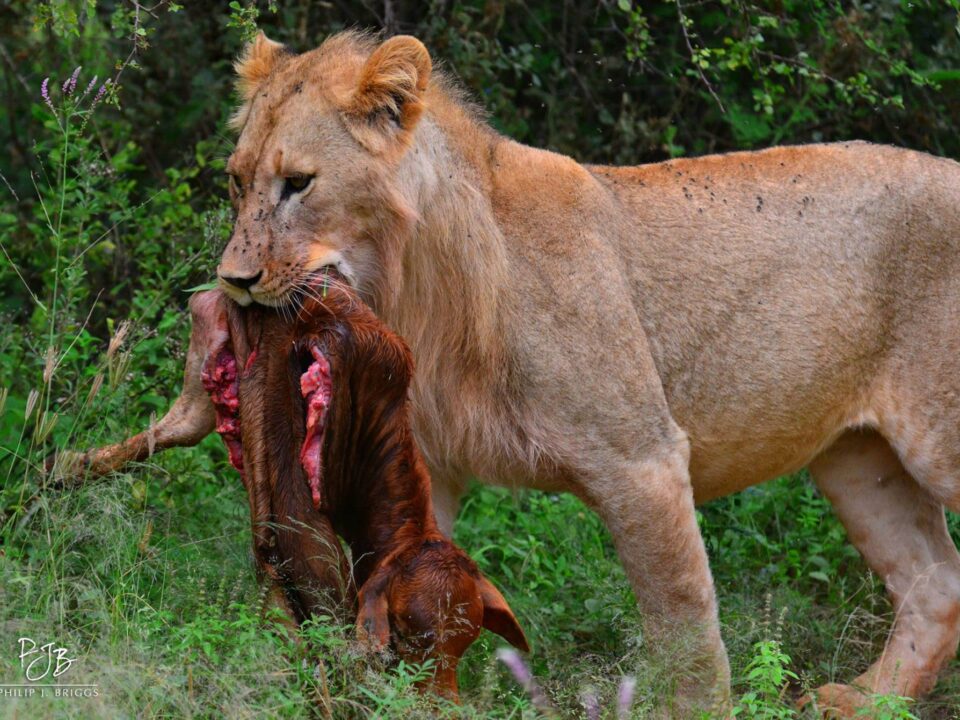
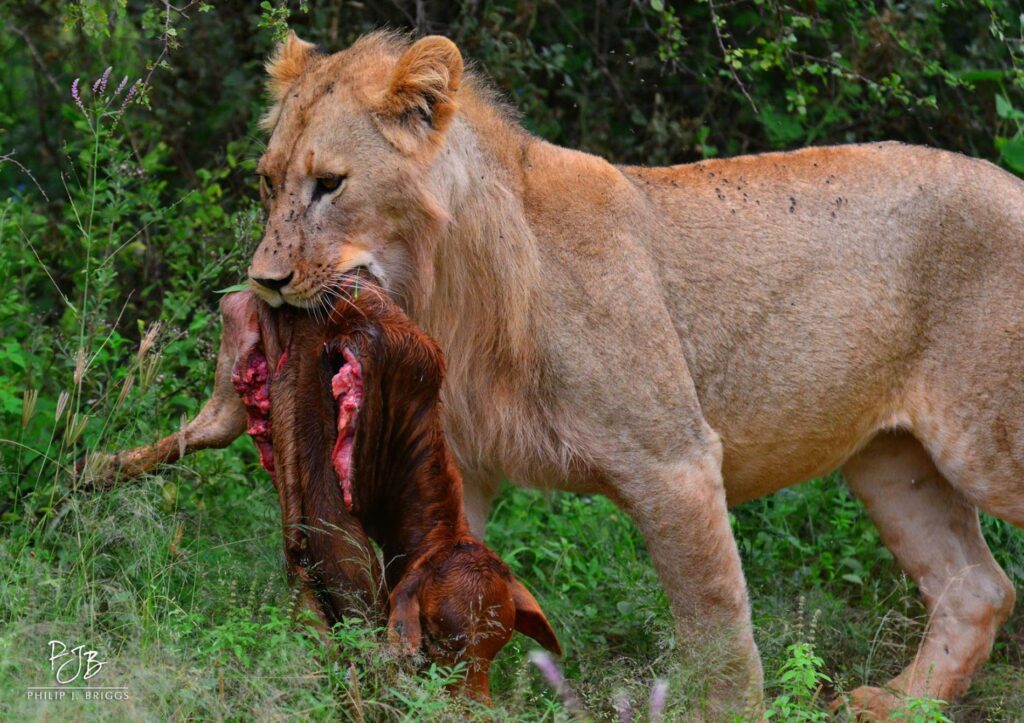
Lions are among the animals visitors hope to see in Murchison Falls, but they should not be treated as a regular boat-cruise sighting. Lions are primarily associated with the savannah rather than the river itself. UWA identifies the Buligi Peninsula and the Heart of Murchison as important game-viewing areas where visitors can search for large predators.
A lion could potentially appear near the river, especially if it is moving through the surrounding habitat. However, a visitor should not book the boat cruise expecting a lion sighting. Instead, Safari O’clock recommends combining the river cruise with a properly timed game drive if predators are high on your wildlife wish list.
This approach creates a more balanced safari. The boat concentrates on river wildlife and waterbirds, while the game drive opens access to the broader savannah ecosystem.
Leopards and Other Elusive Wildlife
Leopards are even less predictable from a boat cruise. They are secretive, solitary cats that usually avoid unnecessary exposure. Therefore, seeing one from the Nile would be an exceptional encounter rather than a normal expectation.
The same principle applies to many smaller mammals. Some species live near the river but remain hidden in vegetation. Others become active at times when most visitors are not on the boat. As a result, a successful wildlife cruise should not be judged only by the number of large mammals seen.
Instead, look at the whole ecosystem. The river may reveal tracks on a sandbank, birds hunting along the shoreline, crocodiles basking in the sun, hippos calling from the water and elephants approaching to drink. These details make the cruise valuable even when a particular animal remains hidden.
Birds You Can See on a Murchison Falls Boat Cruise
Birdwatching is one of the strongest reasons to take the Nile cruise. Murchison Falls National Park contains hundreds of recorded bird species, and UWA highlights aquatic birds along the river and the Albert Delta.
Commonly noticed species can include African fish eagles, kingfishers, herons, egrets, cormorants, darters and other water-associated birds. The exact species list changes with location, season, water levels and bird movements. Therefore, a boat cruise can produce a constantly changing sequence of sightings.
The African fish eagle is particularly memorable because it often perches above the river. Its call may attract your attention before you locate the bird. Kingfishers provide a different spectacle because they may sit quietly before suddenly diving toward the water.
The river environment also supports birds that feed along mudflats and shallow water. Herons and egrets may stalk prey at the edge, while darters and cormorants can swim or dive for fish.
Animals on Murchison Boat Cruise: The Albert Delta
The Albert Delta offers a different type of boat experience. Instead of travelling upstream toward the falls, visitors can travel downriver from Paraa toward the wetland channels leading into Lake Albert. UWA describes the delta as rich in waterbirds, with the shoebill being one of its most famous attractions.
The delta is particularly interesting for travellers who want to combine wildlife viewing with serious birdwatching. Its maze of channels, wetlands and islands creates habitats for many water-associated species. The landscape also changes the character of the safari. Rather than focusing mainly on the dramatic rapids and waterfall, visitors explore a quieter wetland environment.
The shoebill is one of the major attractions. However, seeing a shoebill is never guaranteed. These birds occupy specific wetland habitats and can remain motionless for long periods. Patience is therefore essential.
UWA’s park brochure identifies the December–February and June–September dry seasons as particularly favourable periods for shoebill sightings in the delta.
What Animals Can You See During the Dry Season?
The dry season can change the character of wildlife viewing along the Nile. As water becomes more concentrated in available sources, animals may visit the river more frequently. This does not mean that every animal will appear at the shoreline. Instead, it increases the importance of water as a resource within the wider ecosystem.
Hippos remain closely associated with the river, while elephants and buffaloes may make regular visits. Crocodiles continue to occupy suitable sandbanks and river edges. Birds also remain active because the river provides feeding opportunities.
UWA’s Murchison Falls information identifies the dry seasons as a particularly good period for general wildlife viewing because animals tend to concentrate around water.
For Safari O’clock guests, the dry season can therefore be an excellent time to combine a morning game drive with an afternoon or midday river cruise, depending on the safari itinerary and current operating conditions.
What Animals Can You See During the Wet Season?
The wet season creates a different safari atmosphere. Rain refreshes the landscape, vegetation becomes greener and wildlife can spread across a larger area because water is available more widely. Consequently, animals may not concentrate around the river as strongly as they can during drier periods.
However, the wet season should not be dismissed. Green landscapes can create beautiful photography conditions, and bird activity can be rewarding. The changing light can also make the river and surrounding vegetation look dramatically different.
Rain can affect road conditions and safari timing, so travellers should remain flexible. A short rain shower does not automatically end a wildlife experience. In fact, watching wildlife after rainfall can be memorable because animals may become active as temperatures fall.
Best Time to See Animals on Murchison Boat Cruise
There is no single hour that guarantees the best wildlife sightings. The most useful strategy is to match the cruise to your interests and the wider safari schedule.
If your priority is river wildlife, a standard upstream cruise toward the falls provides strong opportunities to see hippos, crocodiles and visiting elephants and buffaloes. UWA describes this as the park’s oldest and most popular excursion.
If your priority is birds, the delta cruise deserves serious consideration. The wetland channels offer a different habitat and can be especially rewarding for birdwatchers.
For large land mammals, the dry season can provide an advantage because water becomes more important to wildlife. Nevertheless, animal sightings remain unpredictable because Murchison Falls is a wild ecosystem rather than a controlled wildlife enclosure.
How Long Does the Murchison Falls Boat Cruise Take?
The classic boat cruise from Paraa toward the falls takes approximately three hours as a return journey, according to UWA’s park information.
That duration gives visitors enough time to observe both sides of the river. It also allows the boat to travel slowly through areas where hippos, crocodiles and other wildlife may be present.
However, the experience should not feel like a race to the waterfall. Some of the best moments happen before the boat reaches the falls. A crocodile basking on the bank, an elephant drinking at the river or a fish eagle calling from a tree can become more memorable than the destination itself.
What Should You Bring for a Murchison Boat Safari?
Good preparation can make a major difference. Bring binoculars if you have them, because many animals remain some distance from the boat. A camera with a useful zoom lens can also help you photograph wildlife without trying to get closer.
A hat and sunscreen are useful because much of the cruise takes place in open conditions. Light, breathable clothing works well in Uganda’s warm climate. A light waterproof layer can also help during periods of uncertain weather.
Most importantly, bring patience. Wildlife does not follow a schedule. You may spend several minutes watching an empty stretch of river before an elephant suddenly appears. The ability to remain observant is often more valuable than expensive equipment.
Wildlife Photography From the Boat
The boat provides a unique photography platform because the river gives you a broad field of view. Hippos and crocodiles can create strong close-range images, while elephants and buffaloes may provide larger landscape compositions.
Try to photograph the whole scene rather than only the animal. The Nile, vegetation, reflections and distant hills can show the relationship between wildlife and habitat. This approach often produces more meaningful safari photographs.
Avoid asking the boat operator to move unnecessarily close to wildlife. Good photography should never come at the expense of animal welfare or passenger safety. Instead, use your lens and wait for natural behaviour.
For Safari O’clock travellers, guides can also help identify species and explain behaviour. That extra knowledge turns a photograph into a story you can remember long after your Uganda safari ends.
Wildlife Safety During the Boat Cruise
A boat safari is generally a controlled wildlife-viewing activity, but passengers still need to respect the animals. Never attempt to feed wildlife, throw objects into the water or encourage animals to approach the boat.
Hippos and crocodiles deserve particular respect. Both are powerful wild animals. Remain seated or follow the instructions of the boat crew, especially when the vessel approaches areas with concentrated wildlife.
The same rule applies to elephants and buffaloes on the riverbank. Even when an animal appears calm, it can react quickly if it feels threatened. Your guide and boat operator understand how to maintain a safe viewing distance.
Responsible behaviour also protects the quality of the safari for future visitors. Quiet observation allows animals to continue their normal behaviour and gives everyone a better wildlife experience.
Why Combine the Boat Cruise With a Game Drive?
A boat cruise and game drive reveal different sides of Murchison Falls National Park. The boat provides access to river wildlife, while the game drive explores the savannah and woodland habitats away from the Nile.
From the boat, hippos, crocodiles, waterbirds and river-visiting elephants can dominate the experience. From the vehicle, you have better opportunities to search for lions, leopards, Uganda kob, giraffes, hartebeest and other savannah wildlife.
This combination is particularly useful for first-time visitors. Instead of asking whether the boat or game drive is better, treat them as complementary experiences.
Safari O’clock can structure a Murchison Falls itinerary around both activities so that travellers experience the river, savannah, wildlife and waterfall as parts of one connected ecosystem.
A Typical Murchison Falls Wildlife Day With Safari O’clock
A well-planned day can begin with an early game drive when temperatures are cooler and many savannah animals remain active. After breakfast or a suitable break, the itinerary can move toward the river for the boat cruise.
As the boat leaves Paraa, the landscape gradually changes. Hippos become visible in the water, crocodiles appear along the banks and birds begin to dominate the soundscape. Further upstream, passengers may encounter elephants or buffaloes visiting the river.
The journey then reaches the base of Murchison Falls, where the Nile squeezes through a narrow gorge. The power of the water becomes the visual climax of the trip. Yet the wildlife encounters along the way often become equally important memories.
After the cruise, travellers can continue with another safari activity, return to their lodge or explore another part of the conservation area. Safari O’clock can adapt the exact schedule according to the season, accommodation location and interests of the traveller.
Frequently Asked Questions About Animals on Murchison Boat Cruise
What animals are most commonly seen on the Murchison Falls boat cruise?
Hippos and Nile crocodiles are among the most dependable wildlife sightings because they live closely around the Victoria Nile. Elephants and buffaloes also visit the river, while birds occur throughout the river and wetland habitats. UWA specifically identifies hippos, crocodiles, elephants and buffaloes among the wildlife encountered during the classic cruise.
Can you see elephants from the boat?
Yes. Elephants can visit the river to drink, bathe or cool themselves. However, sightings remain wild and unpredictable. UWA lists elephants among the major animals associated with the Victoria Nile wildlife-viewing area.
Can you see lions from the boat?
It is possible, but lions are not a regular boat-cruise target. They are primarily associated with the surrounding savannah. A game drive offers a more appropriate opportunity to search for lions in Murchison Falls.
Can you see giraffes from the boat?
Giraffes can occur within sight of the river, but they are less closely tied to the water than hippos or crocodiles. Their visibility depends on vegetation, distance and animal movements.
Can you see crocodiles in Murchison Falls?
Yes. Nile crocodiles are an important part of the Victoria Nile ecosystem, and UWA specifically describes them as resident wildlife encountered during the boat journey.
Is the boat cruise good for birdwatching?
Yes. The Victoria Nile and Albert Delta provide important habitats for water-associated birds. The delta is particularly well known for birdwatching and the possibility of seeing the shoebill.
What is the best season for the Murchison Falls boat cruise?
The boat cruise operates as a wildlife experience across the year, but dry periods can offer advantages for general wildlife viewing because animals may concentrate more strongly around available water. UWA identifies December–February and June–September as dry periods and highlights these periods for wildlife viewing and, in the delta, shoebill sightings.
How long is the Murchison Falls boat cruise?
The classic Paraa-to-Murchison Falls boat trip takes about three hours as a return journey.
Final Thoughts: The River Is Part of the Safari
The greatest strength of a Murchison Falls boat cruise is its ability to bring several parts of Uganda’s wildlife story together. The river supports hippos and crocodiles, attracts elephants and buffaloes, and provides feeding habitat for a wide range of birds. Beyond the shoreline, giraffes, antelopes and other savannah animals may appear in the surrounding landscape.
The animals on Murchison boat cruise therefore represent more than a checklist of species. They demonstrate how water connects different habitats within the park. During a single journey, you can watch a crocodile basking on the bank, hear a fish eagle calling above the river, see hippos surfacing nearby and perhaps spot an elephant approaching the water. Each sighting adds another part to the story.
For travellers visiting Uganda with Safari O’clock, the best approach is to combine the boat cruise with a game drive. The river shows you one side of Murchison Falls National Park, while the savannah reveals another. Together, they create a much richer safari experience and give you more opportunities to understand the wildlife, landscapes and natural rhythms of one of Uganda’s most remarkable protected areas.
Murchison Falls is not simply a destination where you come to see a waterfall. It is a living ecosystem shaped by the Nile, the savannah, the wetlands and the animals that depend on them. A boat cruise allows you to experience that ecosystem from a completely different perspective, slowly and quietly, with the river carrying you into the heart of the wilderness.