- DIRECT CONTACTS:
- +256394517569
- tours@safarioclock.africa

Predator Prey Relationship in Murchison Falls National Park: How Wildlife Depends on Wildlife

What Animals Can You See on a Boat Cruise in Murchison Falls?
September 16, 2026
How to Combine a Boat Cruise and Game Drive in Murchison Falls
September 16, 2026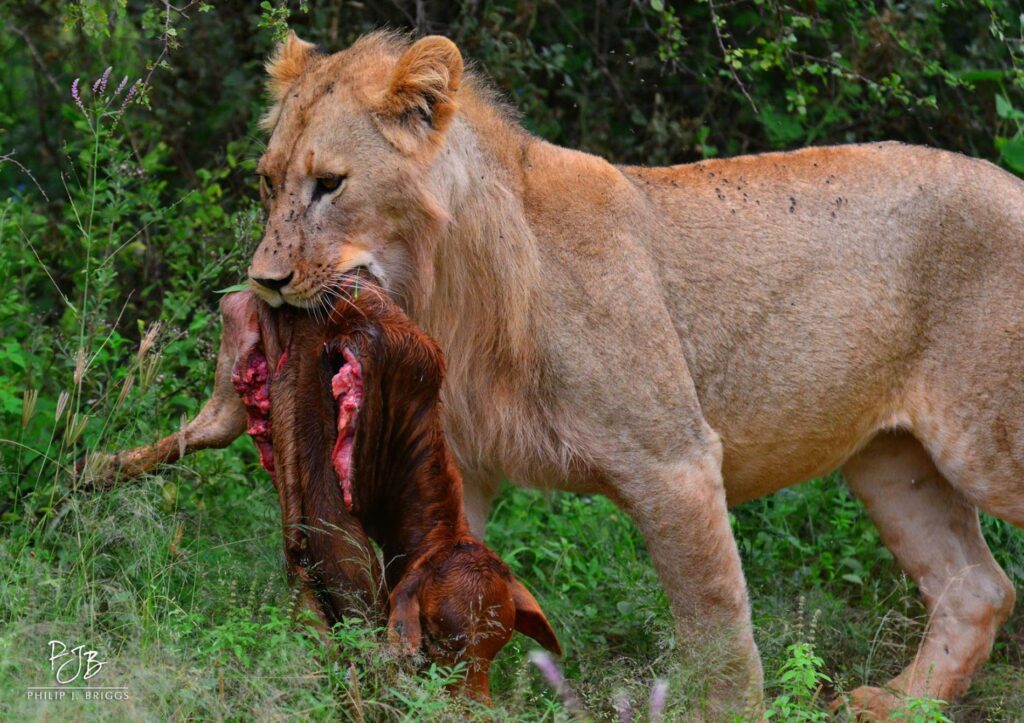
Murchison Falls National Park is famous for its powerful waterfall, the Victoria Nile, vast savannahs and remarkable wildlife. However, beneath those famous attractions lies another story that makes the park especially fascinating: the constant relationship between predators and prey. Every day, lions search for opportunities among Uganda kob herds, leopards move quietly through vegetation, hyenas compete for food, and herbivores remain alert to danger. At the same time, elephants, buffaloes, giraffes and antelopes shape the vegetation that supports the wider ecosystem. This interconnected system is the predator prey Murchison Falls relationship, and understanding it gives visitors a much deeper appreciation of what they see during a Uganda safari.
For travellers exploring Murchison Falls with Safari O’clock, predator and prey interactions are not simply about watching a lion chase an antelope. Most of the relationship happens without a dramatic hunt. A herd of Uganda kob may suddenly become alert when a predator appears nearby. A leopard may change direction after detecting a larger competitor. Hyenas may investigate the remains of a kill. Buffaloes may form a defensive group around young animals. Meanwhile, predators may spend hours resting because hunting requires considerable energy. Therefore, the real story is about balance, energy, competition, survival and adaptation.
Understanding the Predator Prey Murchison Falls Relationship
The simplest way to understand the predator prey Murchison Falls relationship is to look at energy moving through the ecosystem. Plants capture energy from sunlight. Herbivores consume those plants. Predators then obtain energy by hunting herbivores and other animals. Decomposers eventually return nutrients to the soil. This process connects grass, antelope, lion, soil, rainfall and every other part of the ecosystem.
Murchison Falls provides several habitats that support this system. UWA describes the northern section of the park as open savannah with Borassus palms and acacia woodland, while the southern section contains more woodland and forest. The park supports a large variety of mammals and birds, creating multiple food chains rather than one simple predator-prey chain.
Consequently, a lion does not depend on one prey species alone. A leopard does not hunt exactly the same animals as a lion. Hyenas can also exploit different food opportunities. Likewise, prey species respond to predators in different ways. Some rely on speed, some on camouflage, some on herding and some on choosing habitats that make detection more difficult.
That complexity makes Murchison Falls such an interesting place for wildlife observation. Every animal occupies a role, and changes affecting one species can influence others.
Predator Prey Murchison Falls: Why Uganda Kob Matter
Uganda kob are among the most important prey animals in the Murchison Falls ecosystem. These antelopes live in herds and form a major part of the savannah food web. UWA specifically notes that substantial Uganda kob herds occur in the Heart of Murchison and that this area has become known as a prime location for lions.
The connection is straightforward. Large herds provide predators with potential hunting opportunities. However, that does not mean lions can simply select any animal they want. Healthy adult kob can detect danger, run quickly and use the protection of the herd. Predators therefore need to choose their opportunities carefully.
Young animals can face greater risks. They are smaller, less experienced and may not run as efficiently as adults. Consequently, predators often test herds for vulnerable individuals. The presence of many healthy adults can also make hunting difficult because a predator may struggle to isolate one animal.
For visitors on safari with Safari O’clock, this behaviour can be fascinating even when no hunt occurs. A herd suddenly becoming alert can tell you that something has changed nearby. The animals may stop feeding, raise their heads and look in one direction. An experienced guide can then search the surrounding vegetation for a predator.
Lions and the Predator Prey Murchison Falls System
Lions occupy an important position near the top of the Murchison Falls food web. They are powerful predators, but they still depend on the availability, distribution and behaviour of prey.
UWA’s Murchison Falls material identifies the Heart of Murchison as a prime lion area because of its substantial Uganda kob herds. The broader park also provides habitat for buffaloes, antelopes, giraffes and other mammals that contribute to the prey base.
A lion’s life revolves around energy management. Hunting requires effort, and failure can be costly. Therefore, lions cannot waste energy on every potential target. They assess distance, wind, cover, herd behaviour and the condition of individual prey.
This explains why visitors may spend hours looking for lions without seeing a hunt. A successful hunt represents only a small part of a predator’s daily life. Resting, moving, scanning the landscape and staying close to other pride members also matter.
The latest UWA national wildlife report recorded 291 lions across Uganda’s monitored protected areas in the 2023–2025 assessment, compared with 314 in 2021–2022. These figures cover Uganda rather than Murchison alone, so they should not be interpreted as a current Murchison lion population estimate.
Leopard Hunting in the Murchison Falls Ecosystem
Leopards create a different predator-prey relationship. Unlike lions, leopards usually live alone and depend heavily on stealth. UWA describes the leopard as one of Uganda’s most secretive and elusive large carnivores. It also notes that leopards are solitary and often nocturnal.
This solitary lifestyle changes how the predator interacts with prey. A leopard does not normally have a pride supporting the hunt. Instead, it relies on camouflage, patience, speed and careful positioning.
Leopards can also use trees to protect their food. UWA notes that they can haul prey into trees, which can help them avoid losing a kill to competitors.
Murchison provides particularly interesting evidence of the species. A UWA-supported large-carnivore survey in the Nile Delta recorded 99 leopard detections involving 27 individual leopards, including 10 males and 17 females. The researchers estimated a density of 14.06 leopards per 100 square kilometres in that study area. The report describes this as among the highest densities recorded across the species’ African range.
That finding does not mean visitors will easily see leopards. Quite the opposite is true. The data demonstrate that a species can occur at relatively high density while remaining extremely difficult to observe.
Hyenas and Competition for Food
Hyenas add another layer to the predator-prey relationship. They can hunt prey themselves, but they can also take advantage of food that other predators have already obtained. This creates competition between carnivores.
Competition matters because a successful hunt does not always mean that the original predator gets to keep the entire meal. Lions can dominate smaller carnivores in some situations. Leopards may try to move their kills into trees. Hyenas can investigate kills and exploit opportunities.
This competition influences where predators move and when they feed. It can also affect how much energy an animal gains from a kill.
For safari visitors, this means that a carcass or group of vultures may provide important clues. Instead of driving past such a scene, a knowledgeable guide may stop at a safe distance and investigate. The surrounding animals can reveal that a predator has recently made a kill or that scavengers are taking advantage of one.
Predator Prey Murchison Falls and Buffalo Herds
Buffaloes occupy a fascinating position in the ecosystem because they are both prey and formidable animals in their own right. Lions can hunt buffaloes, but healthy adult buffaloes are dangerous opponents.
UWA notes that Murchison Falls can support very large buffalo herds and describes buffaloes as social animals that live in groups. The herds include related groups as well as bachelor groups. UWA also identifies lions and hyenas among their predators.
A buffalo herd therefore provides safety through numbers. Many eyes can detect danger, and adults can defend younger members. When a predator approaches, buffaloes may become highly alert and group together.
This is particularly important for calves. Young buffaloes have less physical strength than adults. Adults can form a defensive barrier around them, making it harder for predators to isolate a vulnerable animal.
The relationship therefore works in both directions. Lions need buffaloes as potential prey, but buffaloes also influence lion behaviour because an attempted hunt can injure or even kill a predator.
Predator Prey Murchison Falls and Other Antelopes
Uganda kob are not the only prey animals in Murchison Falls. Waterbuck, hartebeest, oribi, bushbuck, reedbuck and other antelopes contribute to the wider food web.
Each species uses the landscape differently. Some prefer open grassland, while others favour thicker vegetation or areas close to water. This habitat separation can reduce direct competition for food. At the same time, it gives predators several potential prey species to encounter.
UWA’s wider wildlife information lists numerous herbivores within the Murchison ecosystem, while its current park information identifies Uganda kob, buffaloes, elephants and giraffes among the major wildlife attractions.
For Safari O’clock guests, this diversity means a game drive can reveal much more than the famous Big Five. Watching how different antelope species feed, move and react to danger provides a deeper understanding of the ecosystem.
How Prey Animals Avoid Predators
Prey animals have developed many strategies to survive. The first is detection. An animal that notices a predator early has a much better chance of escaping.
Herding provides another advantage. A large group creates many eyes and ears. When one animal notices danger, others can respond quickly. This explains why herds may suddenly stop feeding and stare in one direction.
Speed also matters. Some antelopes can accelerate quickly and escape before a predator closes the distance. Others rely more heavily on camouflage or dense vegetation.
Buffaloes use another strategy. Instead of simply running away, adults can stand together and confront predators. This behaviour can discourage a lion from continuing an attack.
Young animals face greater challenges. They have less experience and often have weaker physical abilities. Consequently, mothers and herd members may position themselves between young animals and potential threats.
How Predators Choose Their Prey
Predators do not simply attack the nearest animal. They often assess opportunities before committing to a chase.
A lion may look for an animal that has become separated from the herd. A leopard may search for prey that comes within striking distance of cover. Hyenas may investigate an opportunity created by another predator.
This behaviour saves energy. A failed chase can leave a predator exhausted and still hungry. Therefore, successful predators often depend on patience as much as physical strength.
Wind direction can also matter. Predators benefit when they can approach without being detected. Prey animals, in contrast, gain an advantage when they detect predators before the predator reaches striking distance.
This constant contest between detection and concealment creates one of the most important dynamics in the Murchison ecosystem.
The Role of Young Animals in the Food Web
Young animals are an important part of the predator-prey relationship. They represent the next generation of herbivores, but they can also be more vulnerable than adults.
A young Uganda kob cannot run with the same confidence as an experienced adult. A buffalo calf has less strength than a mature buffalo. Other young antelopes also face greater risks during their early months.
However, vulnerability does not mean that predators always succeed. Mothers may defend young animals, herds may surround them, and suitable habitat can provide cover.
This creates a constant balance between reproduction and predation. Herbivore populations need enough young animals to replace adults lost through age, disease, predation and other causes. Predators, meanwhile, depend on enough prey surviving to maintain a sustainable food supply.
Predator Prey Murchison Falls During the Dry Season
Seasonal changes can influence predator and prey behaviour. During dry periods, water and food become more important because vegetation becomes less abundant in many areas.
Animals may move closer to remaining water sources. This can increase opportunities for predators because prey movements become more predictable in some landscapes. However, predators still need to locate and approach prey successfully.
UWA identifies the dry seasons in Murchison as favourable for general wildlife viewing because animals can concentrate around water.
The dry season can therefore create excellent safari conditions. Visitors may see large herbivore concentrations and increased animal activity around water. Yet the ecosystem remains dynamic. Not every predator follows the same movement pattern, and not every prey species responds identically.
For Safari O’clock, this is one reason seasonal safari planning matters. Guides can adjust game-drive routes and timing according to recent wildlife activity rather than relying only on a fixed route.
Predator Prey Murchison Falls During the Wet Season
The wet season changes the balance again. Rain creates fresh vegetation and spreads water across the landscape. As a result, herbivores can access food and water in more places.
This can reduce the need for some animals to remain close to major rivers or permanent water sources. Predators may therefore need to search across larger areas.
At the same time, new grass can provide valuable feeding opportunities for grazers. Young animals may also appear during periods of increased breeding activity in some species.
The green season can therefore provide a different safari experience. Wildlife may appear more dispersed, but the landscape becomes productive and visually dramatic.
How Vegetation Connects Predator and Prey
The predator-prey relationship begins long before a lion encounters an antelope. It begins with plants.
Grass and other vegetation provide food for herbivores. Herbivores convert plant energy into animal energy. Predators then obtain some of that energy by hunting herbivores.
This means that changes in vegetation can affect predators indirectly. If habitat quality falls, herbivores may have less food. If herbivore numbers or distribution change, predators may also change their movements.
UWA’s current Murchison information highlights the park’s combination of open savannah, Borassus palms, acacia woodland, woodland and forest habitats. That variety creates opportunities for many different species to coexist.
Consequently, conserving predators requires more than protecting predators themselves. The habitats supporting their prey also need protection.
Water and the Predator Prey Relationship
The Victoria Nile plays an important role in the Murchison ecosystem. Water attracts elephants, buffaloes, hippos, crocodiles and many birds. It also influences where herbivores spend time during dry periods.
Predators understand these movements. A lion does not need to know the ecological theory behind water concentration. It simply follows opportunities created by prey behaviour.
The same principle applies to leopards and other carnivores. Where prey gathers, predators may have more opportunities. However, prey animals also know that predators may be nearby, so they remain alert.
This creates a fascinating ecological paradox. Water attracts animals because they need it to survive. Yet gathering around water can also increase the possibility of encountering predators.
What Happens When Predator Numbers Change?
Predator populations can influence prey behaviour and distribution. However, it is important not to assume that every change in one species automatically produces a simple increase or decrease in another.
Ecosystems contain many interacting factors. Rainfall, vegetation, disease, habitat changes, human activity, competition and food availability can all influence wildlife populations.
The latest UWA national assessment illustrates this complexity. Between the 2021–2022 and 2023–2025 surveys, several herbivore populations increased nationally, including buffaloes, Uganda kob and waterbuck. At the same time, national lion numbers declined. These results demonstrate that predator and prey populations do not always move in opposite directions over a short period.
That is an important lesson for safari visitors. A healthy ecosystem does not require predators and prey to maintain perfectly predictable population ratios. Instead, conservationists monitor multiple species and environmental factors over time.
Predator Prey Murchison Falls and Conservation
Protecting the predator-prey relationship means protecting the entire ecosystem. Lions need prey. Prey needs vegetation. Vegetation needs functioning soils, rainfall and habitat. Wildlife also needs sufficient space to move and reproduce.
UWA’s current national wildlife assessment identifies habitat fragmentation, agricultural expansion, infrastructure development, extractive activities, climate variability, illegal wildlife use and human-wildlife conflict among the pressures affecting Uganda’s wildlife.
Murchison Falls also faces the challenge of balancing wildlife conservation with surrounding human communities. UWA has been implementing measures to reduce human-wildlife conflict in the Murchison Falls Conservation Area, including electric-fence expansion in areas affected by elephant incidents.
Conservation therefore involves more than protecting charismatic predators. It requires maintaining landscapes where prey can feed, reproduce and move naturally.
Why Large Carnivores Matter in Murchison Falls
Large carnivores are important indicators of ecosystem function because they depend on functioning food webs. Their presence does not prove that an ecosystem is perfect, but maintaining viable predator populations requires enough suitable habitat and prey.
UWA’s recent Strategic Action Plan for Large Carnivore Conservation includes Murchison Falls among the key landscapes studied for lions, leopards and other large carnivores. The leopard survey in the Nile Delta demonstrates the importance of the park for carnivore conservation.
Predators also have cultural and tourism value. Lions, leopards and hyenas attract visitors from around the world. Responsible tourism can therefore contribute to conservation by creating economic value around living wildlife.
For Safari O’clock, this makes wildlife interpretation an important part of the safari experience. Guests should not simply hear that a lion is nearby. They should understand why the lion is there, what it may be searching for and how its presence connects to the rest of the ecosystem.
What Safari Visitors Can Learn From a Predator Sighting
A predator sighting becomes more meaningful when you understand the behaviour around it.
If you see lions watching a Uganda kob herd, look at the kob as well. Are they feeding normally? Have they raised their heads? Are they moving closer together? Do they appear nervous?
If you see a leopard, look at the habitat. Is it using shade? Is it close to a tree? Is it watching another animal? Has it made a kill?
If you see hyenas, look at what has attracted them. Are they travelling together? Are they investigating a carcass? Are other predators nearby?
These questions turn a simple wildlife encounter into ecological observation.
Safari O’clock guides can help interpret these moments while maintaining a respectful distance from the animals.
Predator Prey Murchison Falls and Responsible Safari Viewing
Wild animals need space to behave naturally. Therefore, responsible safari viewing is essential.
Visitors should never encourage predators or prey to approach vehicles. Feeding wildlife is prohibited, and UWA also warns against actions such as hooting at animals. Such behaviour can disturb wildlife and create unsafe situations.
A responsible guide also avoids pushing vehicles into sensitive situations. If an animal becomes visibly stressed, the appropriate response is to give it space.
This approach benefits both wildlife and visitors. When animals behave naturally, guests get a more authentic experience. At the same time, reduced disturbance supports long-term conservation.
How to Photograph Predator and Prey Behaviour
Predator-prey photography requires patience. The best photographs do not always show a chase. A lion watching a distant herd can tell a powerful story. So can a group of buffaloes protecting a calf or a leopard disappearing into tall grass.
Use a suitable zoom lens when possible. Avoid asking the driver to move unnecessarily close. Instead, allow the animals to determine the distance.
Pay attention to body language. Ears, posture, head position and movement can reveal changes in behaviour before anything dramatic happens.
For Safari O’clock photographers, these quiet moments can become some of the most rewarding images of a Murchison Falls safari.
Best Places to Observe the Predator Prey Relationship
The Heart of Murchison is particularly interesting because UWA identifies its substantial Uganda kob herds and strong lion-viewing potential.
The Buligi area is another important game-viewing landscape. UWA’s Murchison material identifies it as a place where visitors can expect elephants, buffaloes, antelopes and giraffes while keeping watch for lions and leopards.
The Nile Delta also deserves attention. Research on leopards has shown that this area supports significant large-carnivore densities, making it particularly valuable for understanding predator ecology.
These areas do not guarantee predator sightings. Wildlife moves freely, and conditions change. However, they provide useful ecological contexts for understanding how predators and prey share the landscape.
A Predator Prey Safari With Safari O’clock
A well-designed Murchison Falls safari should allow enough time to observe wildlife rather than rushing from one attraction to another. Early game drives can focus on savannah wildlife when temperatures are cooler. Guides can then monitor recent sightings and animal movements.
The goal should not be to chase predators. Instead, Safari O’clock can use recent information, guide experience and habitat knowledge to identify areas where predator and prey interactions may occur naturally.
For example, a large Uganda kob herd can become an interesting observation point even when no lion is visible. The herd’s behaviour may change if a predator approaches. Likewise, vultures gathering around a distant location can provide clues about a possible carcass.
This approach creates a more thoughtful safari. Guests learn to read the landscape rather than simply wait for animals to appear beside the vehicle.
Frequently Asked Questions About Predator Prey Murchison Falls
What is the predator prey relationship in Murchison Falls?
It is the ecological relationship between carnivores and the animals they hunt. In Murchison Falls, lions, leopards and hyenas interact with prey such as Uganda kob, buffaloes and other antelopes. The relationship also includes competition among predators and defensive behaviour by prey.
What is the main prey of lions in Murchison Falls?
Lions have access to several prey species rather than one single food source. UWA specifically identifies the substantial Uganda kob herds in the Heart of Murchison as an important reason the area is a prime lion location. Buffaloes and other antelopes also contribute to the wider prey base.
Are leopards common in Murchison Falls?
Leopards are present in Murchison, but they remain difficult to see because they are solitary and elusive. A UWA-supported survey in the Nile Delta detected 27 individual leopards and estimated a density of 14.06 individuals per 100 km² in the study area.
Do hyenas compete with lions?
Yes. Hyenas and lions can compete for food and territory. Hyenas can hunt their own prey and can also exploit kills made by other predators.
Can buffaloes defend themselves against lions?
Yes. Adult buffaloes are powerful animals, and herds can respond collectively when predators approach. Young buffaloes receive protection from adults.
Why are Uganda kob important to predators?
Uganda kob occur in substantial herds in Murchison. Their abundance provides an important prey resource for large carnivores, particularly lions. UWA specifically links the Heart of Murchison’s Uganda kob herds with prime lion habitat.
Does the dry season improve predator sightings?
The dry season can improve general wildlife visibility because animals may concentrate more strongly around available water. However, predators remain unpredictable. A dry-season safari does not guarantee a lion, leopard or hyena sighting.
Why are predators important to Murchison Falls?
Predators form an important part of the food web. They interact with herbivores, influence prey behaviour and depend on healthy habitats and prey populations. Their conservation therefore requires protection of the wider ecosystem.
Final Thoughts on Predator Prey Murchison Falls
The predator prey Murchison Falls relationship is one of the most fascinating stories visitors can discover during a Uganda safari. It is not only about lions chasing Uganda kob or leopards hunting smaller animals. It is about the constant interaction between predators, prey, vegetation, water, competition and habitat.
A lion depends on prey. The prey depends on vegetation. Vegetation depends on functioning habitats and seasonal rainfall. Water influences where animals move. Predators respond to those movements, while prey animals develop strategies to avoid them. Every part connects.
Murchison Falls provides an especially rich setting for observing these relationships because its savannahs, woodlands, river systems and wetlands support a wide range of wildlife. UWA’s current information records 144 mammal species and 556 bird species in the park, illustrating the biological complexity behind the famous waterfall.
For travellers exploring Uganda with Safari O’clock, the best way to experience this ecosystem is to slow down and observe. Watch the herd as well as the lion. Look at the trees as well as the leopard. Notice the behaviour of buffaloes when predators approach. Listen to your guide’s explanation of the landscape.
Once you understand these connections, a Murchison Falls game drive becomes more than a search for animals. It becomes an opportunity to witness one of nature’s most important systems: predators and prey sharing the same landscape, each shaping the lives of the other.