- DIRECT CONTACTS:
- +256394517569
- tours@safarioclock.africa

How to Combine a Boat Cruise and Game Drive in Murchison Falls

Predator Prey Relationship in Murchison Falls National Park: How Wildlife Depends on Wildlife
September 16, 2026
Family-Friendly Boat Safaris in Murchison Falls: A Complete Guide for Families
September 16, 2026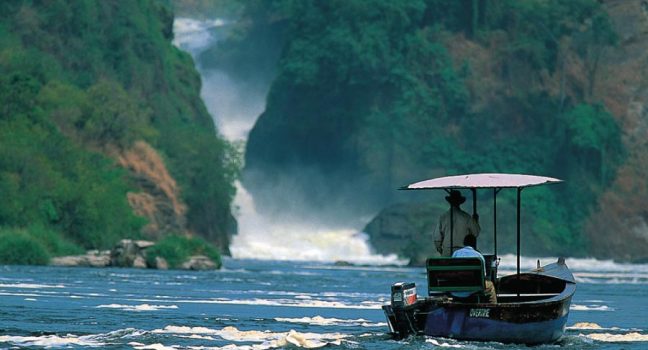
A Murchison Falls safari becomes much more rewarding when you combine a boat cruise with a game drive. These two activities explore the same ecosystem from completely different perspectives. The game drive takes you deep into the savannah, woodland and grassland habitats where you can search for lions, leopards, giraffes, elephants, buffaloes, Uganda kob and other wildlife. The boat cruise, meanwhile, follows the Victoria Nile and reveals hippos, crocodiles, waterbirds and animals that come to the river to drink or cool themselves. When you put both experiences together, you see more of Murchison Falls National Park and gain a better understanding of how the river and savannah support each other.
For travellers planning a Uganda safari with Safari O’clock, the combination also creates a better rhythm for the day. You are not spending every hour inside a safari vehicle. Instead, you move between land and water. One activity focuses on animal tracking across the plains, while the other allows you to relax on the Nile and observe wildlife from a different angle. UWA lists both game drives and boat cruises among the key experiences in Murchison Falls National Park.
Why Combine a Murchison Boat Game Drive Experience?
The main reason to combine a Murchison boat game drive experience is simple: the two activities cover different habitats and target different wildlife behaviours. A game drive gives you access to the wider savannah landscape. The boat cruise concentrates on the river corridor and its banks. Therefore, neither activity fully replaces the other.
During a game drive, your guide can follow tracks, scan open grassland and check areas where animals have recently been reported. You can spend time looking for lions in suitable savannah habitat, search for leopards around thicker vegetation and watch large herds of Uganda kob, buffaloes or other antelopes. The vehicle can also cover considerable ground, which increases the number of habitats you can explore during a safari.
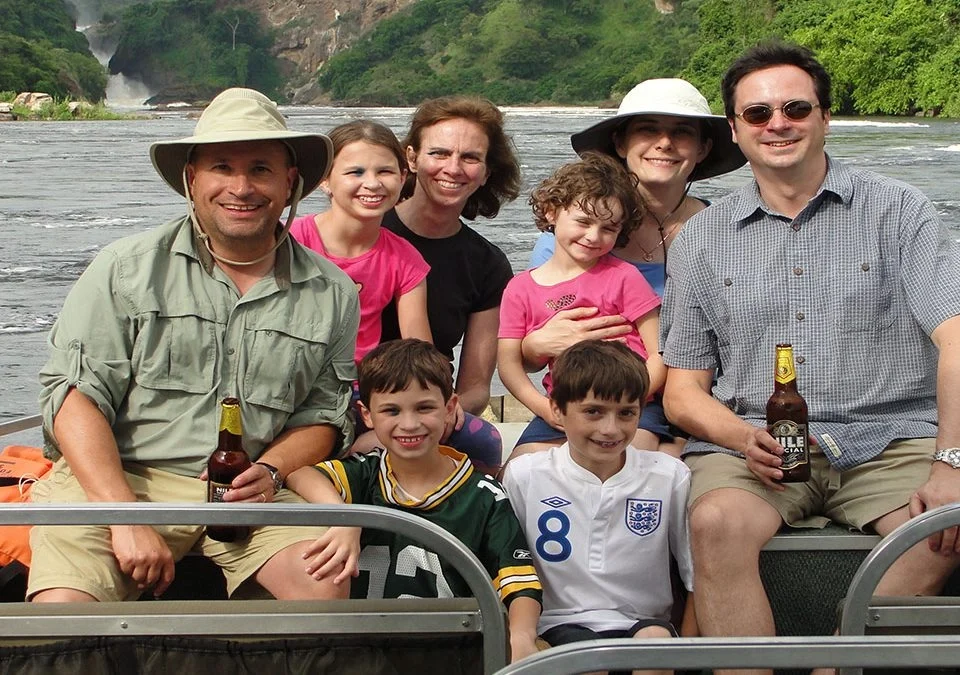
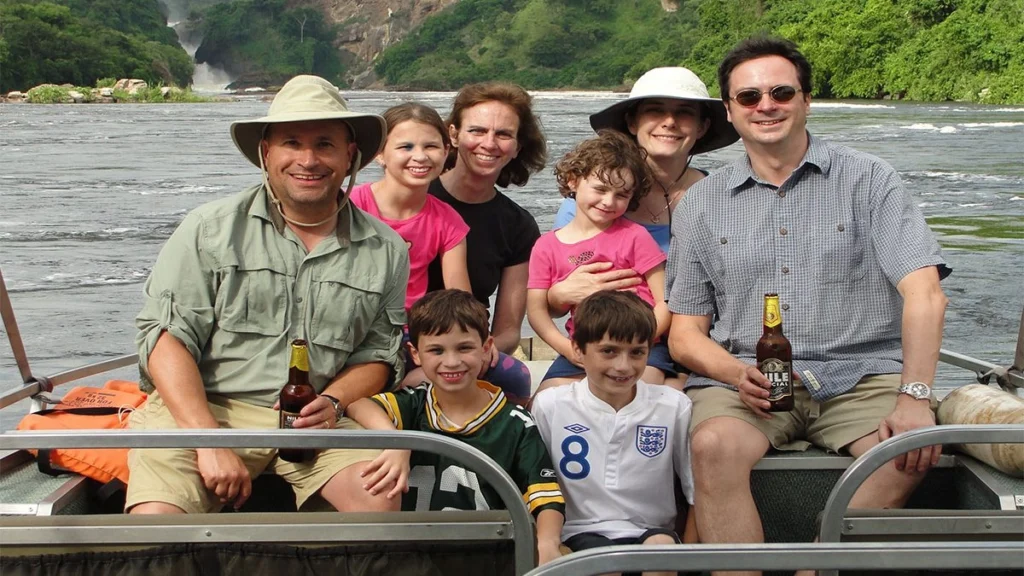
The boat offers a slower experience. Instead of travelling across the plains, you follow the Nile upstream toward the base of Murchison Falls. UWA describes the classic boat journey from Paraa as a three-hour return trip and notes that it passes resident hippos and crocodiles as well as elephants, buffaloes and other riverside wildlife.
As a result, combining both activities gives Safari O’clock guests a more complete view of the park.
Murchison Boat Game Drive: What Each Activity Offers
A useful way to plan your safari is to understand what each activity does best.
The game drive is your main land-based wildlife search. It gives you access to the open areas around the Buligi Peninsula and other game-viewing zones. UWA identifies Buligi as the park’s prime game-viewing area and notes that visitors can expect elephants, buffaloes, antelopes and giraffes while keeping watch for lions and leopards.
The boat cruise is your river-based wildlife experience. It is particularly strong for hippos, Nile crocodiles and aquatic birds. Elephants and buffaloes can also approach the river. You may see them drinking, bathing, feeding or simply standing close to the water.
The two experiences therefore answer different safari questions. The game drive asks, “What is happening across the savannah?” The boat asks, “What is happening along the Nile?”
When Safari O’clock combines both, the itinerary becomes more diverse without needing to add another destination.
What You Can See on the Game Drive
Game drives give you access to the wider terrestrial ecosystem. Murchison Falls supports a broad range of mammals, and UWA highlights elephants, giraffes, buffaloes and antelopes among the wildlife associated with the park.
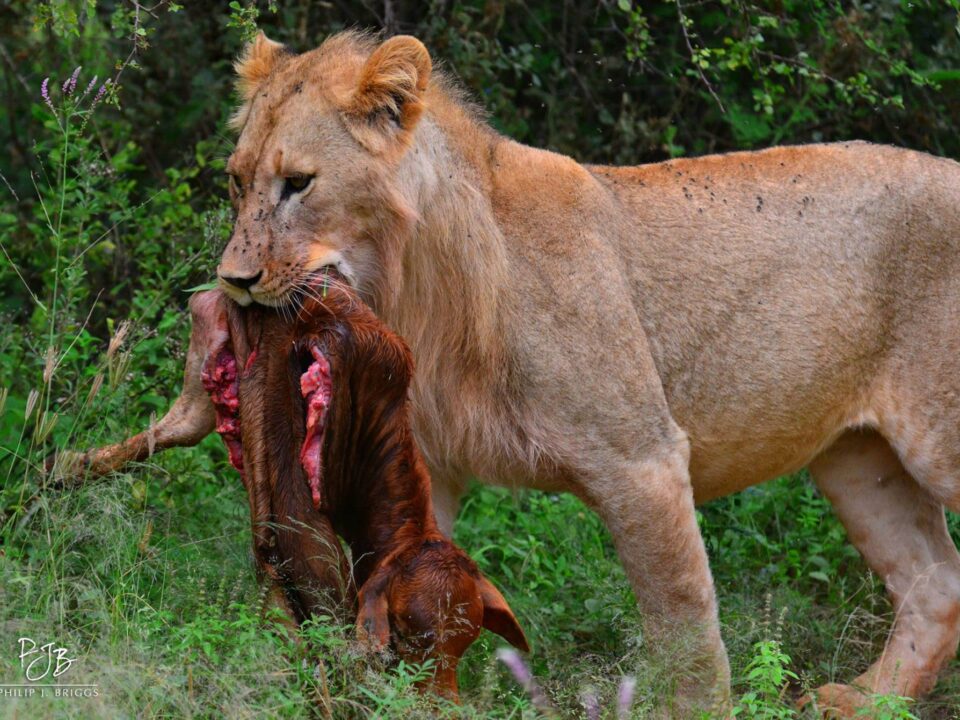
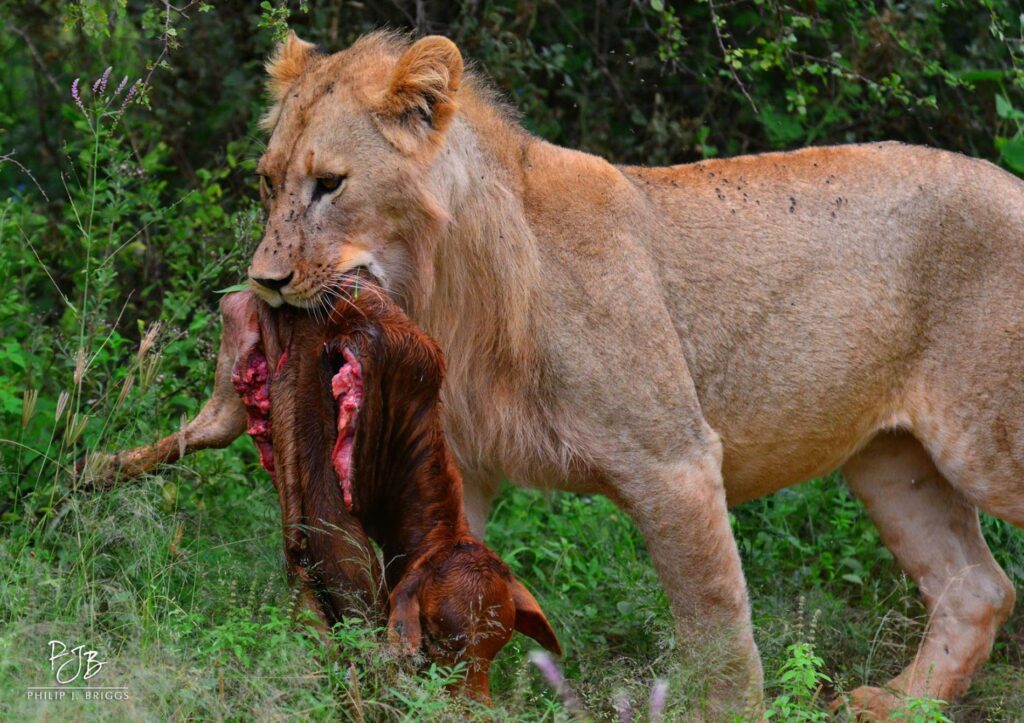
Lions are one of the major attractions. The Heart of Murchison is particularly interesting because substantial Uganda kob herds provide an important prey resource, and UWA identifies the area as a prime location for lions.
Leopards are possible as well, although they are considerably more difficult to find. Their secretive behaviour and preference for cover mean that guides often need patience and careful observation.
Giraffes can be easier to notice because their height allows them to rise above vegetation. Buffaloes may occur in large groups, while Uganda kob and other antelopes can create spectacular scenes across open grassland.
A game drive also allows you to observe animal behaviour away from water. You may see herds feeding, predators resting, giraffes browsing or elephants moving across the savannah.
What You Can See on the Boat Cruise
The boat cruise changes the wildlife experience completely. The Victoria Nile becomes your safari route, and the riverbanks become your viewing area.
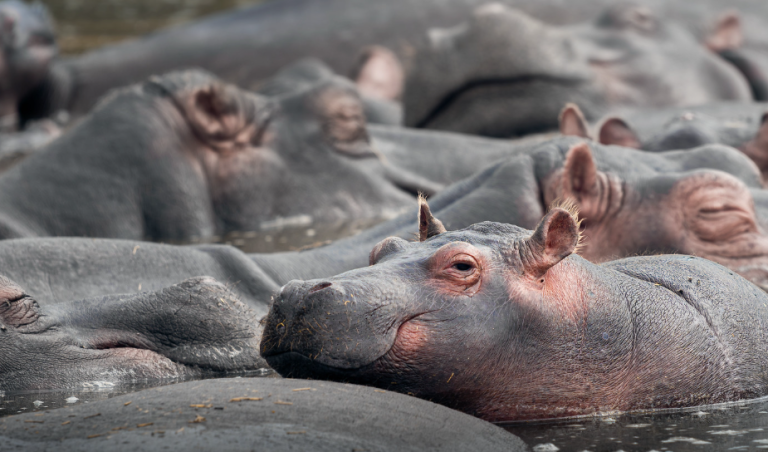
Hippos are among the most characteristic sightings. UWA specifically notes that visitors taking the Nile River boat ride can see numerous hippos along the shores and in the water.
Nile crocodiles are another major attraction. They may lie on sandbanks, rest near the water or remain partly submerged. Their stillness can make them difficult to notice until an experienced guide points them out.
Birdlife adds another dimension. Kingfishers, herons, egrets, fish eagles, cormorants and other water-associated species can appear along the river. The Albert Delta is especially important for waterbirds, and UWA identifies the delta as a wetland of international importance. It provides habitat for species such as shoebills, pelicans, darters and herons.
Elephants and buffaloes can also visit the river. When they appear near the boat, passengers can often watch their behaviour without the vehicle needing to follow them across the landscape.
Murchison Boat Game Drive: Which Should You Do First?
The order depends on your safari schedule, accommodation and priorities. However, a very practical arrangement is to take an early morning game drive and a boat cruise later in the day.
The morning game drive works well because many savannah animals remain active during the cooler hours. Your guide can search for predators, antelopes, giraffes, elephants and buffaloes while temperatures remain relatively comfortable.
After the game drive, you can return for breakfast or lunch, depending on your accommodation and itinerary. Later, you can head to Paraa for the boat cruise.
This creates a natural transition from land to water. You begin the day searching through the savannah and finish by following the Nile toward Murchison Falls.
However, this is not a rigid rule. Some itineraries work better with the boat cruise in the morning. Safari O’clock can adjust the order based on lodge location, boat schedules, weather, season and the traveller’s interests.
Why the Morning Game Drive Can Work Well
Morning game drives often provide good opportunities for wildlife observation because temperatures are generally cooler than during the middle of the day. Animals that become less active during hotter hours may still be moving and feeding.
Predators can be particularly interesting at this time. Lions may still be active after the night’s activity, while antelopes and other herbivores can be feeding.
The morning also gives your guide a fresh opportunity to search for tracks and recent wildlife activity. A skilled guide can use signs such as footprints, dung, alarm calls and animal movements to decide where to explore.
For Safari O’clock, this flexibility is important. A game drive should not become a simple drive along a fixed road. The guide should respond to what the landscape is showing that morning.
Murchison Boat Game Drive: Why the Afternoon Boat Works
The boat cruise often fits naturally into the afternoon part of a safari day. The river provides a relaxing change after a morning spent travelling across the savannah.
The classic launch from Paraa travels upstream toward the bottom of Murchison Falls and takes approximately three hours as a return journey. UWA describes it as the park’s oldest and most popular excursion.
The slower pace allows passengers to spend time observing hippos and crocodiles. You can also watch birds along the shoreline and scan the surrounding vegetation for elephants and buffaloes.
The approach toward the falls creates a dramatic ending. The Nile narrows as it reaches the gorge, and the force of the water becomes increasingly visible.
This makes the afternoon cruise both a wildlife activity and a landscape experience.
How to Plan a Full Day of Game Drive and Boat Cruise
A full day combining both activities requires good timing. The goal is not to squeeze too many activities into one schedule. Instead, allow enough time for each experience.
A typical structure could look like this:
6:00–6:30 a.m. — Early morning game drive:
Leave the lodge and begin searching for wildlife while temperatures remain cooler.
6:30–10:00 a.m. — Extended game viewing:
Explore suitable tracks and habitats around the main game-viewing areas. Search for elephants, buffaloes, giraffes, Uganda kob and predators.
10:00–11:00 a.m. — Return to the lodge:
Have breakfast or a late breakfast depending on your accommodation arrangement.
Late morning to early afternoon — Rest:
Use the warmer hours for relaxation, lunch and preparation for the river experience.
Afternoon — Boat cruise:
Travel from Paraa toward the base of Murchison Falls. Observe hippos, crocodiles, birds, elephants and buffaloes along the river.
After the cruise — Return or continue with another planned activity:
Depending on the itinerary, return to the lodge or continue to another approved safari activity.
This is only a planning model. Safari O’clock can modify the timing according to lodge location, season, boat schedules and the interests of each traveller.
Murchison Boat Game Drive for First-Time Safari Visitors
First-time visitors sometimes wonder whether they need both activities. The answer depends on the length of the safari and the traveller’s priorities.
If you have only a few hours in Murchison Falls, you may need to choose one activity. However, if you have a full day or longer, combining them provides a much broader experience.
The game drive gives you the opportunity to explore areas that the boat cannot reach. You can travel across the savannah and search for animals far from the Nile.
The boat then adds something completely different. You see wildlife from the river and experience the landscape at a slower pace.
For a first visit, this contrast can make the park easier to understand. You are not simply collecting animal sightings. You are seeing how the river, grassland and wildlife connect.
How Many Days Do You Need for Both Activities?
You can technically combine a game drive and boat cruise within one day. However, staying for two or three nights gives you more flexibility.
A one-day combination can feel busy because both activities require several hours. Travel between accommodation and activity points also takes time.
With two nights, you can dedicate one morning to a game drive and another period to the boat cruise. You can also leave room for a second game drive if wildlife viewing is a major priority.
With three nights, Safari O’clock can create a more relaxed schedule. You might include an early game drive, a boat cruise, a second game drive and perhaps a visit to the Top of the Falls.
The extra time also protects the itinerary against weather changes. You do not need to force every activity into one day.
The Role of Paraa in Your Safari
Paraa is particularly important when planning a combined Murchison safari. UWA describes Paraa as the park’s tourism hub on the Nile and the starting point for boat trips to the falls and the delta.
The location also matters because the vehicle ferry connects the southern and northern sides of the river. This access allows safari vehicles to reach the Buligi game tracks from the Paraa area.
Therefore, accommodation location can influence the efficiency of your itinerary. A lodge near Paraa can make the boat activity easier to arrange, while other lodges may require additional driving time.
Safari O’clock should account for these distances when preparing the day’s schedule. A good itinerary is not simply a list of activities. It is a sequence that considers where each activity starts and how long it takes to reach it.
Combining the Boat Cruise With the Buligi Game Drive
The Buligi Peninsula is one of the most important areas for game viewing in Murchison Falls. UWA describes it as the park’s prime game-viewing area. It lies between the Victoria Nile and Albert Nile and contains a network of game tracks.
This makes Buligi a natural complement to the boat cruise.
The boat allows you to explore the river boundary of the ecosystem. The game drive then takes you farther into the open grassland.
In Buligi, visitors can look for elephants, buffaloes, antelopes and giraffes while keeping watch for lions and leopards.
A combined itinerary can therefore move from river wildlife to savannah wildlife without needing to change destinations.
Combining the Boat Cruise With the Heart of Murchison
The Heart of Murchison provides another useful contrast. UWA describes this central savannah area as increasingly known for lions because of its substantial Uganda kob herds.
If predator viewing is important to you, Safari O’clock can incorporate a game drive through suitable areas of the Heart of Murchison while keeping the boat cruise focused on the river.
This combination demonstrates why different safari activities matter. The boat is not necessarily the place to search specifically for lions. Likewise, a game drive is not the best way to experience a large concentration of hippos in the river.
Each activity has a different ecological strength.
Murchison Boat Game Drive During the Dry Season
Seasonality can influence how you combine the activities.
UWA’s Murchison brochure identifies December to late February and June to September as the main dry periods and notes that these conditions can concentrate animals around water, making general wildlife viewing favourable.
During these periods, a game drive may provide excellent opportunities to observe animals around water sources and open feeding areas. The boat remains valuable because the river itself becomes a dependable wildlife environment.
The dry season can also be useful for visitors who want to combine several wildlife activities within a shorter stay. However, temperatures can become high, so sensible timing and hydration remain important.
Safari O’clock can structure the itinerary around the conditions of the specific travel period rather than assuming that every day will behave in the same way.
Murchison Boat Game Drive During the Wet Season
The wet season creates a different landscape. Rainfall encourages vegetation growth and spreads water across the wider environment.
This can change animal distribution. Some herbivores may have less reason to remain close to permanent water because temporary water sources become available.
However, the boat cruise remains valuable. The Nile continues to support hippos, crocodiles and waterbirds, while the surrounding vegetation can create beautiful scenery.
Wet conditions can also affect roads and driving times. Therefore, Safari O’clock should allow flexibility in the game-drive schedule.
The wet season can be particularly rewarding for photographers who enjoy green landscapes, dramatic skies and changing light.
Should You Take the Boat Cruise Before the Game Drive?
You can, but the choice depends on your schedule.
A morning boat cruise followed by an afternoon game drive can work well for travellers who want to start with the river. It also provides a different rhythm from the traditional morning game-drive schedule.
However, if your main priority is predators, an early game drive may be more useful. Lions and leopards are not guaranteed at any time, but early hours can provide favourable conditions for general wildlife activity.
If your priority is hippos, crocodiles, birds and the waterfall, the boat deserves a prominent position in your itinerary.
Safari O’clock can therefore design the order around your priorities rather than following one universal schedule.
Should You Take the Boat Cruise to the Falls or the Delta?
Murchison Falls offers more than one boat experience.
The classic upstream cruise from Paraa travels toward the bottom of Murchison Falls. UWA describes it as the park’s most popular boat excursion.
The downstream delta cruise follows channels toward Lake Albert. UWA notes that the delta is rich in waterbirds and is particularly notable for the shoebill.
Therefore, the choice depends on what you want from the boat experience.
Choose the upstream cruise if you want the classic Murchison Falls experience, with the waterfall, hippos, crocodiles and riverside wildlife.
Choose the delta cruise if birdwatching is a major priority. UWA identifies the Albert Delta as an important wetland habitat for shoebills, pelicans, darters and herons.
For travellers staying longer, Safari O’clock can consider incorporating different river experiences where practical.
How the Boat and Game Drive Complement Wildlife Photography
The two activities also create different photographic opportunities.
During a game drive, you can photograph animals against the broad savannah. Giraffes, elephants, buffaloes and antelopes can become landscape subjects.
Predator photography also benefits from the vehicle’s ability to remain mobile. Your guide can position the vehicle appropriately while respecting wildlife and park regulations.
On the boat, reflections become part of the image. Hippos, crocodiles, elephants and birds can appear against the river. The waterfall adds another dramatic landscape subject.
The changing perspective helps photographers create a more diverse collection of safari images.
For Safari O’clock, this is another reason to avoid treating the boat cruise as an optional extra. It adds a completely different photographic environment.
Safety When Combining a Boat Cruise and Game Drive
Both activities are designed around wildlife viewing, but visitors must follow the instructions of their guides and boat operators.
UWA requires visitors to respect wildlife and prohibits actions such as feeding animals and hooting at them. UWA also states that park speed limits apply within Murchison Falls National Park.
During the game drive, remain inside the vehicle unless your guide confirms that it is safe and permitted to leave at an approved location.
During the boat cruise, remain seated when instructed and avoid leaning dangerously over the side of the vessel.
Do not attempt to attract hippos, crocodiles or other wildlife. Natural behaviour is the experience you want to observe.
Responsible viewing also protects the animals. A safari should allow wildlife to continue its normal behaviour without unnecessary disturbance.
What to Pack for a Combined Boat and Game Safari
Because the two activities have different environments, packing carefully can improve comfort.
Bring lightweight clothing for the warm conditions. A hat and sunscreen are useful during the boat cruise and game drive.
Binoculars are especially helpful. They allow you to observe distant animals and birds without encouraging the vehicle or boat to move closer.
A camera with a zoom lens can also make a major difference. You do not need to approach wildlife closely to obtain useful photographs.
Carry drinking water and consider a light rain jacket during wetter periods.
A small day bag is usually enough. Avoid bringing unnecessary luggage into the safari vehicle or boat.
Murchison Boat Game Drive for Families
Families can enjoy the combination because the activities offer different levels of movement.
The boat cruise can provide a more relaxed experience for children who may become tired during long game drives. Hippos, crocodiles and birds also provide easy subjects for children to identify.
The game drive can then turn into a wildlife-search activity. Guides can encourage children to look for giraffe necks above trees, elephant ears, buffalo herds or animal tracks.
Safari O’clock can also adjust the length and timing of activities to suit the family’s needs.
For younger travellers, breaks become particularly important. A flexible itinerary is often more enjoyable than trying to complete every possible activity.
Murchison Boat Game Drive for Photographers
Photographers benefit from having both land and water perspectives.
The game drive provides opportunities for close observation of large mammals and predator behaviour. It also allows you to work with different backgrounds, distances and compositions.
The boat offers reflections, waterbirds, riverbanks and dramatic landscape photography.
The combination also reduces the risk of returning home with hundreds of similar photographs. Each activity naturally produces a different visual style.
Safari O’clock can discuss photography priorities before the safari and structure the itinerary around the traveller’s interests.
Murchison Boat Game Drive for Birdwatchers
Birdwatchers should give the boat cruise serious consideration.
The river supports many aquatic and shoreline species, while the Albert Delta provides extensive wetland habitat. UWA identifies the delta as an important area for shoebills, pelicans, darters and herons.
The game drive adds another birding environment. Savannah and woodland species can appear far from the river.
Consequently, combining both activities gives birdwatchers access to a broader range of habitats.
A guide familiar with bird identification can also make a significant difference because many species are easier to hear than to see.
A Two-Night Murchison Falls Itinerary
For travellers with two nights, Safari O’clock can build a balanced itinerary around both activities.
Day 1: Travel into Murchison Falls National Park, settle into the lodge and enjoy an afternoon or evening activity if time allows.
Day 2: Begin with an early morning game drive. Explore the savannah and search for elephants, buffaloes, giraffes, Uganda kob and predators. Return to the lodge for breakfast and relaxation. Later, take the boat cruise from Paraa toward the base of Murchison Falls.
Day 3: Depending on departure time, enjoy another game drive or visit another attraction before leaving the park.
This structure gives the traveller a meaningful experience without forcing every activity into the same few hours.
A Three-Night Murchison Falls Itinerary
A three-night stay allows even more flexibility.
Day 1: Arrival and relaxation.
Day 2: Early morning game drive through the major savannah areas. Afternoon boat cruise toward Murchison Falls.
Day 3: Second game drive with more time to explore different areas. Consider focusing on the Heart of Murchison or Buligi depending on the safari plan.
Day 4: Departure or an additional activity if the travel schedule allows.
The main advantage is flexibility. If the first game drive produces excellent elephant sightings but no predators, you have another opportunity to search without turning the safari into a chase.
Common Mistakes When Combining the Two Activities
One common mistake is trying to do too much in one day. A rushed itinerary can reduce the enjoyment of both activities.
Another mistake is expecting the boat to provide the same wildlife experience as the game drive. The river and savannah are different environments, so their wildlife encounters naturally differ.
Some travellers also assume that dry season automatically guarantees predators. It does not. Wildlife remains unpredictable.
Another mistake is ignoring travel time between the lodge and activity points. A three-hour boat cruise is only part of the total time required. You also need to consider transfers, meals and rest.
Safari O’clock can prevent these problems by planning the full day rather than simply booking individual activities.
How Safari O’clock Can Plan the Combination
A successful combined safari begins with the traveller’s priorities.
If you want predators, the game drive should receive more attention. If you love hippos, crocodiles and birds, the boat should have a strong place in the itinerary. If photography matters most, both activities deserve enough time.
Safari O’clock can then consider the season, accommodation location, number of safari days and preferred pace.
The result should not feel like a checklist. It should feel like one connected journey through Murchison Falls.
The game drive reveals the land. The boat reveals the river. Together, they reveal the ecosystem.
Frequently Asked Questions About Murchison Boat Game Drive Safaris
Can I combine a boat cruise and game drive in one day?
Yes. A full-day itinerary can include an early morning game drive and a later boat cruise. The exact timing depends on accommodation, boat schedules, travel distances and the season.
Which should I do first, the boat cruise or game drive?
There is no single order that works for every traveller. An early game drive followed by an afternoon boat cruise is a practical arrangement, especially for visitors interested in predators and general savannah wildlife.
How long is the Murchison Falls boat cruise?
The classic Paraa-to-Murchison Falls cruise takes approximately three hours as a return journey, according to UWA.
What animals can I see on the boat cruise?
Hippos and Nile crocodiles are among the characteristic river sightings. Elephants and buffaloes may also visit the river, while numerous waterbirds can be seen along the banks.
What animals can I see on the game drive?
Game drives provide opportunities to see elephants, buffaloes, giraffes, Uganda kob, antelopes and potentially lions and leopards. UWA identifies the Buligi Peninsula as a prime game-viewing area.
Is the boat cruise better than a game drive?
They serve different purposes. The game drive explores terrestrial habitats, while the boat explores the Nile and its riverbanks. Combining them provides a broader Murchison Falls experience.
How many days should I spend in Murchison Falls?
You can experience both activities in one day, but two or three nights provide more flexibility. A longer stay gives you additional opportunities for game drives and reduces the need to rush.
Is the Murchison Falls boat cruise suitable for children?
Yes, subject to the operator’s safety requirements and the child’s ability to follow instructions. The slower pace can also provide a welcome change from a long game drive.
Is the boat cruise good for birdwatching?
Yes. The Victoria Nile and Albert Delta support a variety of waterbirds. The delta is particularly notable for shoebills and other wetland species.
Final Thoughts: Experience Murchison Falls From Land and Water
The best reason to combine a boat cruise and game drive in Murchison Falls is that neither experience tells the whole story on its own.
The game drive takes you into the savannah. You search for elephants moving through the grass, giraffes browsing above the bushes, buffaloes gathering in herds and Uganda kob feeding across open plains. With patience, you may also encounter lions, leopards or other predators.
Then the boat changes the perspective. The Victoria Nile becomes your route, and the riverbanks become your viewing platform. Hippos rise from the water, crocodiles lie on the banks and birds move between reeds, trees and shallow water. Elephants and buffaloes may appear along the shoreline.
The waterfall provides the dramatic destination, but the journey itself contains much of the magic.
For Safari O’clock, combining these activities is therefore not simply about fitting more into a Uganda safari. It is about creating a better understanding of Murchison Falls National Park. The game drive shows the savannah. The boat shows the Nile. Together, they reveal how water, wildlife and landscape connect
When you leave Murchison Falls after experiencing both, you are not just carrying photographs of animals and a waterfall. You are carrying two different perspectives of one remarkable ecosystem.