- DIRECT CONTACTS:
- +256394517569
- tours@safarioclock.africa

Photography Etiquette During a Mountain Gorilla Encounter

How to Take Sharp Gorilla Photos in Low Forest Light
November 11, 2026
How to Photograph Gorilla Portraits Without Disturbing Wildlife
November 11, 2026
Meeting mountain gorillas in their natural habitat is a remarkable wildlife experience. For many travellers, it is also an opportunity to capture photographs of these gentle giants. A photograph can preserve the memory of a silverback resting, a mother caring for her infant or young gorillas playing among the trees. However, taking pictures during a gorilla encounter requires more than a good camera.
Mountain gorillas are endangered wildlife. They need protection from human diseases, unnecessary disturbance and changes to their natural behaviour. Therefore, visitors must follow responsible photography practices throughout the encounter. They should also remember that they are entering the gorillas’ home, not a photography studio.
Good photography etiquette helps visitors enjoy the experience without disturbing the animals. It also protects other trekkers and allows guides to manage the encounter safely. At Safari O’clock, we encourage travellers to prepare their cameras, understand park rules and put conservation before photography.
This guide explains how to take photographs respectfully during a mountain gorilla encounter in Rwanda or Uganda. It also explores common mistakes, camera behaviour and ways to make the most of your limited viewing time.
Why Photography Etiquette Matters During Gorilla Tracking
Photography can influence how visitors behave around wildlife. A traveller who wants a closer photograph may be tempted to move forward, change position or ignore instructions. Another visitor may raise a camera suddenly or use flash without checking the settings. These actions can create unnecessary disturbance.
Gorillas are sensitive to their surroundings. Loud sounds, sudden movements and people moving outside the group can affect the encounter. Moreover, mountain gorillas share a high degree of genetic similarity with humans. This makes them vulnerable to some human diseases.
Responsible photography helps reduce these risks. Visitors can capture meaningful images while keeping the required distance and following their guide’s instructions. They can also avoid unnecessary movement and allow the gorillas to continue their natural activities.
Photography etiquette also benefits the other members of your trekking group. Everyone deserves an opportunity to observe the gorillas. One person should not dominate the encounter by constantly moving around or blocking another visitor’s view.
For this reason, responsible photography begins with respect. The goal is not to collect as many photographs as possible. Instead, it is to document the experience without affecting the animals or other visitors.
Follow Photography Etiquette and Park Rules
Every gorilla encounter takes place under the supervision of trained guides and park authorities. Their instructions help protect visitors and wildlife. Therefore, photographers must understand the rules before entering the forest.
Rwanda’s official gorilla tracking guidance requires visitors to maintain a minimum distance of seven metres from gorillas. It also limits normal viewing time to one hour and allows a maximum of eight visitors per group. Flash photography is prohibited.
Uganda also has specific gorilla tracking rules. Its authorities issue guidance on visitor conduct, group management and viewing time. However, travellers should confirm the current distance requirement and other instructions for their particular park before the trek.
These differences matter. Visitors should never assume that every destination applies exactly the same rules. Your guide and the relevant wildlife authority provide the instructions you must follow.
Keep the required distance when taking photographs
A good photograph does not justify moving closer to a gorilla. Always maintain the distance required by the park authorities. This protects gorillas from possible disease transmission and reduces unnecessary human contact.
Avoid stretching your arms, stepping forward or leaning towards a gorilla to improve your composition. Instead, use your camera’s optical zoom or choose a suitable focal length.
If a gorilla moves closer to the group, remain calm. Do not reach out to touch it or attempt to take a close selfie. Follow your guide’s instructions and allow the animal to move freely.
Switch off your camera flash
Flash photography is prohibited during mountain gorilla encounters. A sudden flash can disturb the animals and interrupt the natural experience.
Before entering the forest, check your camera settings. Switch off the built-in flash and disable automatic flash if your camera has that option. Phone users should also confirm that the flash is off.
Do not assume that your camera will automatically respect wildlife rules. Check the settings yourself before the encounter begins.
Fortunately, you can still take photographs without flash. Adjust your ISO, aperture and shutter speed to work with the available natural light. A lens with a wide maximum aperture can also help in dark forest conditions.
Practise Respectful Photography Etiquette Around Gorillas
Responsible photography requires awareness of your surroundings. You should pay attention to the gorillas, your fellow visitors and the instructions from your guide.
When you reach the gorilla family, remain with your group. Avoid walking around to find a better angle. Also, do not move ahead of the guide or separate yourself from other visitors.
Your guide understands the terrain and the behaviour of the gorilla family. They can advise where to stand and when to adjust your position. If vegetation blocks your view, ask for assistance rather than clearing the branches yourself.
Furthermore, avoid unnecessary gestures. Do not point at gorillas while moving through the forest. Keep your hands and equipment under control. These small actions help create a calm environment.
Move slowly when taking photographs
Sudden movements can disturb gorillas. Therefore, raise your camera gently and avoid quick changes in position.
If you need to adjust your stance, do so slowly. Keep your movements controlled and follow the guide’s instructions. Do not rush towards an open space when another visitor takes a photograph.
This approach also improves your photography. Calm movement gives you more time to compose your image. It allows you to observe the animal before pressing the shutter.
Avoid loud conversations and unnecessary sounds
Keep your voice low throughout the encounter. Avoid shouting to attract a gorilla’s attention or calling other visitors from across the group.
Some cameras also produce shutter sounds or electronic beeps. Where possible, review your camera settings before the trek and reduce unnecessary sounds if your equipment allows it.
However, never miss important guide instructions while adjusting your camera. Listening to the guide should always come first.
Give Other Visitors Space to Enjoy the Encounter
Gorilla tracking is usually a shared experience. You may find yourself standing with other travellers who have also waited for this special moment. Each visitor deserves a fair opportunity to observe the gorillas.
Photography should not become a competition. Avoid stepping in front of someone who is already taking pictures. Do not push through the group to secure a better position. Also, avoid holding your camera or phone above your head for long periods.
If you need to change your position, ask your guide first. They can help manage the group without disturbing the gorillas.
Remember that some visitors may prefer to observe the animals without taking photographs. Do not pressure them to move or change their position for your camera.
A respectful photographer understands that the encounter belongs to everyone. Sharing space creates a better experience for the entire group.
Use Your Camera Without Disturbing the Gorillas
Modern cameras and smartphones offer many useful photography features. However, visitors should use them responsibly during a gorilla encounter.
You do not need to change lenses repeatedly or take hundreds of photographs. Prepare your equipment before the trek. Choose suitable settings and keep your camera ready.
A moderate zoom lens can help you photograph individual gorillas and family groups. Image stabilisation can also improve handheld photographs in low light. However, equipment should never become a reason to ignore park instructions.
Avoid excessive shutter noise and continuous shooting
Some cameras offer high-speed continuous shooting. This feature takes several photographs in quick succession when you hold down the shutter button.
Although it can help capture movement, use it thoughtfully. Long bursts may create unnecessary noise and distract you from the encounter.
Instead, observe the gorillas first. Wait for a meaningful moment and take a few carefully composed photographs. You can always review your images later.
Keep phones and cameras secure
Forest trails can be steep, muddy and slippery. A dropped camera or phone can injure someone, damage equipment or disturb the group.
Use a secure camera strap and hold your phone firmly. Avoid placing equipment on the ground or leaving loose accessories along the trail.
Also, protect your camera from rain and moisture. Mountain forests can experience changing weather, so a waterproof cover or dry bag can be useful.
Photograph Natural Gorilla Behaviour Instead of Seeking Poses
Mountain gorillas are wild animals. They do not perform for cameras or follow instructions from visitors. Their daily activities include feeding, resting, grooming, playing and caring for young family members.
Therefore, allow the gorillas to behave naturally. Do not make noises to attract their attention or attempt to encourage movement. Never throw objects or offer food to create a photograph.
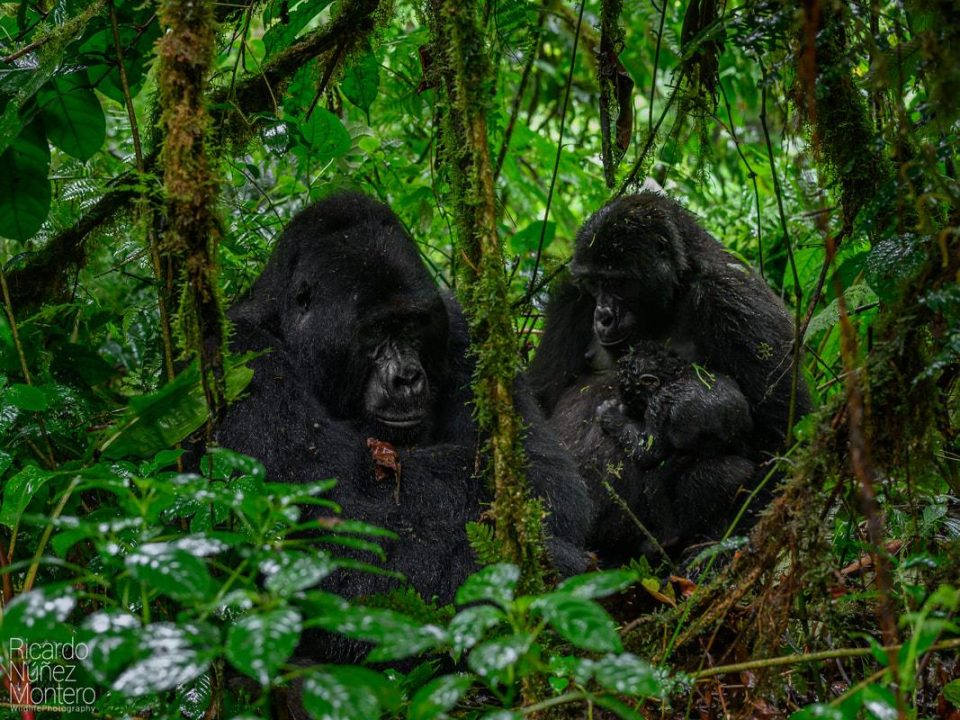
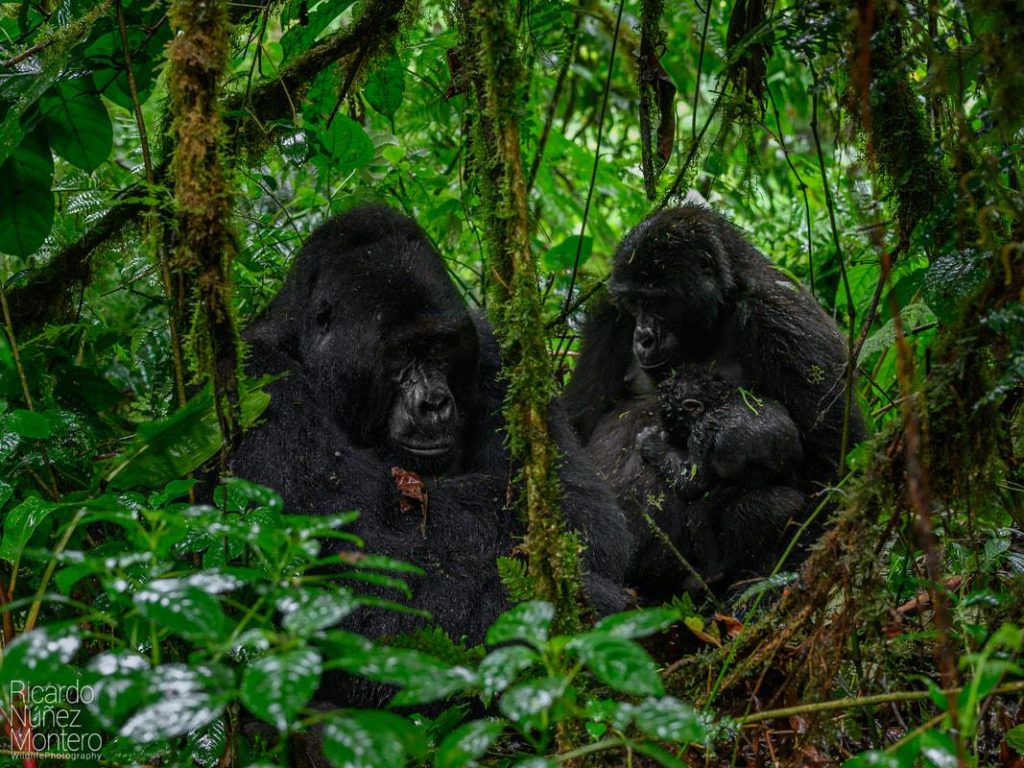
Some of the most meaningful photographs come from ordinary moments. A mother holding her infant, a juvenile playing with another young gorilla or a silverback resting quietly can tell a powerful story.
Patience is important. Watch the animals before taking your photographs. You may notice interactions that you would otherwise miss while looking through the camera screen.
Remember that the best photograph is not always the closest one. A natural image that shows the gorilla in its forest environment can communicate more than a tightly cropped portrait.
Do Not Touch Gorillas for a Photograph
One of the most important photography rules is to avoid physical contact with gorillas. Never reach out to touch a gorilla, even if it comes close to your group.
Human contact can expose gorillas to disease. It can also create safety risks for both people and animals.
Avoid taking selfies that require you to move closer or extend your hand towards a gorilla. Do not attempt to place your camera near an animal for a close-up photograph.
If a gorilla approaches, remain calm and follow the guide’s instructions. Do not try to control the situation for a photograph.
The encounter should remain natural. Visitors are observers, not participants in the gorillas’ social activities.
Respect the One-Hour Viewing Limit
Normal gorilla tracking visits have a limited viewing period. In both Rwanda and Uganda, the standard encounter is generally limited to one hour, although authorities may change or end a visit according to management needs and the circumstances.
This period begins when visitors reach the gorilla family. Guides and trackers help manage the time and ensure that visitors follow the rules.
Do not try to extend the encounter because you want more photographs. Avoid arguing with guides when they signal that the visit is ending.
Instead, use the available time wisely. Take a few photographs, observe the gorillas and enjoy the experience without spending every second behind your camera.
A limited viewing period also encourages responsible tourism. It helps manage the number of people and the amount of time gorillas spend around visitors.
Avoid Risky Photography Positions
A good photograph should never come at the expense of safety. Gorilla tracking often takes place on steep slopes and uneven forest trails. Some areas may contain thick vegetation, slippery ground or exposed roots.
Do not step onto unstable ground to find a better camera angle. Avoid climbing trees, standing on rocks or moving away from your group without permission.
You should also avoid blocking the trail or standing in positions that prevent guides from managing the encounter.
If the guide asks you to move, lower your camera and follow the instruction immediately. Your safety and the welfare of the gorillas are more important than any photograph.
Prepare Your Camera Before the Gorilla Encounter
Preparation makes responsible photography easier. You do not want to spend the limited viewing time searching through camera menus or trying to fix basic settings.
Before the trek, charge your batteries and check your memory card space. Carry a spare battery if possible. Clean your lens and make sure your camera strap is secure.
Switch off flash and unnecessary camera sounds. Practise adjusting ISO, shutter speed and autofocus before entering the forest.
If you use a smartphone, check the battery, storage space and camera settings. Turn off the flash and avoid using bright screen settings unnecessarily.
It is also useful to practise taking photographs in low light. This helps you understand how your camera performs beneath a forest canopy.
Safari O’clock encourages travellers to prepare their photography equipment early. This allows you to focus on the experience rather than troubleshooting your camera during the encounter.
Practise Responsible Photography After the Trek
Responsible photography does not end when you leave the forest. The way you share your photographs can influence how other people understand gorilla tracking.
When posting images online, avoid captions that suggest visitors can touch gorillas or move closer than the permitted distance. Do not encourage others to copy unsafe behaviour.
You can also use your photographs to promote conservation awareness. Explain why visitors must respect viewing distances, avoid flash and follow guide instructions.
Choose images that show natural behaviour and responsible tourism. Avoid editing photographs in ways that misrepresent the encounter or suggest that you were closer to the animals than the rules allow.
Furthermore, respect the privacy of other visitors. Ask for permission before posting photographs that clearly show them.
By sharing responsible images, travellers can help promote better wildlife tourism practices. Your photographs can inspire others to experience mountain gorillas while respecting their natural habitat.
Common Photography Etiquette Mistakes to Avoid
Some mistakes happen because visitors become excited during the encounter. However, understanding them beforehand can help you behave responsibly.
Using flash is one common mistake. Always switch it off before entering the forest. Another mistake is moving closer to get a better photograph. Use your lens instead and follow the required viewing distance.
Some visitors also spend the entire encounter looking through their cameras. Although photographs are valuable, remember to observe the gorillas with your own eyes.
Other mistakes include blocking fellow visitors, making loud noises, touching vegetation without permission and ignoring guide instructions. Avoid these behaviours throughout the trek.
Finally, do not allow photography to distract you from safety. Watch where you stand and remain aware of the people around you.
Final Thoughts on Photography Etiquette During a Mountain Gorilla Encounter
A mountain gorilla encounter is a privilege. It offers travellers a rare opportunity to observe one of the world’s most remarkable primates in its natural environment. However, visitors also have a responsibility to protect the animals they have travelled to see.
Good photography etiquette begins with following park rules. Keep the required distance, switch off flash, move slowly and listen to your guide. Respect other visitors and avoid disturbing the gorillas for a better photograph.
Prepare your camera before the trek and learn to work with natural light. Most importantly, remember that the experience is more valuable than the number of photographs you take.
Safari O’clock encourages every traveller to practise responsible wildlife photography. Capture the memories, share the beauty of the forest and help promote conservation through respectful behaviour.
The best gorilla photograph is one that preserves a special moment without compromising the welfare of the animals.