- DIRECT CONTACTS:
- +256394517569
- tours@safarioclock.africa

The Ultimate Guide to Wildlife in Murchison Falls National Park

What to Expect on a Nile Boat Safari in Uganda
September 15, 2026
Where to Find Lions in Murchison Falls National Park
September 15, 2026
Murchison Falls National Park is one of the best places in Uganda to experience wildlife in a vast, natural landscape. The park combines open savannah, Borassus palms, woodland, riverine habitats, wetlands and forest patches, creating space for an impressive range of animals and birds. At the heart of the park, the Victoria Nile cuts through the landscape before forcing its way through the narrow gorge at Murchison Falls. This combination of water, grassland and woodland explains why Murchison Falls wildlife remains one of the major attractions for travellers exploring Uganda. Uganda Wildlife Authority currently records 144 mammal species, 556 bird species, 51 reptile species and 51 amphibian species in the park. For travellers planning a Uganda safari with Safari O’clock, understanding what lives in the park can make the experience much more rewarding. You will know what to look for, where different animals live, why the Nile matters and why every game drive can feel different.
Why Murchison Falls Wildlife Is So Diverse
The wildlife of Murchison Falls National Park depends heavily on the variety of habitats found across the protected area. The northern sector is particularly well known for open savannah, Borassus palms, acacia woodland and riverine vegetation. The southern part contains more woodland and forest, while the Nile and associated wetlands create another important ecological zone. This variety allows herbivores, carnivores, birds, reptiles and primates to occupy different parts of the landscape.
The Nile adds another layer to this diversity. Animals use the river for drinking, cooling down and moving through the landscape. Hippos spend much of their time in the water, while crocodiles patrol the riverbanks and bask along suitable sandbanks. Elephants and buffaloes may approach the river, especially when they need water. Meanwhile, birds use the shoreline, wetlands, woodland and open grassland for feeding and nesting.
This explains why a safari in Murchison Falls rarely feels like a simple search for a few famous animals. You are exploring an entire ecosystem. One moment you may be watching giraffes crossing the savannah. A few minutes later, you may see elephants near the river. Later in the day, your guide may point out a martial eagle, a crocodile or a small antelope that you would otherwise miss.
The Big Mammals of Murchison Falls Wildlife
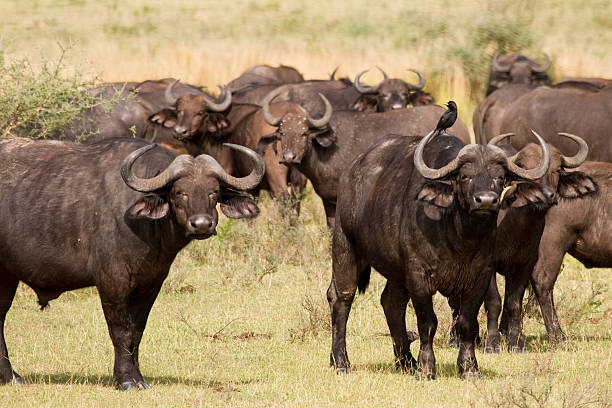
When most travellers imagine a Ugandan safari, they picture elephants, giraffes, buffaloes and lions. Murchison Falls National Park provides opportunities to look for all of these species within one conservation landscape. The park’s current UWA information identifies elephants, giraffes and buffaloes among the major wildlife attractions, while its detailed ecological information records additional large herbivores and carnivores.
However, wildlife viewing here works best when you avoid treating the Big Five as the only measure of a successful safari. Murchison Falls offers much more than a checklist. Uganda kob can appear in open grassland. Warthogs may feed beside the tracks. Waterbucks stay close to water. Hartebeests and reedbucks occupy suitable grassland habitats. Smaller mammals may appear briefly before disappearing into vegetation.
Safari O’clock encourages travellers to slow down and appreciate these less celebrated species. They help explain how the ecosystem works. Herbivores graze and browse across different vegetation zones. Predators follow the availability of prey. Birds exploit insects, fish and carrion. Crocodiles wait along the river. Every sighting connects to another part of the ecosystem.
Elephants in Murchison Falls National Park
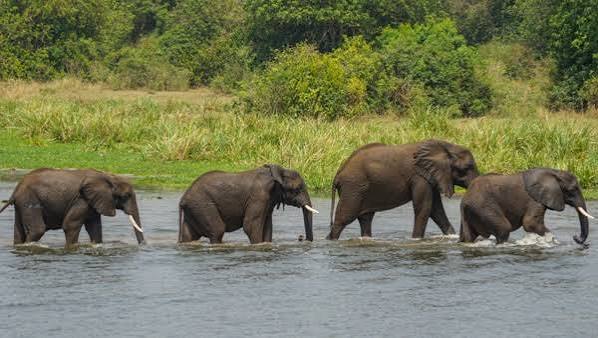
African elephants are among the most impressive animals you can encounter in Murchison Falls. They occupy different habitats across the park and often move between feeding areas and water sources. UWA’s current park information reports an aerial survey count of more than 900 elephants, with the population showing an increasing trend.
During a game drive, elephants can appear in open grassland or woodland. You may see a family group moving slowly across the track, feeding on vegetation or stopping to investigate the vehicle. Near the Nile, elephants can create particularly memorable scenes as they drink or cross through the riverine environment.
Their size can make them seem easy to find. In reality, elephants can blend surprisingly well into woodland. Their movement also changes with temperature, food availability and water. Therefore, your Safari O’clock guide may adjust the route based on recent sightings and local conditions.
Always observe elephants from a respectful distance. A safari vehicle can provide an excellent viewing platform without requiring visitors to approach animals on foot. The best encounter often happens when you remain quiet and allow the animals to continue their natural behaviour.
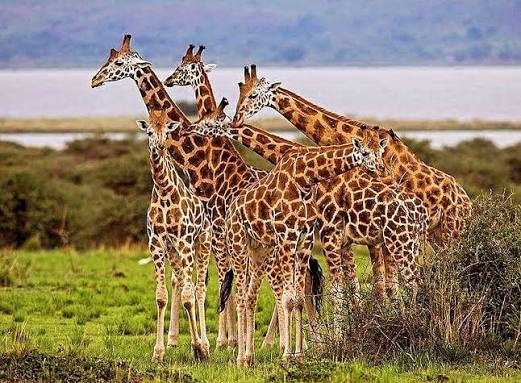
Giraffes: A Signature Part of Murchison Falls Wildlife
Giraffes are one of the animals that give Murchison Falls its distinctive safari character. The park supports the Nubian giraffe, formerly known as the Rothschild’s giraffe. Uganda Wildlife Authority identifies this giraffe as one of the country’s most endangered giraffe types and records Murchison Falls as an important population centre. UWA’s giraffe information currently gives a recent estimate of more than 1,500 individuals in Murchison Falls National Park.
Giraffes are particularly associated with the northern sector of the park. UWA notes that giraffes are found on the northern side of the Victoria Nile within Murchison Falls. Their preference for open woodland and savannah makes them easier to appreciate against the broad landscapes of the northern sector.
Watching giraffes is not simply about seeing a tall animal. Look at how they move through the vegetation. Their long necks allow them to browse leaves that many other herbivores cannot reach. You may also see several giraffes spread across the landscape, each feeding at a different tree.
For photographers, giraffes offer excellent opportunities because their height creates a strong silhouette against the sky. Early morning and late afternoon light