- DIRECT CONTACTS:
- +256394517569
- tours@safarioclock.africa

Where to Spot Buffaloes in Murchison Falls National Park

Murchison Falls National Park and Its Famous Herds of Elephants
September 15, 2026
Rothschild’s Giraffe in Murchison Falls: Uganda’s Towering Safari Attraction
September 15, 2026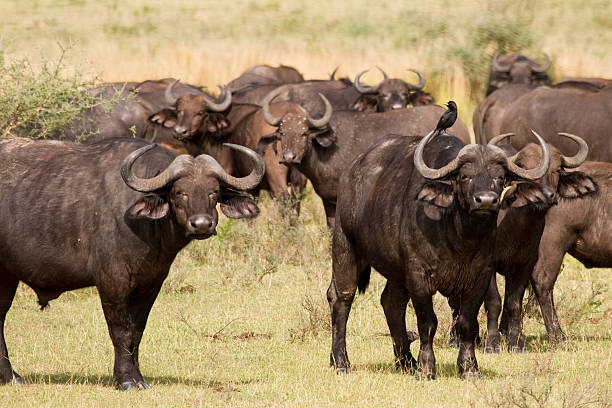
Murchison Falls National Park is one of the best places in Uganda to experience the African buffalo in a natural savannah setting. The park is famous for its dramatic waterfall and the Victoria Nile, but its wildlife story goes much further. Across the open plains, woodland and riverine areas, buffaloes move in herds that can become a major part of a game drive. For travellers exploring Uganda with Safari O’clock, watching these powerful animals graze, rest and move across the savannah can become one of the most memorable experiences of a Murchison Falls safari.
The African buffalo is also one of Uganda’s Big Five animals. Murchison Falls provides suitable habitat for the large savannah buffalo, and Uganda Wildlife Authority identifies the park as one of the country’s areas with significant buffalo populations. UWA’s latest 2026 State of Wildlife Resources report records a strong national recovery, with Uganda’s buffalo population increasing from 32,235 in 2021–2022 to 41,548 in 2023–2025. Murchison Falls is part of this wider conservation story.
Where to Find Buffaloes Murchison Falls National Park
The first place Safari O’clock recommends considering is the Buligi Peninsula. UWA describes Buligi as the park’s prime game-viewing area. It forms a broad triangle of grassland between the Victoria Nile and the Albert Nile, creating an open landscape where large mammals are often easier to observe. UWA specifically lists buffaloes among the wildlife visitors can expect in this area, together with elephants, antelopes and giraffes.
The open nature of Buligi makes it especially attractive for wildlife viewing. Buffaloes can sometimes appear as dark shapes against the golden grass, while larger herds may spread across the plains. However, their exact position changes constantly. They may move towards water, search for fresh grazing or rest beneath trees as temperatures rise. Therefore, Safari O’clock guides do not rely on one fixed location. Instead, they read the landscape, recent sightings, tracks and animal behaviour while choosing the most promising game tracks.
The wider northern sector also deserves attention. Murchison’s northern landscapes contain extensive savannah and woodland, which support a wide variety of herbivores. Buffaloes share this environment with elephants, Uganda kob, hartebeest, waterbuck and other grazers. This creates the kind of wildlife-rich landscape that makes a game drive exciting even when the original target changes.
Buffaloes Murchison Falls on the Buligi Peninsula
Buligi is particularly important for travellers who want a classic African savannah experience. The landscape opens into wide grasslands, and the two branches of the Nile help define the peninsula. UWA’s official tourism information describes it as the park’s prime game-viewing area, making it one of the first areas to consider when planning a buffalo-focused game drive.
Buffaloes in Buligi may occur in different types of groups. Large mixed herds can include females and young animals, while groups of males may behave differently. UWA explains that African buffaloes can form family-based herds as well as bachelor groups. This social structure gives visitors an opportunity to observe differences in size, behaviour and movement rather than simply seeing a mass of animals from a distance.
The open terrain can also help photographers. A herd moving through short grass provides a clear view of the animals and their surroundings. However, buffaloes do not always remain in open ground. They may disappear into woodland or gather beneath shade during hotter parts of the day. Consequently, a patient guide can be more valuable than simply driving quickly from one sighting to another.
Safari O’clock encourages travellers to enjoy the entire scene. Look beyond the largest bull and watch how the herd moves. Notice the younger animals. Observe how individuals respond when another animal approaches. These details turn a buffalo sighting into a proper wildlife experience.
Buffaloes Murchison Falls Along the Nile
The Victoria Nile is one of the defining features of Murchison Falls National Park, and it also plays an important role in the wildlife experience. Buffaloes need water like other large mammals, and the river provides a dependable source within a wider savannah ecosystem. The areas around the river can therefore become useful places for wildlife viewing.
UWA’s information on the Murchison Falls boat cruise notes that the three-hour return journey from Paraa towards the falls passes riverside wildlife, including elephants and buffaloes. This means travellers have an opportunity to see buffaloes from a completely different viewpoint. Instead of watching them from a safari vehicle on land, you may see them from the water as they stand or graze along the riverbanks.
The boat cruise should not replace the game drive if buffaloes are a major interest. Instead, the two activities complement one another. The game drive allows you to explore the savannah and search for herds across the plains. The boat cruise offers a slower perspective and introduces you to the river’s hippos, crocodiles and birds as well.
For Safari O’clock, this combination creates a stronger Murchison itinerary. You are not simply searching for one species. You are experiencing the landscape that supports the buffalo and the other wildlife around it.
Why Murchison Falls Has Large Buffalo Herds
Buffaloes thrive where they can find adequate food, water and suitable space. Murchison Falls offers a mixture of grassland, woodland and riverine habitats. The northern part of the park is particularly open, with savannah and woodland that support many herbivores. This habitat diversity helps explain why buffaloes form an important part of the park’s wildlife community.
Buffaloes are primarily grazers. They feed mainly on grasses, so productive grasslands are especially important. When conditions are favourable, buffaloes can move across open areas while feeding for long periods. Their movements may also take them closer to water as temperatures rise.
Murchison’s large size matters as well. The park covers about 3,840 square kilometres, providing extensive habitat for wildlife. The combination of space, grassland and water gives large herbivores room to move through the ecosystem.
The presence of buffaloes also connects to the wider predator community. Lions and spotted hyenas can prey on buffaloes, although healthy adult buffaloes are powerful and dangerous animals. Large herds provide social protection, while individuals can respond aggressively when they perceive a threat.
What Do Buffalo Herds Look Like on Safari?
A buffalo herd can be impressive because of its sheer size and movement. UWA notes that Murchison Falls can produce very large buffalo gatherings, with historical descriptions referring to herds of up to about 1,000 animals. Such a figure should be understood as an example of the large aggregations that can occur rather than a promise that visitors will encounter a thousand buffaloes on every drive.
A large herd may appear almost motionless from a distance. As the vehicle gets closer, however, the scene becomes much more dynamic. Some buffaloes continue grazing while others lift their heads and watch the approaching vehicle. Calves remain close to adults, and dominant individuals may stand out because of their size and heavy horns.
Sometimes the herd stretches across a large section of grassland. At other times, smaller groups separate from the main gathering. These movements can make the experience feel different from one drive to the next.
This is why Safari O’clock encourages visitors not to judge a safari only by the number of animals seen. Ten buffaloes behaving naturally can provide a better wildlife encounter than a much larger herd viewed from a rushed vehicle.
How to Identify an African Buffalo
The African buffalo is one of the most distinctive large herbivores in Uganda. UWA describes the savannah buffalo as a large bovine with dark grey to black colouring, although the animals can appear muddy after wallowing. Both males and females have horns, but mature males develop a strong horn boss across the forehead.
Their heavy build makes them easy to recognise once you know what to look for. The horns are particularly useful because they create a broad, powerful profile. Adult males can also appear noticeably larger and more muscular than females.
Buffaloes can look deceptively calm. A herd may spend long periods feeding without showing obvious signs of aggression. However, these are wild animals with considerable strength and unpredictable behaviour. A responsible safari keeps an appropriate distance and never attempts to make the animals move for a better photograph.
A Safari O’clock guide can help explain the differences between adult bulls, females, young animals and bachelor groups. This adds context to what might otherwise look like a large group of similar animals.
When Is the Best Time to See Buffaloes Murchison Falls?
Early morning is often a productive time for wildlife viewing. Temperatures are generally cooler, and many animals are active after the night. Buffaloes may be grazing across open areas or moving between feeding and resting locations.
Late afternoon can also be rewarding. As temperatures begin to fall, wildlife may become more active again. Buffaloes can return to grazing areas after spending hotter hours resting in shade.
However, there is no single hour when every buffalo herd will appear. Wildlife responds to weather, food, water, disturbance and many other factors. Therefore, a good guide uses the conditions of the day rather than following a rigid wildlife timetable.
Safari O’clock can structure game drives around these patterns while respecting official park regulations. UWA has stated that Murchison Falls National Park operates from 7:00 AM to 7:00 PM in its park guidance.
The important point is to arrive prepared to observe rather than expecting a guaranteed encounter. A safari remains a wildlife experience, not a scheduled performance.
Buffaloes Murchison Falls During the Dry Season
Dry periods can create interesting buffalo-viewing conditions. As the landscape becomes drier, water becomes increasingly important to wildlife. Buffaloes may therefore spend more time around reliable water sources and productive grazing areas.
The shorter vegetation can also improve visibility in some locations. A herd that would be partly hidden during periods of taller grass may become easier to see across an open plain. This can benefit both wildlife watchers and photographers.
At the same time, dry-season wildlife viewing does not mean that every buffalo gathers beside the river. Herds still move in response to food availability and local conditions. Some animals may remain further from the water while feeding.
Safari O’clock therefore recommends a flexible approach. Instead of focusing on one expected location, guides can explore suitable habitats and respond to what the landscape reveals on the day.
Can You See Buffaloes on a Murchison Falls Boat Cruise?
Yes, buffaloes can be seen during the boat cruise towards Murchison Falls. UWA specifically lists buffaloes among the riverside wildlife that visitors may encounter on the three-hour return journey from Paraa.
The boat offers a different viewing experience from a game drive. From the water, you can look towards the riverbanks and observe animals without the vehicle moving through their habitat. The lower viewpoint can also create attractive photographs when buffaloes stand near the shoreline.
However, travellers should remember that the boat cruise is not exclusively a buffalo safari. Its main attraction is the Nile and the wildlife associated with it. Hippos and Nile crocodiles are important parts of the experience, while birds can be abundant along the river.
The best approach is therefore to combine activities. Safari O’clock can include a game drive for extensive savannah wildlife viewing and a boat cruise for the river experience. Together, these activities provide a much fuller picture of Murchison Falls.
Buffaloes and Other Big Five Animals in Murchison Falls
Buffaloes are one of the traditional African Big Five, and seeing them can become part of a broader Murchison wildlife experience. The park also supports elephants and lions, while leopards occur but are generally more elusive. Rhino is different because Uganda’s wild rhino population does not currently live in Murchison Falls National Park.
This distinction is important when planning a Big Five safari. Safari O’clock does not promise all five species simply because a traveller visits Murchison. Wildlife moves freely, and some animals are much harder to find than others.
Buffaloes, however, are among the large mammals that visitors have a strong opportunity to encounter in suitable game-viewing areas. UWA specifically identifies them in Buligi and along the riverine environment.
The real reward comes when several species appear during the same drive. A buffalo herd may share a landscape with Uganda kob, elephants or other grazers. In the distance, you may notice vultures or other birds. The scene can change quickly, which is one reason game drives remain so engaging.
Buffaloes and Lions: A Powerful Predator-Prey Relationship
Buffaloes occupy an important position in the Murchison food web. They are large herbivores, but they are also potential prey for large predators. Lions can target buffaloes, particularly when they find vulnerable individuals or younger animals.
A healthy adult buffalo presents a serious challenge. Its horns, weight and herd behaviour provide strong protection. When threatened, buffaloes can form defensive groups and face a predator together.
This relationship adds another layer to a safari. When Safari O’clock guides stop near buffaloes, they are not only looking at the animals themselves. They may also scan the surrounding grassland for predators. Wildlife behaviour can provide clues about what may be nearby.
A herd suddenly becoming alert can be interesting. Heads may rise, animals may bunch together, and individuals may stare in one direction. Such behaviour does not always mean a predator is present, but an experienced guide can investigate without disturbing the herd.
Buffaloes and the Other Herbivores of Murchison Falls
Murchison Falls supports a rich community of herbivores. Buffaloes share the savannah with Uganda kob, elephants, giraffes, waterbuck, hartebeest and other species. UWA’s official Murchison tourism material specifically highlights elephants, buffaloes, antelopes and giraffes around the Buligi Peninsula.
This variety is one reason the park works so well for classic game drives. You may begin the morning searching for buffaloes and suddenly encounter elephants. A little further along, Uganda kob may appear on the grassland. Later, giraffes may rise above the woodland.
Each species uses the habitat differently. Buffaloes primarily graze. Giraffes browse higher vegetation. Elephants use their trunks to feed on different plant material and can move through both woodland and open areas. These differences allow many species to share the same broad ecosystem.
For travellers, this creates a more complete safari experience. The buffalo becomes part of a larger story about how Murchison’s wildlife uses the landscape.
The Conservation Story Behind Buffaloes Murchison Falls
The current buffalo experience is connected to Uganda’s broader conservation recovery. UWA’s 2026 State of Wildlife Resources report shows that buffalo populations across Uganda’s monitored protected areas increased from 32,235 in 2021–2022 to 41,548 in 2023–2025. The report describes buffalo as an important Big Five species found across seven national parks and nine wildlife reserves.
Murchison Falls is identified as one of the country’s important areas for buffaloes, alongside Kidepo Valley, Queen Elizabeth and Lake Mburo. Kidepo is described as the main buffalo stronghold, while Murchison remains one of the areas supporting significant populations.
Conservation gains, however, should never lead to complacency. Wildlife populations remain affected by habitat pressures, illegal hunting and interactions between wildlife and surrounding communities. UWA continues to work with communities and conservation partners to protect wildlife and manage these challenges.
Recent enforcement activity also shows that buffaloes remain vulnerable to illegal hunting. In October 2025, UWA reported the arrest of poachers carrying buffalo meat from Murchison Falls National Park. Rangers recovered five buffalo heads during the operation.
That is an important reminder that responsible tourism has a role to play. Every safari that values wildlife helps create economic reasons to protect the landscape.
Why Buffalo Conservation Matters to Uganda Safari Tourism
Buffaloes are more than a photographic attraction. They are part of the ecological structure of Murchison Falls and contribute to the experience that draws visitors to Uganda. Their presence supports the park’s reputation as a destination for large African wildlife.
Tourism also creates a connection between wildlife conservation and local economies. Visitors spend money on guiding, accommodation, transport, park activities and other services. When tourism operates responsibly, it can help demonstrate the economic value of maintaining healthy protected areas.
Safari O’clock views this relationship as an important part of Uganda safari planning. A safari should not only deliver memorable wildlife encounters. It should also encourage visitors to understand why these animals need protection.
Seeing a large buffalo herd can therefore be more meaningful when you understand what it represents. It represents a functioning ecosystem, ongoing conservation and the value of protecting Uganda’s wild spaces for future generations.
How to Photograph Buffaloes in Murchison Falls
Buffaloes are excellent photographic subjects because of their powerful shapes and social behaviour. A close portrait can show the texture of the horns and the details around the eyes. A wider photograph can show an entire herd moving across the Murchison savannah.
Try not to focus only on the biggest bull. Young buffaloes can create interesting photographs because they often remain close to adults. A herd moving in the same direction can also create a strong sense of movement.
Morning and afternoon light can add depth to the landscape. If buffaloes stand near the Nile, include some of the river when possible. This helps the photograph tell the story of where the encounter happened.
Most importantly, allow your guide to determine the appropriate position of the vehicle. Do not ask the driver to move too close or repeatedly reposition the vehicle simply to obtain a particular image.
Are Buffaloes Dangerous on Safari?
Buffaloes deserve respect because they are large and powerful wild animals. Their reputation should not encourage fear, but it should encourage responsible behaviour. A buffalo that appears relaxed can still react quickly if it feels threatened.
The safest approach is to remain inside the safari vehicle during normal game drives and follow your guide’s instructions. Never attempt to approach a buffalo on foot without authorised professional guidance.
Visitors should also avoid shouting, feeding animals or trying to attract their attention. UWA’s park rules and wildlife management approach exist to protect both people and wildlife.
Safari O’clock guides understand that a good wildlife encounter depends on maintaining an appropriate relationship with the animals. The goal is observation, not interaction.
What Should You Pack for a Buffalo Safari?
A buffalo-focused game drive requires much the same equipment as a general Uganda safari. Comfortable lightweight clothing is useful during warmer periods, while a light jacket can help during early morning drives.
Binoculars are extremely useful. Buffaloes may appear far across the plains, and binoculars allow you to study the herd without asking the driver to move closer.
A camera with a suitable zoom lens can also be valuable. However, a smartphone can produce excellent memories when the animals are close enough. Sunscreen, sunglasses, a hat and drinking water are practical additions as well.
Safari O’clock can advise travellers on packing based on the complete itinerary. If your Uganda safari includes other activities, such as chimpanzee tracking or gorilla trekking, your packing list may need additional items.
How Safari O’clock Plans a Buffalo Safari
Safari planning becomes more effective when it considers the entire ecosystem rather than one species. Safari O’clock can plan game drives around Murchison’s key wildlife areas, while keeping enough flexibility to respond to current conditions.
The Buligi Peninsula is an obvious area to include because UWA identifies it as the park’s prime game-viewing zone. The riverine areas also deserve attention, particularly when combined with the boat cruise. Other suitable game tracks may become important depending on recent sightings and seasonal conditions.
The guide’s role is particularly important. A knowledgeable guide can identify buffalo tracks, interpret herd behaviour and watch the surrounding landscape for other wildlife. The guide can also explain why buffaloes behave differently at different times of the day.
Most importantly, Safari O’clock does not treat wildlife sightings as guarantees. We plan for the best opportunities while respecting the fact that animals control their own movements.
That uncertainty is part of what makes a safari special. You never know exactly what will appear around the next bend.
Frequently Asked Questions About Buffaloes Murchison Falls
Where is the best place to see buffaloes in Murchison Falls?
The Buligi Peninsula is one of the best areas to consider because UWA describes it as Murchison Falls’ prime game-viewing area and specifically lists buffaloes among the wildlife found there. Riverine areas can also produce buffalo sightings.
Can I see buffaloes during a boat cruise?
Yes. UWA reports that buffaloes can be among the riverside wildlife seen during the boat journey from Paraa towards Murchison Falls. However, the boat cruise should be viewed as a broader river wildlife experience rather than a guaranteed buffalo excursion.
How large can buffalo herds become?
Very large herds can occur. UWA’s buffalo information describes herds of up to about 1,000 animals in Murchison Falls. This is a description of the species’ potential herd size in the park, not a guarantee that visitors will encounter a herd of that size.
Are buffaloes part of the Big Five?
Yes. The African buffalo is one of the traditional Big Five animals and is an important safari species in Uganda.
What is the best time to see buffaloes?
Early morning and late afternoon often provide excellent wildlife-viewing conditions because temperatures are more comfortable and many animals become active. However, buffaloes can be encountered throughout the day.
Are buffaloes dangerous?
Buffaloes are powerful wild animals and should always be treated with respect. Never approach them on foot or attempt to provoke them. During a normal game drive, remain inside the vehicle and follow the guide’s instructions.
Can I see buffaloes and elephants together?
Yes. Buffaloes and elephants use overlapping habitats in Murchison Falls, particularly in productive savannah and riverine areas. Seeing several large herbivore species during the same game drive is one of the attractions of the park.
Does Safari O’clock guarantee buffalo sightings?
No responsible safari company can guarantee a wildlife sighting. Safari O’clock plans around the best available information and works with experienced guides, but buffaloes remain wild animals that move according to their own needs.
Final Thoughts: Finding Buffaloes Murchison Falls
Finding buffaloes in Murchison Falls National Park is about much more than driving to a single location. The Buligi Peninsula offers some of the park’s strongest game-viewing opportunities, while the Nile and its surrounding habitats add another dimension to the experience. The northern savannahs, riverbanks and wider game-track network all form part of the landscape that supports these impressive animals.
The best buffalo encounter is also not necessarily the largest herd. Sometimes a small group beside the road provides an opportunity to study individual behaviour. At other times, a large herd stretching across the savannah creates an unforgettable African scene.
The wider conservation story makes these encounters even more valuable. Uganda’s buffalo population has shown strong recent recovery, while Murchison Falls remains one of the country’s important buffalo areas. Protecting these animals requires continued enforcement, habitat protection, responsible tourism and cooperation with communities around protected areas.
For Safari O’clock, the aim is to give travellers more than a checklist of animals. We want visitors to understand the landscapes they explore and appreciate the wildlife that makes Uganda special. When you watch a buffalo herd moving across the Murchison savannah, you are seeing a living part of one of Uganda’s great conservation landscapes.
That is what makes a Murchison Falls safari memorable. The buffaloes are not simply another animal to photograph. They are part of the river, grassland, predators, herbivores and people that together make this remarkable ecosystem worth protecting.