- DIRECT CONTACTS:
- +256394517569
- tours@safarioclock.africa

Chimpanzee Tracking in Budongo Forest Near Murchison Falls: A Complete Uganda Safari Guide

Crocodiles of Murchison Falls: The Nile’s Ancient Predators
September 15, 2026
Morning vs Afternoon Game Drives in Murchison Falls National Park: Which Is Better?
September 15, 2026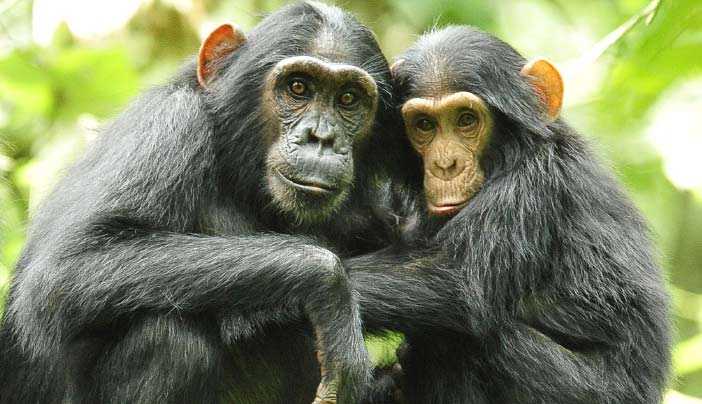
A Uganda safari does not have to be only about lions, elephants, giraffes and wide-open savannah. Near Murchison Falls National Park, another world begins beneath the forest canopy. Budongo Forest offers visitors the chance to walk through a rich tropical forest while searching for one of our closest living relatives, the chimpanzee. Chimpanzee tracking Budongo Forest experiences combine wildlife, walking, conservation and forest exploration in a way that feels very different from a traditional game drive. Instead of sitting in a safari vehicle and scanning open plains, you follow forest trails with trained guides and trackers. You listen for calls, look for movement in the canopy and search for signs left behind by chimpanzees. Sometimes the animals remain high in the trees. At other times, they move closer to the ground and give visitors an extraordinary view of their social lives.
Budongo is particularly valuable because its chimpanzees have a long history of scientific research and conservation. The Budongo Conservation Field Station says the forest is home to approximately 600–700 chimpanzees, and researchers have studied chimpanzees there since the 1960s. Several communities have become habituated to human observers through long-term research and conservation work. However, visitors should understand an important distinction. The well-known Sonso and Waibira communities are research communities and are not open to ordinary tourist visits. For tourism, the Budongo Conservation Field Station recommends the Kaniyo-Pabidi community, which lies in the northeastern part of Budongo and is managed for visitor experiences through Budongo Eco-Lodge.
For travellers booking through Safari O’clock, this makes Budongo an excellent addition to a Murchison Falls itinerary. You can experience the open savannah on a game drive, follow the Victoria Nile on a boat cruise and then step beneath the forest canopy to search for chimpanzees. Each activity reveals a different part of northern Uganda’s wildlife. More importantly, the forest walk slows the safari down. You begin to notice birds, butterflies, trees, monkeys, insects and the sounds of the forest. Then, when a chimpanzee calls from somewhere above you, the entire experience changes.
Chimpanzee Tracking Budongo Forest: Where the Experience Happens
Budongo Forest forms an important part of the wider Murchison Falls Conservation Area. The forest sits south of Murchison Falls National Park and provides a striking contrast to the park’s extensive savannah landscapes. Kaniyo-Pabidi lies along the route between Masindi and Murchison Falls, making it especially convenient for travellers who want to combine primate tracking with a northern Uganda safari. The Budongo Conservation Field Station confirms that Kaniyo-Pabidi is the tourist-accessible chimpanzee community, while the station itself remains primarily a research facility and does not operate as a normal tourist attraction.
This location gives Safari O’clock an opportunity to design an itinerary that flows naturally between ecosystems. Travellers arriving from Masindi can include chimpanzee tracking before continuing towards the park. Visitors already exploring Murchison can also incorporate the forest experience into their wider itinerary. The exact timing depends on the day’s activities, road conditions and accommodation location. Therefore, good planning matters. Chimpanzee tracking works best when treated as a major safari activity rather than something squeezed between two unrelated stops.
The forest itself adds another dimension to the experience. Budongo is a moist, semi-deciduous tropical forest associated with the Albertine Rift. Its large trees create a complex habitat for primates, birds and other forest species. The Budongo Conservation Field Station describes the forest as an important research site with a long history of ecological study. It also highlights threats such as forest-edge encroachment, illegal timber cutting and wire snares.
Why Chimpanzee Tracking Budongo Forest Is Special
Chimpanzees are fascinating because they combine remarkable intelligence with complex social behaviour. They live in communities, communicate through a wide range of calls and gestures, form relationships and show individual personalities. A forest encounter therefore offers more than a photograph. It gives visitors a glimpse into the daily life of a highly social great ape.
Budongo has another advantage. Its chimpanzees have been observed by researchers for decades. The Budongo Conservation Field Station traces scientific work in the forest back to the 1960s and its own formal conservation and research programme to the work of Vernon Reynolds. Long-term observation has produced an unusually detailed understanding of the forest and its chimpanzee communities.
That history also makes habituation important. Wild chimpanzees naturally avoid close contact with humans. Habituation involves gradually allowing animals to become accustomed to the presence of researchers or visitors without changing their natural behaviour. The process takes time and careful management. At Budongo, long-term research has helped establish communities that can tolerate human observers. This creates a more meaningful wildlife encounter because visitors can observe natural behaviour rather than seeing animals that have been captured or confined.
Chimpanzee Tracking Budongo Forest and the Kaniyo-Pabidi Community
Kaniyo-Pabidi is the community most relevant to tourists. The Budongo Conservation Field Station explains that these chimpanzees live in the northeastern part of the forest and were habituated through work associated with the Jane Goodall Institute. The community can also move beyond the forest into surrounding savannah areas, which makes their movements especially interesting.
This movement is one reason chimpanzee tracking cannot operate like a zoo visit. The animals decide where they go. They choose feeding trees, sleeping locations and travel routes. They can move through dense vegetation or climb high into the canopy. Therefore, your guide cannot simply take you to a fixed enclosure and point at the chimpanzees. Instead, trackers use knowledge of the animals and the forest to locate the group.
That uncertainty adds excitement. You may begin walking through the forest without seeing any chimpanzees. Then you hear distant calls. Your guide pauses. Everyone listens. The sound seems to come from one direction, then another. The trackers examine the trail and continue. Eventually, branches move overhead and the first chimpanzee appears. That moment often becomes one of the most memorable parts of a Uganda safari.
What Happens During Chimpanzee Tracking in Budongo
A typical tracking experience begins with a briefing before visitors enter the forest. Guides explain what to expect and outline the rules for observing chimpanzees. Once the group starts walking, the pace can change depending on where the animals are located. Some days involve a relatively short walk. Other days require more time and effort.
Trackers pay attention to many clues. Chimpanzees build nests in trees for sleeping, and these nests can help trackers determine where animals have recently spent the night. Guides may also recognize feeding signs, broken branches, fruit remains, footprints and vocalizations. However, no single clue guarantees that the chimpanzees are nearby. The animals may have moved several hundred metres or more since leaving a particular location.
This makes chimpanzee tracking different from ordinary hiking. You are not simply following a trail from one landmark to another. You are following the behaviour of living animals. Your guide constantly interprets the forest. The experience becomes a partnership between visitors, guides and trackers.
How Long Does Chimpanzee Tracking Take?
The length of a chimpanzee trek can vary considerably. The group may locate chimpanzees relatively quickly, or the animals may have travelled deeper into the forest. Terrain, weather, food availability and chimpanzee movements can all influence the experience.
This uncertainty is worth embracing. A visitor who expects a guaranteed 30-minute encounter may become frustrated. A traveller who understands that the forest determines the schedule will usually enjoy the experience more. Safari O’clock recommends approaching chimpanzee tracking with patience and flexibility.
The walking itself also forms part of the adventure. You may encounter other primates, forest birds, butterflies and unusual trees before seeing a chimpanzee. Even if the animals remain difficult to locate, the forest is still alive with activity. In that sense, chimpanzee tracking is both a wildlife search and a guided nature walk.
What Chimpanzees Eat in Budongo Forest
Chimpanzees are primarily fruit eaters, but their diet is varied. They also consume leaves, flowers, seeds, bark and other plant material. On some occasions, chimpanzees hunt and eat animal prey. The diet changes according to what the forest provides at different times of the year.
Food availability strongly influences chimpanzee movement. When an important fruiting tree produces food, chimpanzees may remain in the area for longer. When food becomes scarce, they can travel farther in search of resources. This behaviour has direct implications for visitors. A forest full of fruit does not necessarily mean an easier trek. It may change where the chimpanzees spend their time.
The Budongo Conservation Field Station’s long-term research helps explain why understanding the forest matters. The station studies both chimpanzee behaviour and the wider forest ecosystem. Its work demonstrates that chimpanzees cannot be separated from the trees, food resources and other species around them.
Understanding Chimpanzee Social Behaviour
One of the most rewarding aspects of a chimpanzee encounter is watching social behaviour. Chimpanzees live in flexible communities rather than remaining together in one permanently fixed group. Individuals can separate and regroup depending on food, social relationships and other circumstances.
You may see adults feeding together, youngsters playing, individuals grooming one another or animals moving through the canopy. You may also hear loud calls that seem to travel through the forest. These sounds can help chimpanzees maintain contact and communicate with members of their community.
Visitors should resist the temptation to interpret every behaviour as if it were human behaviour. Chimpanzees are closely related to humans, but they remain wild animals with their own social systems. A good guide can help explain what you are seeing without turning the experience into a staged performance.
Chimpanzee Tracking Budongo Forest: What Should You Wear?
Forest tracking requires practical clothing rather than fashionable safari outfits. Wear lightweight trousers and a comfortable long-sleeved shirt. Long trousers help protect your legs from vegetation and insects. Choose sturdy hiking shoes or boots with good grip because forest trails can become slippery after rain.
A lightweight rain jacket is useful because tropical forests can experience sudden rainfall. Carry enough drinking water for the walk. Insect repellent can also improve comfort, especially in humid conditions.
Neutral colours are preferable because they blend into the forest environment. Avoid very bright clothing where possible. A hat can help in exposed sections, although much of the walk takes place beneath the canopy.
Safari O’clock can advise travellers on the practical packing list before departure. The right footwear and clothing make a significant difference when you spend several hours walking through uneven forest terrain.
What About Cameras and Photography?
Chimpanzee photography can be challenging. The forest canopy often creates low-light conditions, while the animals may move quickly between branches. A camera with good low-light performance and a useful telephoto lens can help.
However, equipment should never become the main priority. Sometimes a chimpanzee appears close enough for a simple photograph. At other times, you may see only a silhouette among leaves. Avoid using flash unless guides specifically confirm that it is permitted. Sudden light can disturb wildlife.
Try to photograph behaviour rather than simply collecting portraits. A chimpanzee feeding, grooming or climbing through the canopy can tell a stronger story than a static face. At the same time, put the camera down occasionally. Watching the animals directly can be more rewarding than viewing the entire encounter through a screen.
How Close Can Visitors Get to Chimpanzees?
Visitors should follow the current instructions of their guides and the authorities managing the tracking experience. Chimpanzees are wild animals. Even habituated individuals can behave unpredictably.
Maintaining an appropriate distance protects both visitors and chimpanzees. It reduces stress for the animals and lowers the risk of disease transmission. Great apes can be vulnerable to human respiratory infections, while people can also face health risks from close contact with wildlife.
Do not attempt to touch a chimpanzee. Never offer food. Do not make noises to attract an animal closer. If a chimpanzee approaches, allow the guide to manage the situation. The goal is to observe natural behaviour, not to create an interaction.
Why Health Rules Matter During Chimpanzee Tracking
Disease prevention is a serious part of responsible great-ape tourism. Humans and chimpanzees share many biological similarities, which means some illnesses can potentially move between the two species.
Budongo Conservation Field Station maintains dedicated guidance for visitors and researchers, including protocols for preventing respiratory infections and managing human-great ape interactions.
This is why visitors should never track chimpanzees when they are ill without first following the applicable health guidance. Cover coughs and sneezes properly. Avoid unnecessary close contact. Follow hand hygiene instructions. Most importantly, listen to the ranger or guide.
These rules may seem strict compared with an ordinary forest walk. However, they protect a vulnerable population. Responsible visitors contribute to conservation simply by following them.
Chimpanzee Tracking and Conservation in Budongo Forest
Chimpanzee tourism has value beyond the experience itself. Budongo’s forests support wildlife while also providing ecological services and resources for surrounding communities. Conservation therefore requires cooperation between researchers, authorities, local communities and tourism stakeholders.
The Budongo Conservation Field Station works on research and conservation aimed at improving sustainable management of the forest. Its work includes studying chimpanzees, forest ecology and threats to biodiversity.
Those threats are significant. BCFS identifies forest-edge encroachment, illegal timber harvesting and wire snares among the challenges affecting Budongo. Snares intended for other forest animals can injure chimpanzees when they encounter them on the forest floor.
This makes responsible tourism particularly important. Visitors may not see a patrol or conservation project during their trek. Nevertheless, the opportunity to observe wild chimpanzees depends on the continued protection of their habitat.
Chimpanzee Tracking Budongo Forest vs Kibale Forest
Uganda offers several places where visitors can search for chimpanzees, and Kibale National Park is the country’s best-known chimpanzee destination. Budongo offers a different proposition.
The greatest advantage of Budongo for a Murchison safari is location. You can combine chimpanzee tracking with one of Uganda’s premier savannah parks without making a major detour to western Uganda. This makes the experience especially attractive to travellers who want to combine big-game wildlife with primate tracking.
Budongo also has a strong research history. Its chimpanzees have been studied for decades, giving the forest considerable scientific importance. Visitors therefore enter a landscape where tourism and long-term conservation research intersect.
Safari O’clock can help travellers decide between the different chimpanzee destinations according to their overall itinerary. If Murchison Falls is already a major part of the journey, Budongo provides a natural forest extension rather than requiring a completely separate safari route.
When Is the Best Time for Chimpanzee Tracking Budongo Forest?
Chimpanzees can be tracked throughout the year. However, forest conditions change with rainfall, and these changes can affect walking conditions and animal movements.
The drier months can make trails easier to walk. The wetter months can make the forest lush and especially attractive for nature lovers and photographers. Rain can also make some trails muddy or slippery. Therefore, the best time depends partly on your priorities.
If your safari combines chimpanzees with Murchison’s savannah wildlife, the overall seasonal conditions matter too. Safari O’clock can help coordinate the itinerary so that forest activities, game drives and the Nile boat cruise fit together comfortably.
There is also an important difference between having a good chance of seeing chimpanzees and expecting a guaranteed encounter. Wildlife remains unpredictable. Even habituated communities can move beyond the most convenient trails. A responsible operator should explain this clearly before the trek.
What Other Wildlife Can You See in Budongo?
Chimpanzees are the headline attraction, but Budongo is much richer than one species. The forest supports other primates, birds, butterflies and a remarkable variety of plant life.
You may hear monkeys moving through the canopy before seeing them. Forest birds can remain hidden among leaves while their calls reveal their presence. Large trees create habitats at several levels, from the forest floor to the highest branches.
The Budongo Conservation Field Station describes the forest as an important habitat for thousands of tropical plants and animals. Its research programme therefore looks beyond chimpanzees and considers the wider forest ecosystem.
This diversity makes a guided nature walk worthwhile even between chimpanzee sightings. Instead of focusing only on the next chimpanzee call, take time to notice the smaller details. A good guide can transform an ordinary tree, bird call or insect into part of the safari story.
How to Combine Budongo With Murchison Falls
One of the strongest reasons to choose Budongo is how naturally it fits into a Murchison Falls itinerary. A traveller can combine chimpanzee tracking with savannah game drives and a Nile boat cruise without changing the overall character of the trip.
For example, Safari O’clock can plan a forest experience around the beginning or end of a Murchison safari, depending on accommodation and driving logistics. After the forest, you can continue into the park for wildlife viewing. Alternatively, you can enjoy Murchison’s savannah first and then finish with a quieter forest experience.
The combination also creates excellent variety. A game drive places you in an open landscape. A boat cruise places you beside the Nile. Chimpanzee tracking takes you beneath a forest canopy. Within one safari, you experience three very different ecosystems.
Is Chimpanzee Tracking Suitable for Families?
It can be, depending on the age, fitness and interests of the children. Forest trails can be uneven, and chimpanzees may require extended walking. Parents should therefore consider the physical demands before booking.
Children also need to understand that wildlife viewing requires patience. A chimpanzee may not appear immediately. The group may need to walk quietly and wait while trackers locate the animals.
Safari O’clock can help families choose an itinerary that matches their pace. A shorter nature walk may suit some younger travellers better, while older children and teenagers who enjoy wildlife can find chimpanzee tracking extremely rewarding.
What Fitness Level Do You Need?
You do not need to be an elite hiker. However, you should be comfortable walking on uneven forest trails for several hours if necessary. Roots, mud, slopes and fallen branches can occur along forest paths.
The difficulty changes with the chimpanzees’ movements. A group close to the trailhead may require little walking. A group that has travelled deeper into the forest can require considerably more effort.
This is why comfortable footwear matters so much. Good shoes can improve confidence on slippery ground and make the entire experience more enjoyable.
What Should Visitors Not Expect?
First, do not expect a zoo-style encounter. The chimpanzees live freely in the forest. They decide where they travel and what they do.
Second, do not expect every chimpanzee to remain on the ground. They may spend considerable time in trees. You might see only movement among leaves before getting a clearer view.
Third, do not expect every trek to follow the same route. The trackers adapt according to the animals’ movements.
Finally, do not expect the experience to feel like a game drive. Walking changes your relationship with the forest. You hear more. You smell the vegetation. You feel the terrain beneath your feet. The forest becomes part of the wildlife encounter.
How Safari O’clock Can Organise Your Budongo Experience
Safari O’clock can incorporate chimpanzee tracking into a wider Murchison Falls itinerary while taking into account driving times, accommodation, park activities and your personal interests.
For travellers who love primates, we can make the forest experience a central part of the safari. For travellers mainly interested in big game, we can position it as a complementary activity alongside game drives and the Nile cruise.
We also believe in setting realistic expectations. We do not promise that a wild chimpanzee will pose perfectly for a photograph. Instead, we focus on giving you the best opportunity to experience the animals responsibly. Good preparation, experienced guiding and enough time can make the difference.
Most importantly, we want travellers to understand that Budongo is not simply another stop on a checklist. It is a living forest with a long scientific and conservation history. Your visit should leave you with both memories and a deeper appreciation for why this habitat matters.
Chimpanzee Tracking Budongo Forest: A Complete Safari Experience
Chimpanzee tracking Budongo Forest is one of the best ways to add a forest dimension to a Murchison Falls safari. The experience combines walking, wildlife observation and conservation education. It also gives visitors a chance to encounter chimpanzees in a natural forest rather than viewing them in captivity.
The Kaniyo-Pabidi community makes the experience particularly accessible for tourists visiting the Murchison area. At the same time, the wider Budongo Forest carries enormous scientific value. Researchers have studied its chimpanzees for decades, while conservationists continue working to protect the forest and address threats such as snares and habitat pressure.
For Safari O’clock travellers, the experience can become one of the highlights of a northern Uganda journey. Begin with chimpanzees beneath the forest canopy. Continue to the savannah for elephants, giraffes, buffaloes and big cats. Then follow the Victoria Nile towards Murchison Falls. Each environment tells a different story.
In the end, that variety is what makes Uganda special. You do not have to choose between primates and classic safari wildlife. In the Murchison region, you can experience both.
Frequently Asked Questions About Chimpanzee Tracking Budongo Forest
Where is Budongo Forest?
Budongo Forest lies in western Uganda near Masindi and the Murchison Falls Conservation Area. Kaniyo-Pabidi is located along the route towards Murchison Falls and is the main area recommended for tourist chimpanzee experiences.
Where does chimpanzee tracking take place?
For tourists visiting Budongo, the key location is the Kaniyo-Pabidi community. The Budongo Conservation Field Station specifically recommends Kaniyo-Pabidi for chimpanzee tracking rather than its research-focused Sonso and Waibira communities.
How many chimpanzees live in Budongo Forest?
The Budongo Conservation Field Station currently estimates approximately 600–700 chimpanzees in Budongo Forest. This refers to the wider forest population, not a single tourist group.
Can tourists visit the Sonso chimpanzee community?
Not as ordinary tourists. Sonso is an important long-term research community, and the Budongo Conservation Field Station states that tourists should instead visit the Kaniyo-Pabidi community for chimpanzee tracking.
How long does chimpanzee tracking take?
The duration varies because the chimpanzees move freely through the forest. Some encounters happen relatively quickly, while others require longer walking. Visitors should therefore allow enough time rather than planning a very tight schedule.
What are the chances of seeing chimpanzees?
Sightings are generally good at the habituated tourism site, but no ethical safari company should guarantee an encounter. The chimpanzees determine where they move, and their ranging patterns can change with food availability and other conditions.
Can chimpanzees be dangerous?
Chimpanzees are wild animals and deserve respectful distance. Habituation does not make them domesticated. Visitors should never touch, feed or deliberately approach them.
Is Budongo suitable for first-time chimpanzee trekkers?
Yes. You do not need previous trekking experience. The main requirement is being comfortable walking through forest terrain and following the guide’s instructions.
Can I combine chimpanzee tracking with Murchison Falls?
Yes. This is one of Budongo’s biggest advantages. Safari O’clock can combine chimpanzee tracking with Murchison game drives, the Nile boat cruise and a visit to the falls.
Is chimpanzee tracking available throughout the year?
Chimpanzee tracking can operate year-round, although forest conditions change with the seasons. Wet periods can make trails muddy, while drier periods can make walking easier.
What should I bring?
Bring comfortable hiking shoes, long trousers, a lightweight long-sleeved shirt, drinking water, insect repellent, sunscreen, a rain jacket and binoculars. Photographers should also carry appropriate camera equipment and protect it from rain.
Final Thoughts
Budongo Forest offers something that a traditional savannah safari cannot. Instead of watching wildlife from a vehicle, you walk through the habitat where the animals live. Instead of scanning a distant plain, you listen to the canopy. Instead of following a road, you follow signs left by a moving community of chimpanzees.
That makes the experience deeply personal. The forest asks you to slow down. It rewards patience. It encourages you to notice small details. Then, when a chimpanzee appears above the trail, the encounter feels earned.
For travellers exploring northern Uganda with Safari O’clock, Budongo is therefore more than an optional activity. It is an opportunity to experience another side of Uganda’s wildlife. Combined with Murchison Falls National Park, the Nile and the savannah, it creates a safari that moves from forest canopy to open grassland and finally to one of Africa’s great rivers.
That is the beauty of a Uganda safari. One journey can bring you face to face with chimpanzees in an ancient forest and, only a short time later, place you beside the Nile watching elephants, hippos and crocodiles. Budongo simply adds another remarkable chapter to that story.