- DIRECT CONTACTS:
- +256394517569
- tours@safarioclock.africa

Morning vs Afternoon Game Drives in Murchison Falls National Park: Which Is Better?

Chimpanzee Tracking in Budongo Forest Near Murchison Falls: A Complete Uganda Safari Guide
September 15, 2026
What Animals Are Most Active During an Evening Safari in Rwanda?
September 16, 2026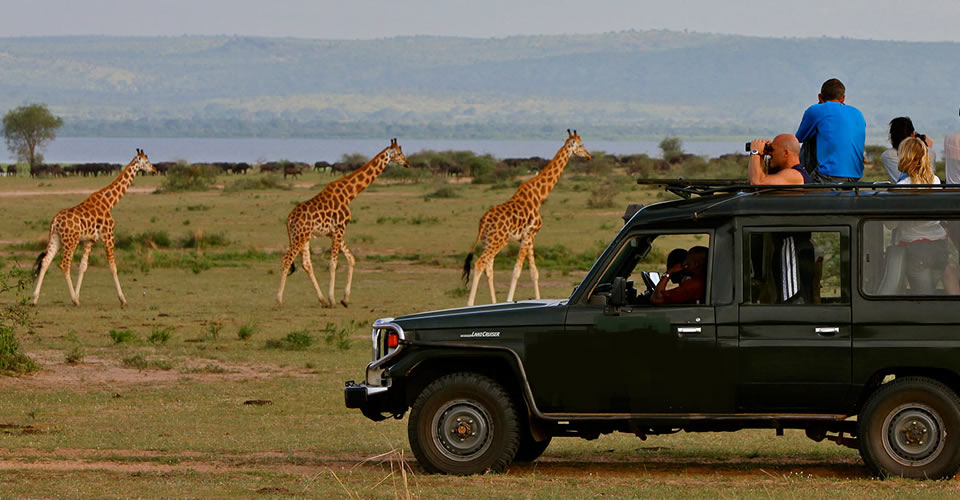
A game drive in Murchison Falls National Park is one of the best ways to experience Uganda’s wildlife from the savannah. However, many travellers planning their first safari ask the same question: Is a morning game drive better than an afternoon game drive? The answer is not as simple as choosing one time and calling it the best. Both morning and afternoon drives offer excellent opportunities, but they create different safari experiences. The weather, season, wildlife behaviour, location, and length of your stay can all influence what you see. Therefore, when planning Murchison game drives, it is more useful to understand what each time of day offers rather than expecting one session to guarantee better sightings.
Murchison Falls National Park covers a huge landscape of savannah, woodland, riverine habitats and wetlands. The Victoria Nile is one of its defining features, while the northern sector provides some of the park’s best open-country wildlife viewing. UWA describes the Buligi Peninsula as the park’s prime game-viewing area. Here, visitors can expect elephants, buffaloes, antelopes and giraffes, while lions and leopards require more luck and patience. The Heart of Murchison also provides excellent savannah viewing and is known for substantial Uganda kob herds, which in turn make it an important area for lion sightings.
For travellers booking a Uganda safari with Safari O’clock, the best approach is therefore not to ask only, “Morning or afternoon?” Instead, ask, “What wildlife experience do I want, what season am I travelling in, and how many game drives can I fit into my itinerary?” That small change in thinking can make your safari much more rewarding.
What Makes Murchison Game Drives Special?
Murchison Falls is different from many safari destinations because the wildlife experience is closely connected to the Nile. The river cuts through the protected area and creates water sources, grasslands and riverine habitats that attract a wide variety of animals. UWA currently lists 144 mammal species and 556 bird species for the park. The northern landscape is characterised by open savannah, Borassus palms and acacia woodland, while the southern part contains more woodland and forest patches.
This variety means that a game drive is never simply about searching for one famous animal. You may begin by watching Uganda kob grazing across an open plain. A few minutes later, you might encounter a herd of buffaloes, a group of elephants or giraffes moving between patches of vegetation. With patience, you may also find lions resting in the grass or discover smaller species that are easy to overlook when everyone is focused on the Big Five.
The landscape itself also changes the character of the drive. In some areas, wide-open plains make it easier to scan for large animals. Elsewhere, woodland can make wildlife more difficult to spot. Consequently, an experienced driver-guide can make a major difference by reading tracks, understanding the terrain and knowing where animals are more likely to be found.
Morning Game Drives in Murchison Falls
Morning game drives are usually the first choice for travellers who want to experience the savannah when temperatures are still relatively comfortable. Murchison Falls can become hot during the day. UWA information describes daytime temperatures commonly around 25–32°C, with occasional higher temperatures during hotter periods.
An early start therefore gives you a cooler period for exploring. More importantly, it allows you to enter the wildlife areas during the first part of the day, when the landscape is gradually becoming active. You can experience the transition from the quiet morning into the busier hours of the savannah.
Morning light can also be excellent for photography. The softer light creates attractive conditions for photographing giraffes, elephants, buffaloes, antelopes and birds. Shadows are generally less harsh than they can become around midday. As a result, photographers often appreciate the visual quality of an early drive even when a particular animal is not behaving dramatically.
However, it is important not to turn this into a promise that every animal will be more active in the morning. Wildlife does not follow a tourist timetable. Some animals may still be resting, while others may already have moved into thicker vegetation. Your guide must therefore adapt to what is happening in the park on that particular day.
Why Choose Morning Game Drives?
The biggest advantage is the combination of cooler conditions, fresh light and the opportunity to explore before the strongest daytime heat develops. This can make the experience physically comfortable, particularly during the hotter months.
Morning drives are also useful for travellers who have a full day of activities planned. You can complete your drive earlier and then return to your lodge for breakfast or relaxation before another activity. Depending on your itinerary, you may then have time for a boat cruise on the Victoria Nile, a visit to the Top of the Falls, birding or another planned experience.
For Safari O’clock guests, this flexibility can be especially useful because Murchison Falls is not a destination where you need to spend every hour inside a safari vehicle. A well-designed itinerary combines different experiences instead of repeating the same activity throughout the day.
What Animals Can You See in the Morning?
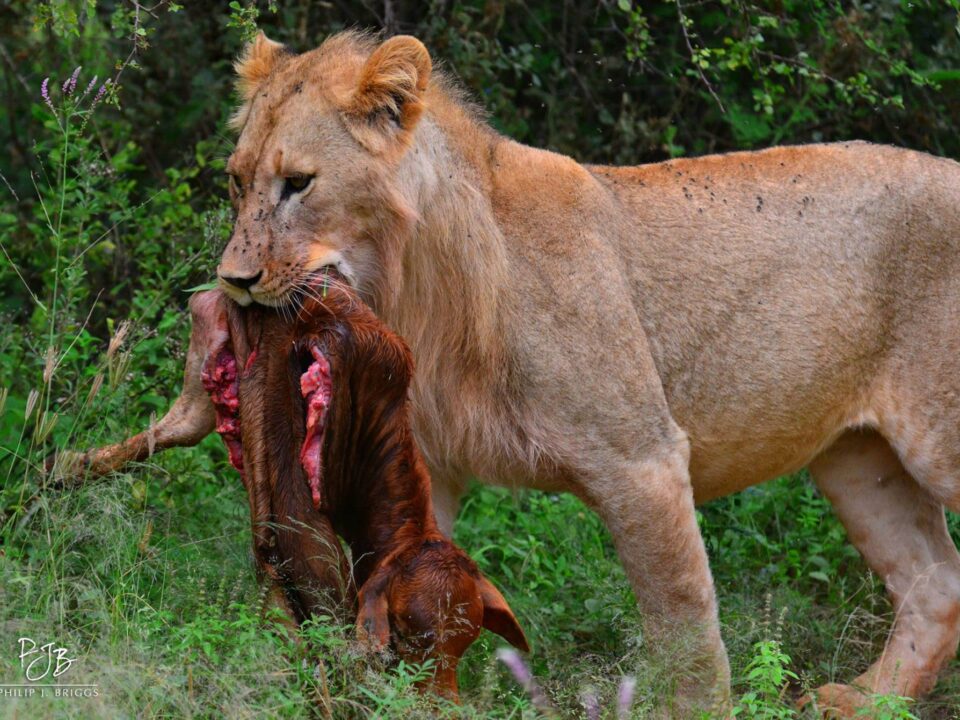
Morning game drives can produce a broad range of sightings. Elephants, buffaloes, giraffes, Uganda kob, waterbuck and other antelopes occur in the savannah landscape. Lions and leopards are also present, although neither should be treated as a guaranteed sighting.
The Buligi Peninsula is particularly important because UWA identifies it as the park’s prime game-viewing area. Its grassland landscape supports large herbivores and offers opportunities to search for predators.
The Heart of Murchison is another valuable area. Its Uganda kob herds are one of the reasons the area has become associated with lion viewing. However, predators can move over considerable distances, so your guide may need to search different sections rather than remain in one location.
Morning Drives and Photography
If photography is one of your priorities, morning can be an excellent option. The lower sun often produces more gentle illumination than the strong midday light. Wildlife standing in open areas can also be easier to photograph when the sun is not directly overhead.
Furthermore, morning drives can provide opportunities to photograph landscapes as well as animals. The combination of grassland, palms, distant hills, dust, sunrise light and wildlife can create some of the most memorable images of a Uganda safari.
Still, good photography depends on more than the time of day. Your position, lens, animal behaviour, weather and patience all matter. A skilled guide will also help you approach wildlife responsibly without disturbing it.
Afternoon Game Drives in Murchison Falls
Afternoon game drives offer a completely different rhythm. Instead of starting with the first light, you enter the savannah after the middle of the day and continue toward the later afternoon. This timing can work particularly well for travellers who prefer a slower morning at their lodge or who combine their day with another activity.
Afternoon conditions can be warmer at first. Therefore, the early part of an afternoon drive may not always feel as comfortable as an early morning departure. However, as the sun begins to move lower, temperatures can become more pleasant and the landscape takes on a different appearance.
The later afternoon can be especially beautiful for photography. The light becomes warmer and softer, and long shadows begin to appear across the grasslands. Giraffes, elephants and other large animals can look particularly striking against the changing landscape.
Why Choose Afternoon Game Drives?
An afternoon drive is ideal for travellers who do not want to rush out of their accommodation at dawn. It can also work well after a morning boat cruise, breakfast, relaxation or another activity.
For example, a Safari O’clock itinerary might combine a morning boat cruise on the Nile with lunch and relaxation before an afternoon game drive. This creates a varied day instead of spending many consecutive hours in the same vehicle.
Afternoon drives also allow travellers to enjoy the changing atmosphere of the park. As the strongest heat begins to ease, you can continue searching the plains while keeping an eye on the changing light.
What Animals Can You See in the Afternoon?
The same broad range of wildlife can potentially be encountered during afternoon drives. Murchison’s savannah supports elephants, buffaloes, giraffes, Uganda kob, waterbuck and other antelopes. The park also supports predators such as lions and leopards.
However, there is no scientific rule saying that every species must appear in the morning or afternoon. Animal movements depend on many factors. These include temperature, water availability, food, disturbance, social behaviour and the individual animal.
Therefore, a good afternoon drive is not simply about driving around until sunset. Your guide may adjust the route based on fresh sightings, tracks, animal concentrations and information from other professional guides.
Morning vs Afternoon Game Drives: The Main Difference
The simplest way to compare the two is to think about conditions and experience, rather than guaranteed wildlife.
Morning drives generally offer cooler conditions, fresh light and an early start to wildlife viewing. Afternoon drives provide a more relaxed schedule, changing evening light and the possibility of watching the savannah transition toward the cooler part of the day.
| Feature | Morning Game Drive | Afternoon Game Drive |
|---|---|---|
| Temperature | Usually cooler | Warmer initially, cooler later |
| Light | Soft morning light | Warm late-afternoon light |
| Photography | Excellent for soft light | Excellent for warm, dramatic light |
| Schedule | Requires early start | More relaxed morning |
| Wildlife | Wide range of species possible | Wide range of species possible |
| Best for | Early risers and photographers | Relaxed travellers and sunset-light photography |
| Combination | Works well before other activities | Works well after lunch or a boat cruise |
The most important point is that both Murchison game drives can be rewarding. Your decision should depend on your travel style rather than a simple claim that one is always superior.
Does Morning Mean More Wildlife?
This is one of the most common safari questions. The answer needs some caution.
Early morning is often promoted because animals can be active during cooler periods. That makes sense from a behavioural and ecological perspective. However, Murchison Falls is a large protected landscape, and wildlife is constantly moving. You may have an excellent morning with several sightings, while another traveller may have a spectacular afternoon.
For that reason, Safari O’clock does not recommend treating the morning as a guaranteed wildlife formula. Instead, we plan drives around the park’s current conditions, your accommodation, the season and your wider itinerary.
UWA itself describes the Buligi Peninsula as the prime game-viewing area rather than defining one universal hour as the only successful period.
Does Afternoon Mean Fewer Animals?
Not necessarily.
An afternoon drive can still produce excellent wildlife sightings. The park remains active, and animals do not disappear simply because the morning has passed. In addition, the later afternoon can offer beautiful viewing conditions as temperatures begin to fall.
The key difference is that you may experience wildlife differently. Some animals may be resting in shaded areas during the hottest part of the afternoon. Later, however, you may see activity increase again as conditions become more comfortable.
Consequently, a late-afternoon drive can be particularly enjoyable when combined with patience and good route planning.
Morning vs Afternoon Game Drives During the Dry Season
Season can influence your choice more than many first-time safari visitors realise.
UWA information identifies December to February and June to September as the main dry periods for Murchison Falls. During these periods, rainfall is generally lower and animals can become more concentrated around available water sources. UWA also notes that the dry season is a strong period for wildlife viewing in Uganda’s savannah reserves.
During the dry season, morning drives can be particularly comfortable because the temperature has not yet reached the hottest part of the day. However, afternoon drives can also become attractive as the heat starts to reduce.
Water sources therefore become important when planning routes. The Nile is a major permanent water feature, and the riverbanks can attract elephants, buffaloes and other wildlife. UWA describes the river stretch around Murchison Falls as one of Uganda’s important wildlife-viewing areas.
Morning vs Afternoon Game Drives During the Wet Season
The wet season changes the safari experience.
UWA documentation describes rainfall periods in Murchison Falls, with March to May and October to November commonly identified as wetter periods in one current park climate assessment. Rain can affect road conditions and the timing of wildlife activities.
However, wet-season safaris should not be dismissed. Rain transforms the landscape, vegetation becomes greener and birdlife can be especially interesting. The park remains a strong wildlife destination throughout the year.
For travellers visiting during wetter months, Safari O’clock may recommend flexible scheduling. A morning drive can work well if conditions are dry early in the day. Alternatively, an afternoon drive may be better if heavy rain has affected the morning.
This is why experienced safari planning matters. Instead of following a rigid timetable, the day’s activities can be adjusted where practical.
What Time Do Murchison Game Drives Start?
Visitors should distinguish between park operating hours and the actual departure time of a game drive.
UWA has stated that Murchison Falls National Park operates from 7:00 am to 7:00 pm.
The exact time your Safari O’clock vehicle leaves your lodge depends on your accommodation, the location of the lodge, the gate being used and the planned route. A lodge close to the game-viewing area can start differently from one that is farther away.
Therefore, there is no single departure time that applies to every safari. Your driver-guide will normally coordinate the timing so that you can enter the appropriate wildlife area efficiently while respecting park regulations.
How Long Should a Murchison Game Drive Last?
A game drive can vary in length depending on the itinerary and the traveller’s interests.
Some visitors prefer a shorter drive followed by another activity. Others enjoy several hours in the savannah, especially when wildlife viewing is the main purpose of the trip.
The most important consideration is not simply the number of hours. It is how those hours are used.
A skilled guide will avoid turning the experience into a race between sightings. Wildlife viewing is slower than sightseeing in a city. You may spend several minutes watching one elephant family, studying a herd of buffaloes or waiting patiently for a lion to emerge from vegetation.
At Safari O’clock, we believe those quiet moments are part of the safari rather than wasted time.
Should You Do Both Morning and Afternoon Game Drives?
If your itinerary allows it, yes.
Doing both gives you two different opportunities to experience the same ecosystem. You can enjoy the cooler morning atmosphere and then return later when the light and temperature have changed.
This approach also reduces the pressure to find every desired animal during a single drive. If the morning is quiet, you have another opportunity later. If the morning is spectacular, the afternoon becomes an opportunity to explore a different area.
A two-drive day can therefore be particularly useful for first-time visitors who want a deeper experience of Murchison Falls.
A Perfect Full Day of Murchison Wildlife
One of the advantages of staying around Murchison Falls is the ability to combine several activities.
A carefully planned day could begin with an early morning game drive in the savannah. Afterward, you can return for breakfast or lunch and take time to relax. Later, you can enjoy an afternoon boat experience on the Nile or take another game drive depending on your interests.
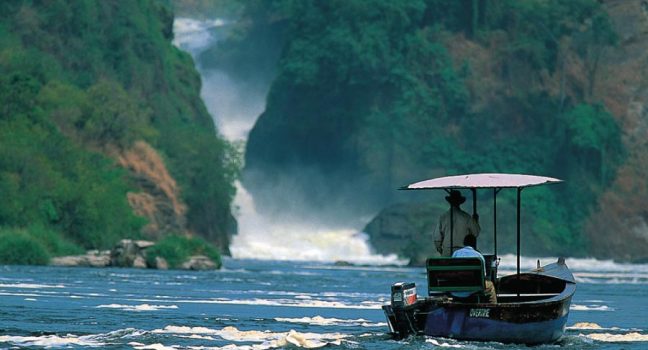
The classic boat trip from Paraa to the base of Murchison Falls takes about three hours return. UWA describes the journey as passing hippos, crocodiles and visiting elephants and buffaloes along the riverbanks.
Another option is to use the afternoon for relaxation before returning to the savannah later in the day. This is often more comfortable than trying to fill every hour with activities.
Morning Game Drives for Families
Families should consider their children’s ages and daily routines before choosing a game-drive schedule.
For some families, a morning drive works beautifully because children wake up early and are excited to see wildlife. Cooler conditions can also make the experience more comfortable.
For other families, getting everyone ready before sunrise may create unnecessary stress. In that situation, an afternoon drive can be a better choice.
Safari is supposed to be enjoyable. Therefore, there is no prize for choosing the earliest possible departure if everyone in the vehicle is exhausted before the wildlife viewing even begins.
Afternoon Game Drives for Relaxed Travellers
Travellers who prefer a slower holiday may find afternoon drives more appealing.
You can have breakfast without rushing, enjoy the lodge surroundings, read, take photographs or simply rest. After lunch, you can prepare for your afternoon excursion.
This style works particularly well for travellers who are combining Murchison Falls with several other destinations in Uganda. Safari holidays can involve long drives between parks, so allowing time for rest can prevent the itinerary from becoming tiring.
Safari O’clock can build this flexibility into your Uganda safari rather than treating every day as a strict checklist.
Which Drive Is Better for Photographers?
Both can be excellent.
Morning light can provide soft illumination and clear atmospheric conditions. Afternoon light can create warmer tones and longer shadows. Consequently, photographers who have enough time should consider doing both.
The type of photograph you want also matters. A wide landscape photograph may look very different at 7:00 am compared with late afternoon. Likewise, a giraffe photographed against a warm evening sky creates a different mood from an elephant photographed in the soft morning light.
Rather than asking which drive is universally better, photographers should ask which light they prefer.
Which Drive Is Better for First-Time Safari Visitors?
For first-time visitors, we usually recommend prioritising a morning drive if the itinerary only allows one major wildlife drive.
The reason is practical. Morning conditions are often cooler, and starting early gives you a substantial part of the day for wildlife viewing. You can then use the rest of the day for another activity.
However, this is not a rule. If your travel schedule makes an afternoon drive more convenient, there is no reason to avoid it.
A good safari is not defined by the clock alone. It is defined by the quality of the guide, the landscape, your expectations and your willingness to observe.
Where Should You Go for Murchison Game Drives?
The Buligi Peninsula deserves particular attention. UWA identifies it as Murchison’s prime game-viewing area. The peninsula contains grassland between the Victoria Nile and Albert Nile systems and supports elephants, buffaloes, antelopes and giraffes. Lions and leopards can also be encountered with luck.
The Heart of Murchison is another important wildlife area. Its savannah landscape and Uganda kob herds make it a valuable location for searching for lions.
However, guides should not treat these locations as fixed wildlife theatres. Animals move. Weather changes. Vegetation changes. Recent sightings can also influence where guides search.
That flexibility is part of professional safari guiding.
How Safari O’clock Plans Your Game Drives
At Safari O’clock, we understand that travellers do not all want the same safari.
Some guests want the earliest possible start because wildlife photography is their priority. Others prefer a slower morning and an afternoon drive. Some want to maximise wildlife viewing by doing both.
We therefore consider your accommodation, travel dates, season, interests and the rest of your Uganda itinerary before deciding on the best schedule.
If lions are a priority, we may give additional attention to areas associated with Uganda kob herds and predator sightings. If photography is your main goal, we can consider the light and timing. If you are travelling with children, we can build in breaks. If you want a more relaxed holiday, we can avoid creating an exhausting schedule.
The goal is not simply to sell you more game drives. The goal is to create a safari that feels right for you.
Murchison Game Drives and Responsible Wildlife Viewing
Whichever time you choose, responsible behaviour matters.
UWA prohibits hooting and feeding wildlife in Murchison Falls National Park. The authority also enforces speed limits and other rules designed to protect visitors and wildlife.
During a game drive, remain inside the vehicle unless your guide has confirmed that it is safe and permitted to leave. Avoid shouting at animals or asking the driver to chase wildlife. Do not encourage the vehicle to move too close simply to obtain a photograph.
Responsible safari behaviour protects the animals and improves the experience for everyone.
A quiet vehicle is often more rewarding than an aggressive one. Wildlife may continue normal behaviour when visitors remain calm and respectful.
Morning vs Afternoon Game Drives: Our Verdict
So, which is better?
Morning game drives are usually the better single-drive choice for travellers who want cooler conditions, early wildlife viewing and soft photography light. They are especially practical when you have another activity planned later in the day.
Afternoon game drives are excellent for travellers who prefer a relaxed morning, want warm late-day photography or have other activities scheduled earlier. They can also become particularly enjoyable as temperatures fall and the evening light develops.
Doing both is the best option when your itinerary allows it.
Most importantly, do not measure your Murchison Falls safari only by how many animals you tick off a list. The sound of the savannah, the Nile in the distance, the sight of giraffes crossing an open plain, the slow movement of elephants and the anticipation of finding a lion are all part of the experience.
Murchison Falls is a landscape to experience, not simply a place to collect wildlife photographs.
For travellers planning a Uganda safari with Safari O’clock, our recommendation is simple: if you have only one drive, choose the morning unless your schedule strongly favours the afternoon. If you have more time, experience both. The contrast between the two can give you a much fuller understanding of this remarkable park.
Frequently Asked Questions About Murchison Game Drives
Is a morning game drive better than an afternoon game drive in Murchison Falls?
For most travellers choosing only one drive, morning is a strong choice because temperatures are generally more comfortable early in the day and the schedule leaves more time for other activities. However, afternoon drives can also produce excellent wildlife encounters. There is no guarantee that one time will always produce more animals.
What animals can I see on a Murchison game drive?
Murchison Falls supports elephants, buffaloes, giraffes, Uganda kob and other antelopes, as well as predators such as lions and leopards. UWA identifies Buligi as the park’s prime game-viewing area and highlights these species among the wildlife visitors may encounter.
Can I see lions during an afternoon game drive?
Yes. Lions can be encountered during afternoon drives, although sightings are never guaranteed. The Heart of Murchison is particularly associated with Uganda kob herds and lion viewing.
What time does Murchison Falls National Park open?
UWA states that Murchison Falls National Park operates from 7:00 am to 7:00 pm. The departure time for an individual game drive can vary according to the lodge, route and itinerary.
Is Murchison Falls good for photography?
Yes. The park combines wildlife, open savannah, woodland, palms and the Nile. Morning provides softer light, while late afternoon can provide warmer light and longer shadows. Both periods can work well for photography.
Can I combine a game drive with a boat cruise?
Yes. Combining the activities is one of the best ways to experience Murchison Falls. The classic boat cruise from Paraa toward the falls takes approximately three hours return and provides opportunities to see hippos, crocodiles, elephants, buffaloes and waterbirds.
What is the best season for Murchison game drives?
The dry periods are generally strong for wildlife viewing. UWA identifies December to February and June to September as the main dry periods and notes that animals can become concentrated around water points. However, Murchison Falls can be visited throughout the year, and wetter months offer their own advantages.
Should I book two game drives instead of one?
If wildlife is a major priority, two drives provide more time and flexibility. You also get to experience the park under different lighting and temperature conditions. Safari O’clock can help arrange the schedule around your other activities.
Is Murchison Falls suitable for a first Uganda safari?
Yes. The park combines large mammals, savannah landscapes, the Victoria Nile, Murchison Falls and a wide variety of birdlife. UWA currently records 144 mammal species and 556 bird species in the park.
Is wildlife guaranteed on a game drive?
No. Wildlife is free-ranging, and sightings can never be guaranteed. Experienced guides improve your chances by understanding animal behaviour, habitats and recent sightings, but nature always retains an element of unpredictability.
Final Thoughts
Morning and afternoon game drives are not competitors. They are two ways of experiencing the same extraordinary ecosystem.
Morning gives you freshness, cooler conditions and soft light. Afternoon gives you a slower start, changing temperatures and beautiful late-day scenery. When you have enough time, experiencing both provides the greatest variety.
Murchison Falls rewards patience. It rewards quiet observation. It rewards travellers who are willing to look beyond the famous animals and appreciate the landscape that supports them.
Whether you choose one drive or several, Safari O’clock can help you build a Murchison Falls itinerary around the experience you actually want. From the savannah plains of Buligi to the Uganda kob herds of the Heart of Murchison and the wildlife-rich Nile, every drive offers another opportunity to discover Uganda in its wildest form.