- DIRECT CONTACTS:
- +256394517569
- tours@safarioclock.africa
Choosing a Suitable Vehicle for Rwanda’s Mountain Roads

How to Coordinate Hotel Pick-Up for Gorilla Tracking Day
November 10, 2026
How a Private Driver Guide Can Simplify Gorilla Tracking Logistics
November 10, 2026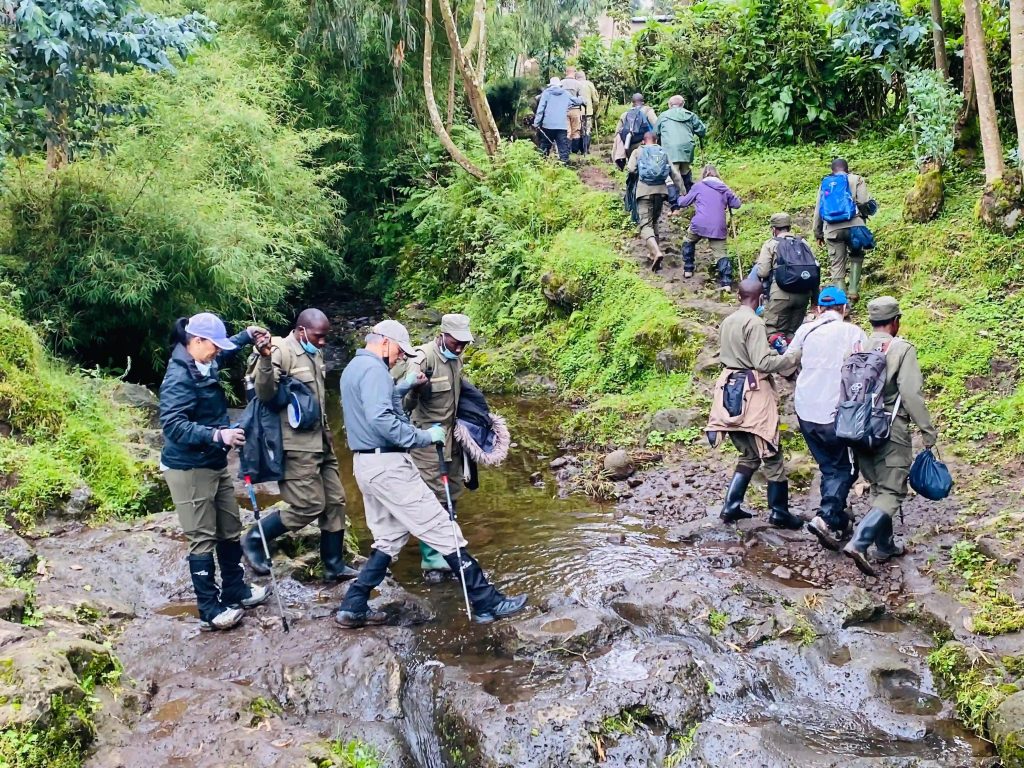
Rwanda is famous for its beautiful hills, green landscapes, winding roads, and unforgettable wildlife experiences. From the busy streets of Kigali to the mountain scenery surrounding Volcanoes National Park, travelling through the country offers visitors a chance to enjoy its natural beauty. However, choosing the right vehicle is an important part of planning a comfortable and reliable journey.
Although Rwanda has a well-developed road network connecting its major towns, conditions can vary between main roads and smaller rural routes. Some roads are paved and easy to navigate. Others may be steep, narrow, rough, or affected by heavy rainfall. Therefore, travellers should consider their destination, travel season, group size, and planned activities before choosing a vehicle.
For visitors planning gorilla trekking, the choice becomes particularly important. The journey may include driving from Kigali to Musanze, continuing towards Kinigi, and travelling along local roads to reach the designated trekking starting point. Some of these local tracks can be rough, rocky, and steep.
At Safari O’clock, we believe that a well-planned safari starts with suitable transport. The right vehicle can improve passenger comfort, help manage challenging road conditions, and make it easier to enjoy the journey.
In this guide, we explain how to choose a suitable vehicle for Rwanda’s mountain roads. We also explore the differences between common vehicle types, the importance of four-wheel drive, and the factors travellers should consider when booking a safari.
Why Rwanda Mountain Roads Require Careful Vehicle Selection
Rwanda is often called the Land of a Thousand Hills because of its distinctive landscape. The country has mountainous areas, rolling hills, valleys, and highland regions. These features create beautiful scenery, but they also influence road conditions and journey times.
The main roads connecting Kigali with major towns are generally in good condition. However, some secondary and unpaved roads require greater care. During rainy periods, certain routes may become muddy, slippery, or difficult to access. Heavy rainfall can also cause flooding and landslides.
Consequently, travellers should not choose a vehicle based on appearance alone. A comfortable vehicle must also suit the intended route and weather conditions.
For example, a standard passenger car may work well for a journey between major towns on paved roads. However, a trip involving steep, unpaved tracks may require a high-clearance four-wheel-drive vehicle.
Safari O’clock encourages travellers to discuss their complete itinerary before confirming transport. This allows the team to consider the road conditions and recommend a suitable option for the journey.
What Makes Rwanda’s Mountain Roads Different?
Mountain roads often include sharp bends, steep sections, and changing gradients. Drivers may need to reduce their speed and maintain greater awareness of other road users.
In some areas, roads are narrow and have limited space for vehicles to pass. Heavy rain can also affect visibility and make certain surfaces more slippery.
Additionally, travelling through mountainous regions may take longer than expected. The distance between two destinations does not always reflect the time needed to reach them.
For these reasons, a suitable vehicle should provide reliable handling, adequate ground clearance where needed, and enough space for passengers. An experienced driver also plays an important role in managing challenging conditions.
1. Choose a 4×4 for Rwanda Mountain Roads When Necessary
A four-wheel-drive vehicle, commonly called a 4×4, can be a suitable choice for journeys involving rough or unpaved mountain roads.
Four-wheel-drive systems can distribute engine power to all four wheels, depending on the vehicle and selected driving mode. This can improve traction when travelling on certain loose, slippery, or uneven surfaces.
However, four-wheel drive does not make a vehicle suitable for every road or weather condition. Tyre condition, ground clearance, vehicle design, driver skill, and road accessibility still matter.
For some journeys around Volcanoes National Park, a high-clearance 4×4 is particularly useful. Local tracks leading towards certain forest entry points can be rough, rocky, and steep. The park’s visitor guidance identifies high-clearance four-wheel-drive vehicles as necessary on many local tracks.
When arranging transport with Safari O’clock, explain whether your itinerary includes only paved roads or also includes local tracks. This information helps determine whether a 4×4 is appropriate.
When Should You Choose a 4×4 Vehicle?
A 4×4 may be a suitable option when your journey includes unpaved roads, uneven terrain, or routes that become difficult after rainfall.
It can also be useful when travelling to remote accommodation or certain outdoor destinations. However, the suitability of any vehicle depends on the actual route and current conditions.
Consider a traveller driving from Kigali to Musanze. Much of the main journey follows paved roads. A suitable standard vehicle may handle that section comfortably.
However, if the itinerary continues along a rough local track towards a trekking starting point, a high-clearance 4×4 may be more appropriate.
Therefore, Safari O’clock recommends selecting a vehicle according to the complete itinerary rather than assuming every mountain journey requires the same type of transport.
2. Compare Different Vehicles for Rwanda Mountain Roads
Several vehicle types can suit travel in Rwanda. The best choice depends on the number of passengers, road conditions, luggage, and level of comfort required.
Travellers should also consider whether they need transport for a single transfer or a multi-day safari.
Safari SUVs
A sport utility vehicle, or SUV, can provide a comfortable option for couples, small families, and small groups.
Depending on its design, an SUV may offer generous passenger space, luggage capacity, and better ground clearance than a standard saloon car.
Some SUVs also have four-wheel-drive capability. However, not every SUV has four-wheel drive, and not every SUV is designed for demanding off-road conditions.
Before booking, ask about the vehicle’s specifications and whether it suits the intended route.
Safari O’clock can help travellers identify an appropriate vehicle category according to their itinerary and transport requirements.
High-Clearance 4×4 Vehicles
High-clearance 4×4 vehicles are useful for routes that involve uneven surfaces, rocks, steep sections, or muddy tracks.
Their higher ground clearance can help reduce the risk of the underside striking obstacles. Four-wheel drive may also improve traction on suitable surfaces.
Nevertheless, the driver must still assess road conditions carefully. A 4×4 should never be treated as permission to drive through flooded roads or attempt unsafe routes.
For visitors heading towards challenging local tracks near Volcanoes National Park, this vehicle category deserves particular consideration.
Minivans and Group Vehicles
Minivans can be convenient for families, tour groups, and travellers carrying several bags.
They often provide more seating than a typical SUV. However, passengers should distinguish between a vehicle’s seating capacity and its available luggage space.
A fully occupied vehicle may not have enough room for large suitcases. Therefore, confirm the passenger and luggage capacity before booking.
Some minivans may also have limited ground clearance or lack four-wheel drive. As a result, they may suit paved-road transfers but not every rough mountain track.
Safari O’clock recommends checking the actual vehicle specification rather than choosing transport based on passenger capacity alone.
Standard Passenger Cars
Standard passenger cars can be suitable for journeys between major towns on paved roads.
They may provide a practical option for airport transfers, city travel, and some hotel-to-hotel journeys.
However, they are not always appropriate for rough or steep local roads. Lower ground clearance can increase the risk of damage on uneven surfaces.
If your itinerary includes remote accommodation or unpaved mountain tracks, discuss the route with your transport provider before booking a standard car.
The key principle is simple: choose a vehicle that matches the road, not just your budget.
3. Consider Ground Clearance on Rwanda Mountain Roads
Ground clearance refers to the distance between the lowest part of a vehicle’s underside and the road surface.
This measurement matters when travelling over rocks, deep ruts, uneven ground, or other obstacles.
A vehicle with greater ground clearance may pass over certain obstacles more easily than a low-slung passenger car. However, the exact capability depends on the vehicle’s design and the obstacle itself.
For example, a rough road with deep ruts may present a challenge for a standard car. A suitable high-clearance vehicle may be better equipped for the same route.
Still, ground clearance alone does not guarantee safe passage. A steep slope, unstable surface, or deep muddy section may remain unsuitable.
When booking a safari with Safari O’clock, explain the destinations you intend to visit. The team can then consider whether your route requires a vehicle with higher ground clearance.
Why Ground Clearance Matters Near Volcanoes National Park
The area surrounding Volcanoes National Park includes local roads that connect the main settlements with accommodation and trekking access points.
Some tracks can be rocky, steep, and uneven. These conditions make vehicle clearance an important consideration.
A vehicle that handles paved roads comfortably may struggle when the route changes to a rough surface.
Therefore, travellers should ask about the road conditions beyond the main highway. This is particularly important when a safari includes a lodge located away from the main road or a transfer to a specific trekking starting point.
Safari O’clock can help coordinate transport according to the itinerary and the services included in the booking.
4. Choose the Right Vehicle for Rwanda’s Rainy Season
Weather is another important factor when selecting a vehicle.
Rwanda generally experiences two rainy seasons, although the exact timing and rainfall can vary. The Rwanda Meteorology Agency describes major rainfall periods around March to May and September to December.
Heavy rain can affect road surfaces and visibility. It may also contribute to flooding, landslides, and temporary road closures.
During these conditions, some unpaved routes become difficult or unsafe to use. Travellers should therefore check the weather forecast and local road information before departure.
A suitable 4×4 may improve access on certain rough surfaces. However, it cannot eliminate the risks associated with flooding, unstable slopes, or severe weather.
Safari O’clock encourages travellers to remain flexible when planning journeys during rainy periods. In some circumstances, changing the departure time or using an alternative route may be safer than continuing as planned.
Is a 4×4 Necessary During the Dry Season?
Not every journey requires a 4×4 during the dry season.
Many main roads remain suitable for ordinary passenger vehicles. Therefore, travellers should consider their destinations and the actual road conditions before selecting transport.
However, some local tracks may remain rough even when the weather is dry. Rocky surfaces, steep gradients, and uneven ground can still make high-clearance vehicles useful.
For this reason, the dry season should not automatically determine the vehicle type.
Instead, discuss the planned route with Safari O’clock and choose a vehicle that suits the terrain.
5. Prioritise Passenger Comfort on Rwanda Mountain Roads
A suitable vehicle should do more than reach the destination. It should also provide a comfortable journey.
Travellers may spend several hours on the road when moving between Kigali, Musanze, and Volcanoes National Park. Therefore, seating comfort, legroom, ventilation, and luggage arrangements deserve attention.
Families with children may prefer vehicles that provide enough space for everyone to sit comfortably. Similarly, travellers carrying camera equipment may need additional room for their belongings.
Older travellers and visitors with mobility concerns should also discuss their needs before booking. Easy entry and exit, suitable seating, and enough room to move can make a meaningful difference.
Safari O’clock encourages guests to communicate these requirements early. This helps the team assess the available options before confirming transport.
Consider Seating and Luggage Space
A vehicle may have enough seats for your group but still lack adequate luggage capacity.
For example, four travellers carrying large suitcases may need more space than four travellers with small daypacks.
Before booking, provide the correct number of passengers and explain how much luggage you expect to carry.
If you plan to bring camera equipment, specialised bags, or additional trekking supplies, mention these items as well.
The transport provider can then help identify a suitable vehicle size.
Think About the Journey, Not Just the Destination
Long journeys require a vehicle that supports passenger comfort.
Good seating, effective ventilation, and sufficient space can make travelling more pleasant. A well-maintained vehicle can also reduce the likelihood of avoidable mechanical interruptions.
Additionally, an experienced driver can help passengers enjoy the scenery without worrying about navigating unfamiliar roads.
When planning your Rwanda safari, Safari O’clock can help you consider these factors alongside your budget and destination.
6. Check Vehicle Safety and Maintenance
Vehicle condition is just as important as vehicle type.
Even a capable 4×4 can become unsafe if it has worn tyres, faulty brakes, damaged lights, or other mechanical problems.
Before a long journey, the vehicle should receive appropriate maintenance checks. Tyres, brakes, lights, windscreen wipers, and other essential components should function correctly.
This becomes particularly important during rainy weather, when slippery roads and reduced visibility can increase driving risks.
Rwanda National Police advises motorists to avoid speeding in heavy rain, keep a safe distance from other vehicles, and avoid driving through flooded roads. It also highlights the importance of checking tyres, lights, and windscreen wipers.
Travellers booking a guided safari should choose a transport provider that takes vehicle maintenance and road safety seriously.
Safari O’clock encourages guests to clarify their transport arrangements before departure. Ask whether the planned vehicle is suitable for the route and whether the transport provider has considered the prevailing road conditions.
Why Tyres Matter on Mountain Roads
Tyres are the only part of a vehicle that makes direct contact with the road.
Their condition influences traction, braking, and handling. Worn or damaged tyres can increase the risks associated with wet and uneven surfaces.
Consequently, a vehicle should have tyres suitable for its intended use and in good condition.
Drivers should also maintain appropriate tyre pressure according to the vehicle manufacturer’s guidance.
However, suitable tyres cannot make every road safe. Drivers must still avoid flooded sections and follow local advice about hazardous routes.
7. Consider an Experienced Driver for Mountain Travel
Choosing the right vehicle is only part of planning a safe journey. The driver’s experience also matters.
Mountain roads may involve steep gradients, tight bends, narrow sections, and changing weather. Drivers need to adjust their speed, maintain safe distances, and respond carefully to other road users.
An experienced local driver may also understand the route, likely journey times, and alternative roads when conditions change.
For visitors unfamiliar with Rwanda, hiring a vehicle with a driver can reduce the pressure of navigating unfamiliar destinations.
It also allows passengers to focus on the scenery and enjoy the journey.
Safari O’clock can help travellers coordinate transport arrangements according to their itinerary. When discussing your booking, ask about the driver, planned route, and arrangements for challenging road conditions.
Why Local Road Knowledge Is Valuable
Local knowledge can help drivers anticipate changes in road surfaces and identify the most appropriate route for the journey.
It can also help them account for traffic, weather, and access arrangements near particular destinations.
However, no driver can eliminate every travel risk. Current road conditions and official safety advice should always guide the final decision.
A responsible driver will slow down when necessary and avoid routes that appear unsafe.
For visitors, the best approach is to choose transport that combines a suitable vehicle with careful driving and realistic scheduling.
8. Match Your Vehicle to Your Safari Itinerary
Your itinerary should guide your vehicle choice.
A short airport transfer may require different transport from a multi-day safari involving several destinations. Likewise, a journey between major towns may have different requirements from travel along rough local tracks.
Before booking, list the places you intend to visit and identify the type of roads likely to connect them.
For example, travellers visiting Kigali and Musanze may spend much of their time on main roads. However, a gorilla trekking itinerary can also include local transfers around Volcanoes National Park.
If your trip includes several destinations, consider whether one vehicle can meet all your transport needs or whether you may need different arrangements for particular sections.
Safari O’clock can help you review the itinerary and identify the transport requirements for each stage.
Vehicle Choice for Gorilla Trekking
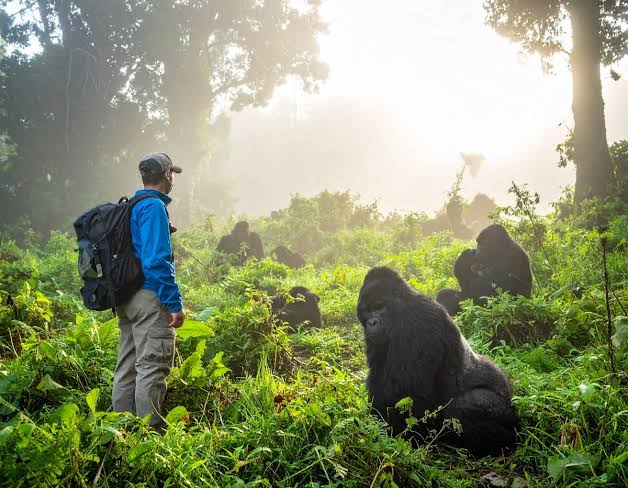
Gorilla trekking is one of Rwanda’s most popular wildlife experiences. Visitors travel to Volcanoes National Park, where they attend the required briefing before proceeding towards their assigned trekking area.
The main journey from Kigali to the park headquarters takes approximately two to three hours by road, although the actual time depends on traffic, conditions, and the starting point.
After arriving at Kinigi, additional driving may be required to reach particular forest entry points. Some local tracks can be steep and rough, so the vehicle must suit the route.
Travellers should therefore confirm the entire transfer arrangement before departure.
When booking with Safari O’clock, ask whether your transport covers the hotel-to-Kinigi journey and any additional transfers required for your activity. Confirm which services are included in your package.
Vehicle Choice for Family Safaris
Families often need to balance comfort, passenger capacity, and luggage space.
A suitable SUV may work well for a small family. Larger groups may prefer a minivan or another vehicle with more seating.
However, the chosen vehicle must still suit the road conditions.
If the itinerary includes rough local tracks, ask whether the selected vehicle has adequate clearance and capability for the route.
Safari O’clock can help families discuss their needs before confirming transport.
9. Understand the Difference Between 4WD and AWD
Travellers sometimes use the terms four-wheel drive and all-wheel drive interchangeably. However, these systems can differ in design and intended use.
Four-wheel drive, or 4WD, commonly refers to systems designed to provide power to all four wheels in selected driving modes. Many traditional off-road vehicles use this type of system.
All-wheel drive, or AWD, generally distributes power to all four wheels automatically or through a continuously managed system. Its capabilities vary by vehicle.
Neither label alone guarantees that a vehicle is suitable for a demanding mountain track.
Ground clearance, tyres, drivetrain design, vehicle weight, and the driver’s skill all influence performance.
For this reason, travellers should not assume that every AWD vehicle can handle the same conditions as a high-clearance 4×4 designed for rough terrain.
If your Rwanda itinerary includes challenging roads, describe the route to Safari O’clock and ask which available vehicle is appropriate.
The goal is not to choose the vehicle with the most impressive specification. It is to choose one that safely meets the requirements of your journey.
10. Consider Your Budget When Choosing a Safari Vehicle
Transport costs can influence the overall price of a Rwanda safari.
Larger vehicles may cost more to operate because of fuel consumption, maintenance, and other expenses. However, the most affordable option is not always the most suitable for every itinerary.
Travellers should compare the total value of each option rather than focusing only on the initial price.
For example, a private vehicle may provide greater flexibility for a couple or small family. A shared transfer may be more economical for travellers whose schedules and destinations align.
However, the availability of each option depends on the operator and the services included in the booking.
Before confirming transport with Safari O’clock, ask for a clear explanation of what the quoted price covers.
Confirm the passenger capacity, luggage arrangements, driver services, fuel arrangements, and any additional transfers required.
This helps you understand the overall cost and avoid unexpected expenses.
Is a More Expensive Vehicle Always Better?
Not necessarily.
A premium vehicle may provide extra comfort, but it may not be necessary for every journey. Likewise, a cheaper vehicle may be perfectly suitable for a paved-road transfer.
The most important factors are suitability, safety, comfort, and the requirements of the itinerary.
Choose a vehicle that meets your needs without paying for features you do not require.
Safari O’clock can help you discuss the available transport options and select one that fits your travel plans.
11. Avoid Common Vehicle Selection Mistakes
Travellers sometimes choose transport without considering the complete journey. This can lead to discomfort, delays, or difficulty accessing certain destinations.
One common mistake is assuming that every SUV is a 4×4. In reality, some SUVs use two-wheel drive, so travellers should check the actual specifications.
Another mistake is choosing a vehicle based only on the number of seats. Passenger capacity does not guarantee sufficient luggage space or suitable ground clearance.
Some travellers also underestimate the effect of rain. A route that is manageable in dry conditions may become difficult after heavy rainfall.
Others focus on the vehicle but overlook the driver’s experience and maintenance standards.
To avoid these problems, confirm the following details before booking:
- The vehicle’s make, model, and relevant specifications.
- The number of passengers and amount of luggage.
- Whether the route includes paved or unpaved roads.
- Whether high ground clearance or 4WD is necessary.
- The driver’s experience with the planned route.
- The condition of the vehicle and its safety equipment.
- The transport services included in the quoted price.
- The arrangements for delays or changes in road conditions.
Safari O’clock recommends discussing these details before travel. A little preparation can make the journey more comfortable and help prevent avoidable complications.
12. How Safari O’clock Helps You Choose Suitable Transport
Planning a Rwanda safari involves more than selecting accommodation and booking activities. Travellers also need transport that matches their itinerary and the conditions they may encounter.
Safari O’clock can help guests discuss their destinations, group size, luggage requirements, and preferred level of comfort. These details help establish which vehicle category may suit the journey.
For example, a couple travelling between major towns may have different requirements from a family visiting several destinations. Likewise, travellers heading towards rough local tracks may need a high-clearance 4×4.
Safari O’clock can also help coordinate transport arrangements for gorilla trekking and other safari activities, depending on the services included in the booking.
Before finalising your plans, explain where you intend to travel and ask about the available vehicle options.
You should also confirm whether the vehicle will remain available throughout the itinerary or whether separate transfers apply to different stages.
Clear communication helps travellers understand their options and make informed decisions.
With Safari O’clock, you can plan your transport around your destination, comfort needs, and the type of roads on your itinerary.
Conclusion: Choose the Right Vehicle for Rwanda Mountain Roads
Choosing a suitable vehicle for Rwanda’s mountain roads is an important part of planning a successful safari.
Although the country’s main roads connect major destinations, secondary roads and local tracks can present different challenges. Steep gradients, uneven surfaces, and heavy rainfall may influence which vehicle is most appropriate.
A standard passenger car can suit many paved-road journeys. However, some itineraries require a high-clearance 4×4, especially when travelling along rough local tracks near Volcanoes National Park.
Travellers should also consider passenger comfort, luggage space, vehicle maintenance, and the driver’s experience. In addition, checking weather conditions and confirming transport details before departure can help reduce unnecessary risks.
Above all, choose your vehicle according to the actual route rather than appearance or price alone.
Safari O’clock can help you plan suitable transport for your Rwanda adventure. Whether you are preparing for gorilla trekking, exploring the countryside, or travelling between destinations, the right vehicle can make your journey more comfortable and practical.
Contact Safari O’clock to discuss your itinerary and find a transport option that suits your Rwanda safari plans.