- DIRECT CONTACTS:
- +256394517569
- tours@safarioclock.africa

Evening Game Drives in Murchison Falls: A Complete Uganda Safari Guide

Family-Friendly Boat Safaris in Murchison Falls: A Complete Guide for Families
September 16, 2026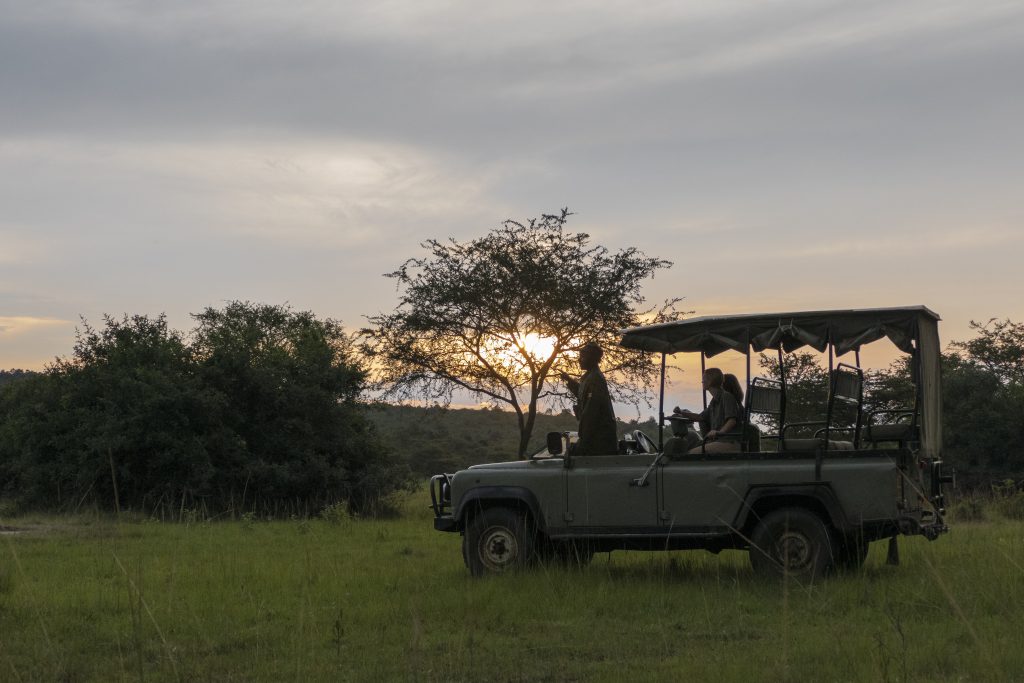
An evening game drive in Murchison Falls National Park offers a different way to experience Uganda’s wildlife. As the heat of the afternoon begins to ease, the savannah changes character. Animals that spent the hottest hours resting may become more active, herds begin moving across the grasslands, and the softer light creates excellent conditions for photography. At the same time, predators may become easier to search for as the day moves toward sunset.
For visitors planning a Uganda safari, this makes an evening game drive a valuable addition to the classic morning safari. Murchison Falls is Uganda’s largest national park, and its extensive savannah, woodland, riverine habitats and wetlands support a remarkable range of wildlife. The park is particularly known for elephants, buffaloes, giraffes, Uganda kob, lions, leopards and numerous antelope species. The Victoria Nile also adds another dimension to the experience, supporting hippos, crocodiles and many water-associated birds.
However, an evening safari needs careful planning. Families, photographers, first-time safari travellers and visitors staying near the park may have different needs. The timing also matters because the official park operating hours and authorized night-drive arrangements are not the same thing. Safari O’clock can help travellers understand these differences and build an itinerary that makes the most of the late afternoon without rushing the experience.
Why Choose an Evening Game Drive in Murchison Falls?
An evening game drive gives visitors an opportunity to experience Murchison Falls when the landscape begins to transition from daytime activity toward the quieter hours of dusk. The changing light can make the savannah look completely different from the same landscape seen during the middle of the day. Grasslands appear warmer in colour, long shadows develop around trees, and animals often become more active as temperatures fall.
The timing also creates a useful contrast with an early morning game drive. Morning drives focus on the beginning of the day’s activity. Evening drives allow visitors to watch animals prepare for the night. This does not mean that every species suddenly becomes active at sunset. Wildlife behaviour varies by species, weather, season, habitat and individual animal. Nevertheless, the cooler conditions can create rewarding viewing opportunities.
For Safari O’clock travellers, the evening drive can also provide a practical way to balance a safari day. Instead of spending every hour searching for wildlife, visitors can use the middle of the day for lunch, relaxation or a boat cruise before heading out again later.
Evening Game Drive and the Murchison Falls Landscape
Murchison Falls National Park is not one uniform landscape. The northern sector contains extensive open savannah and woodland, while other parts of the conservation area include forest and wetland habitats. The Nile provides another important ecological corridor.
This variety matters during an evening game drive because different animals respond differently to the changing conditions. Grazers may continue feeding across open areas. Giraffes may browse from trees. Uganda kob can remain active on the plains, while elephants may move between feeding areas and water sources.
The park’s famous Buligi Peninsula is especially important for traditional game viewing. UWA describes the area as a prime game-viewing zone where visitors can expect elephants, buffaloes, antelopes and giraffes, with opportunities for lions and leopards as well. (Uganda Wildlife Authority)
Consequently, the quality of an evening drive depends not only on the clock but also on where the guide chooses to search.
What Animals Can You See on an Evening Game Drive?
One of the most common questions from visitors is whether an evening drive produces different wildlife sightings from a morning drive. There is no guaranteed list because animals move freely. However, several species are particularly interesting as daylight begins to fade.
Elephants
Elephants can be active throughout the day, although their movement can change with temperature and water availability. During an evening drive, visitors may encounter elephants feeding, crossing tracks or moving toward water.
Their size makes them easier to spot than some smaller animals. However, families should still watch carefully because elephants can appear surprisingly quietly.
A guide from Safari O’clock can also explain elephant behaviour while maintaining an appropriate distance. This helps visitors understand what they are seeing rather than simply taking photographs.
Buffaloes
African buffaloes are another important species in Murchison Falls. They can occur in large herds and often use open grassland and areas near water.
Evening light can create attractive photographic conditions around buffalo herds. The animals’ dark bodies contrast strongly with golden grass, especially when the sun is low.
However, buffaloes are powerful wild animals. Visitors should never assume that a calm-looking herd is harmless. The driver should choose a suitable viewing distance and avoid disturbing the animals.
Rothschild’s Giraffes
Murchison Falls is one of Uganda’s major strongholds for the giraffe. Giraffes are especially impressive during the late afternoon because the changing light can emphasise their height and patterns.
Visitors may find giraffes feeding from trees or moving across open areas. A guide can help explain how giraffes use their long necks and tongues to reach vegetation that many other herbivores cannot access.
For photographers, the combination of giraffes, acacia-like vegetation and warm evening light can produce some of the most memorable images of a Murchison safari.
Uganda Kob
Uganda kob are among the important antelopes of Murchison Falls. Large concentrations of kob also influence predator activity because they provide an important prey resource.
UWA identifies the Heart of Murchison as a notable area for Uganda kob and describes it as a prime location for lions. (Uganda Wildlife Authority)
Therefore, when Safari O’clock guides search areas containing kob, they are not simply looking for antelope. They are also considering the wider predator-prey relationship.
Lions
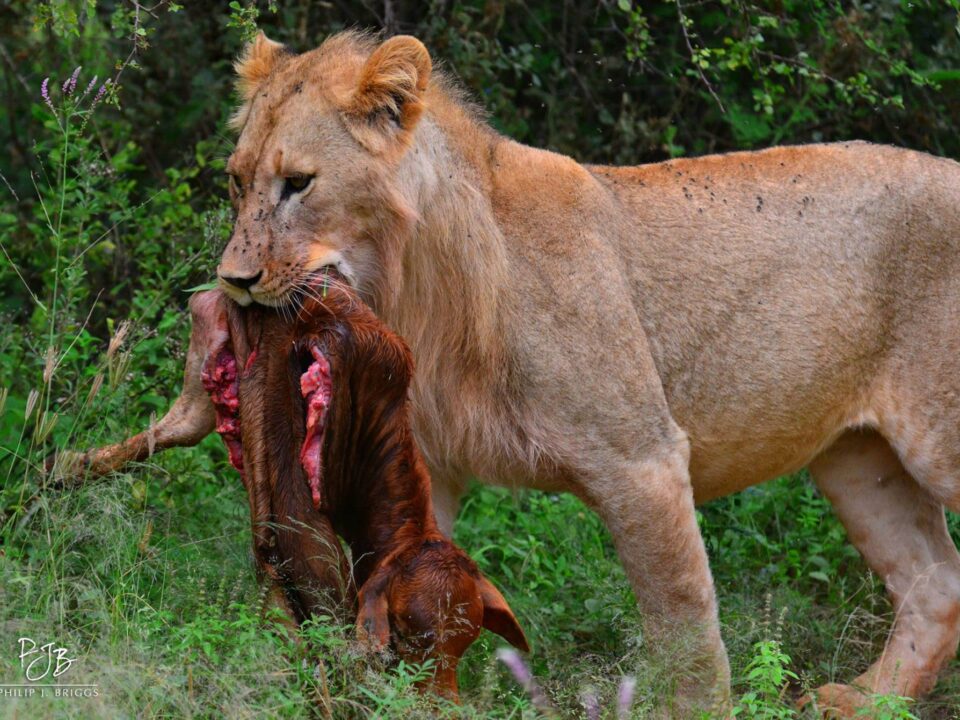
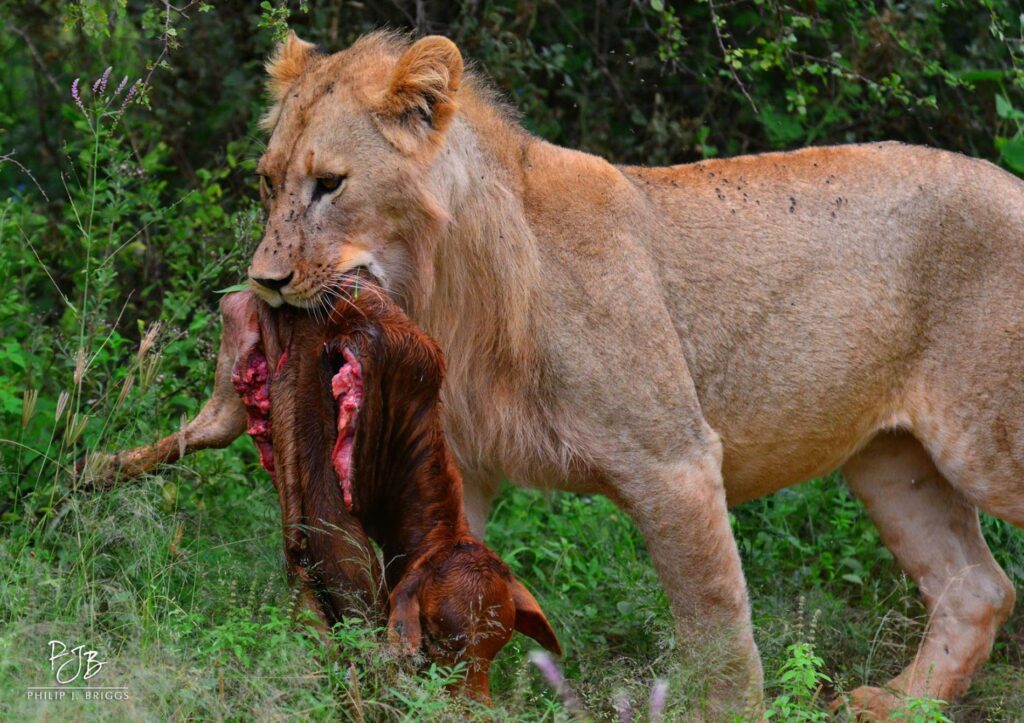
Lions are one of the most exciting possibilities during an evening game drive. Murchison Falls remains one of the Ugandan protected areas where lions occur, and the latest UWA State of Wildlife Resources report identifies Murchison Falls, Queen Elizabeth and Kidepo Valley as the country’s current national-park strongholds for lions. The report also says the Murchison population has remained relatively stable compared with declines recorded elsewhere. (Uganda Wildlife Authority)
The Heart of Murchison is particularly associated with lion viewing because of its Uganda kob herds. (Uganda Wildlife Authority)
Still, visitors should never expect a lion simply because they choose an evening drive. Lions may be resting in tall grass, moving through vegetation or occupying an area that the vehicle does not reach that day.
Leopards
Leopards are among the most difficult animals to find in Murchison Falls. UWA describes the leopard as secretive, solitary and nocturnal, noting that it is difficult to see and photograph. Murchison Falls is one of the Ugandan parks where leopards occur. (Uganda Wildlife Authority)
The transition toward evening can therefore be an interesting period for leopard searches. However, a responsible safari operator should never promise a leopard sighting.
Finding one depends on many factors, including habitat, prey availability, individual movements and the skill of the guide.
Spotted Hyenas
Spotted hyenas are another fascinating carnivore to consider. Recent UWA-supported large-carnivore research in the Murchison Falls area estimated a high spotted-hyena density within the surveyed Nile Delta region. The study area covered only part of the enormous park, so the figure should not be treated as a park-wide population estimate. (Uganda Wildlife Authority)
Hyenas can become particularly interesting around the transition from daylight into darkness. Their social behaviour, vocalisations and interactions with other predators make them an important part of the Murchison ecosystem.
Evening Game Drive vs Morning Game Drive
Both experiences have strengths, and the choice often depends on the rest of the itinerary.
A morning drive starts when wildlife activity can be rewarding after the night. The temperatures are usually more comfortable, and the early light can be excellent for photography. Visitors also have the advantage of having a full day ahead of them.
An evening game drive, by contrast, gives visitors the opportunity to watch the landscape change as the day progresses. The heat often becomes less intense, and some animals may become more active.
For this reason, Safari O’clock often recommends considering both when the itinerary allows. They are not identical experiences. Instead, they show different stages of the daily rhythm of the park.
What Time Should an Evening Game Drive Start?
There is no single start time that works for every itinerary. The best timing depends on the season, accommodation location, road conditions, the target wildlife area and the time of sunset.
The most important distinction is between an evening drive and a night drive.
UWA has stated that Murchison Falls National Park operates from 7:00 AM to 7:00 PM. It also requires visitors and motorists to plan their movements within those official hours. (Uganda Wildlife Authority)
Therefore, a normal evening game drive should be planned so that the vehicle remains compliant with park operating rules.
UWA has separately clarified that night game drives are permitted for tourists staying overnight within the parks. (Uganda Wildlife Authority)
That means travellers should not assume that simply driving after sunset is automatically the same as booking a standard evening game drive. The arrangements, authorization and applicable rules should be confirmed with the operator and UWA.
Safari O’clock can help clients distinguish these two experiences when planning their Murchison itinerary.
Evening Game Drive in the Dry Season
Dry-season conditions can influence wildlife distribution because water becomes an increasingly important resource. Animals may concentrate around remaining water sources, although movement patterns still vary.
UWA’s Murchison Falls information has traditionally identified the dry periods as favourable times for general wildlife viewing. However, visitors should remember that seasonality does not guarantee sightings.
The dry season can also bring stronger sunlight and higher daytime temperatures. Consequently, the late afternoon can feel more comfortable than the middle of the day.
For photographers, dry-season grass can also create strong contrasts with wildlife. Golden vegetation and warm light can produce attractive compositions, particularly around giraffes, buffaloes and elephants.
Evening Game Drive in the Wet Season
Wet-season safaris can reveal a greener side of Murchison Falls. Grass and vegetation respond to rainfall, and the landscape can look dramatically different from the dry season.
Rain may also affect roads and tracks. Therefore, flexibility becomes important. A skilled guide can adjust the route according to road conditions, wildlife movements and weather.
The wet season also reminds visitors why wildlife viewing cannot be reduced to a fixed formula. Rain can change animal behaviour within hours. A cloudy afternoon may produce very different conditions from a bright afternoon.
Safari O’clock can build flexibility into the itinerary so that visitors do not feel pressured to follow a rigid schedule regardless of weather.
Evening Game Drive for Wildlife Photography
Late afternoon light can be particularly attractive for wildlife photography. The sun sits lower in the sky, reducing the harsh overhead light that can occur around midday.
Giraffes can stand against warm skies. Elephants can create strong silhouettes. Buffalo herds can appear dramatically against open grassland. If a lion rests in a suitable position, the softer light may create an excellent portrait.
However, photography should never interfere with wildlife viewing. A visitor can easily spend an entire drive adjusting camera settings and miss what is happening around the vehicle.
Safari O’clock guides can help photographers balance patience, observation and photography. Sometimes the best photograph comes after putting the camera down and watching the animal first.